Custom Software Development Services: Costs, Process, and When to Build
Custom software development means building software for one organization's requirements instead of a mass market. For you, that is the quoting tool, client portal or integration your team keeps improvising around, finally built to fit your process and owned outright.
With AI-assisted delivery, most builds now go live in weeks. You get a fixed price before anyone writes code, and no per-seat fees afterwards.
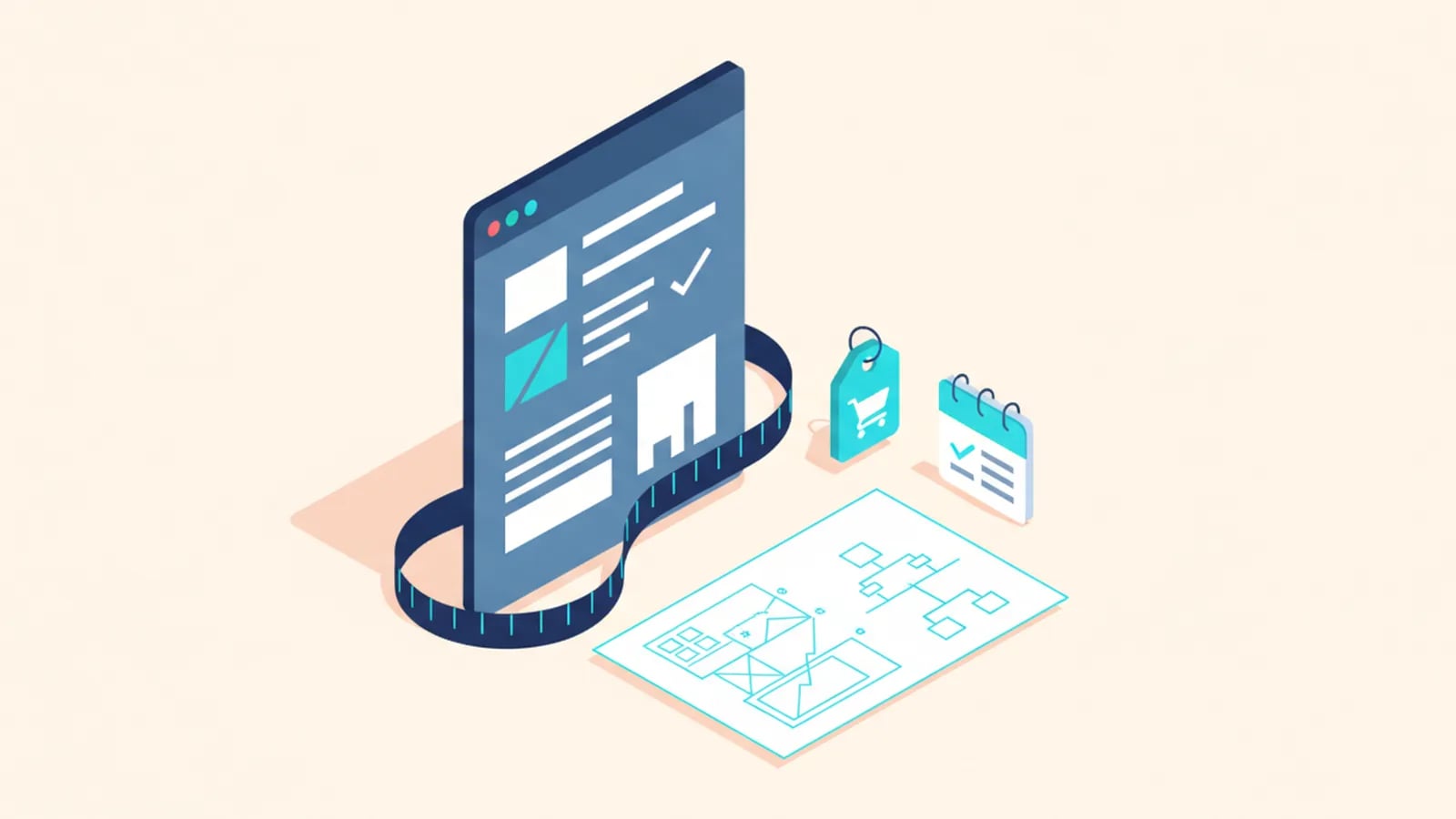
What Is Custom Software?
Custom software is built around one organization's processes, data and users. Off-the-shelf software is built for the average of thousands of buyers. "Bespoke software" means exactly the same thing; British English simply prefers the word.
You have three ways to get software, and each one caps you differently:
- Off-the-shelf software (COTS, or SaaS when you pay by subscription). Fast to start and cheap per month. The gap shows at the edges: your pricing rules, your workflow exceptions, your languages.
- Low-code platforms (Retool, Power Apps, Airtable). A tech-comfortable employee can assemble internal tools quickly, until the platform's ceilings kick in: per-seat pricing, limited customization and vendor lock-in.
- Custom software, built to your written specification. It does exactly what your process needs, you own the code outright, and nobody charges you per seat. It used to be the slowest and most expensive route. AI-assisted development changed that.
Think of a quoting tool that encodes your pricing logic, a client portal for order status and documents, a dispatch board shaped to your fleet, or middleware that keeps your store and your ERP in sync. The software your business runs on, that nobody sells.
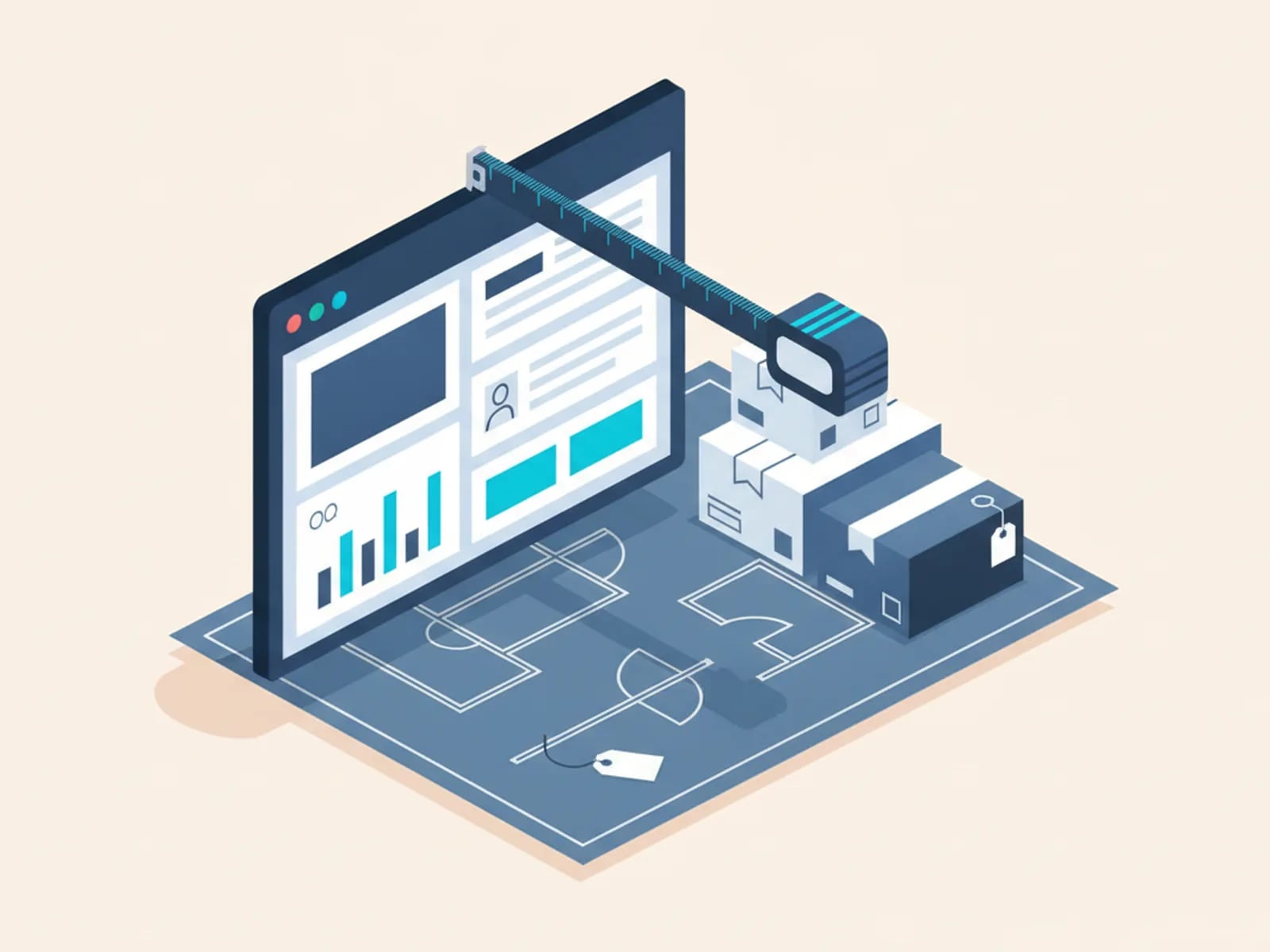
Build vs. Buy vs. Subscribe: The Decision Framework
Buy software for commodity processes. Build it for the processes that make you different. Accounting, payroll and email are solved problems: subscribe and move on. The call gets interesting where an off-the-shelf tool almost fits.
Four questions settle it:
- How big is the fit gap? If a standard tool covers your process completely, buy it. If your team maintains workaround spreadsheets, double entry or manual patch steps, that gap shows up on your payroll. The hidden costs of off-the-shelf software (per-seat creep, integration fees, workaround labor, data lock-in) rarely make it onto a pricing page.
- What do three years really cost? Compare total cost of ownership (TCO), not day-one prices. A 10-person team on a $50-per-user-per-month tool pays $18,000 over three years for access, not ownership. We run the numbers in custom software vs. SaaS.
- Is the process your competitive edge? Rent the same tool as your competitors and you work the way they do. The processes that win you customers deserve software shaped to them.
- Does anything structural rule off-the-shelf out? Several languages, unusual integrations or data-residency requirements often decide the question on their own.
If two or more answers point to "build", the full decision tree in when to build custom software is your next read. It includes the cases where the honest answer is "don't".
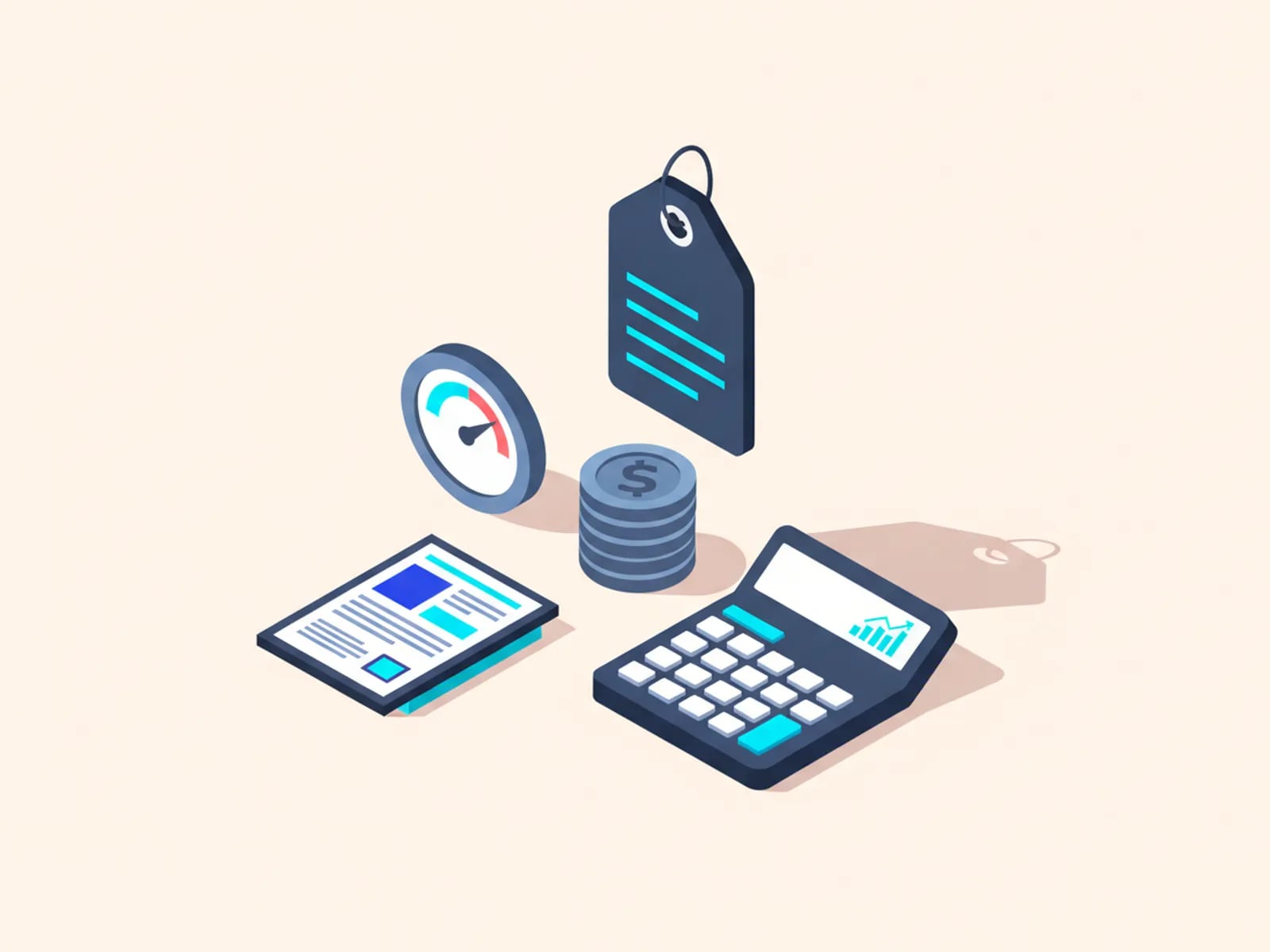
How Much Does Custom Software Development Cost?
Less than it used to, and you can know the number before you commit. Traditional agencies bill by the hour against an open-ended estimate, so even a modest build of a few hundred hours becomes a large quote before project management is added. That pricing model, more than the software itself, kept custom development out of reach for smaller organizations. Demand grew anyway: Grand View Research valued the custom software development market at $45.4 billion in 2025, with growth projected at 18.8% a year through 2033.
Five factors set the price of any build, whoever you hire:
- Scope. Screens, user roles and business rules. By far the biggest lever.
- Integrations. Each external system (ERP, payments, carrier networks) adds scoped work. Clean APIs cost less than legacy formats.
- Data migration. Moving years of spreadsheet or legacy data into the new tool.
- Languages. Multilingual interfaces multiply content and testing, far less so on an i18n-first architecture.
- Compliance. GDPR handling, PCI DSS scope control, audit trails. All buildable, all priced explicitly.
The pricing model matters as much as the total. Hourly billing leaves the overrun risk with you. A fixed scope at a fixed price moves it to the developer, and that is how we work. Our fixed-price packages (automation, web app, multilingual platform) list what each one includes, and custom software development cost in the AI era breaks prices down by project type.
Whether a price is worth paying is a return question, not a budget one. To calculate ROI on custom software, multiply hours saved by loaded wages and add the subscriptions you would drop.
How Long Does Custom Software Take to Build?
Weeks, not quarters. With AI-assisted delivery, a scoped workflow automation typically ships in 2–3 weeks, a full web application in 3–6 weeks and a multilingual platform in 5–8 weeks, counted from approved scope to production. The delivery date is fixed in writing before work starts.
Traditional timelines ran several months for comparable scope, which is how software projects earned their reputation for lateness. In the Standish Group's original CHAOS Report (1994), more than half of software projects (52.7%) were "challenged", and those projects cost on average 189% of their original estimates.
Timelines from real builds, including what still takes long and why: how long custom software takes.
The Custom Software Development Process, Step by Step
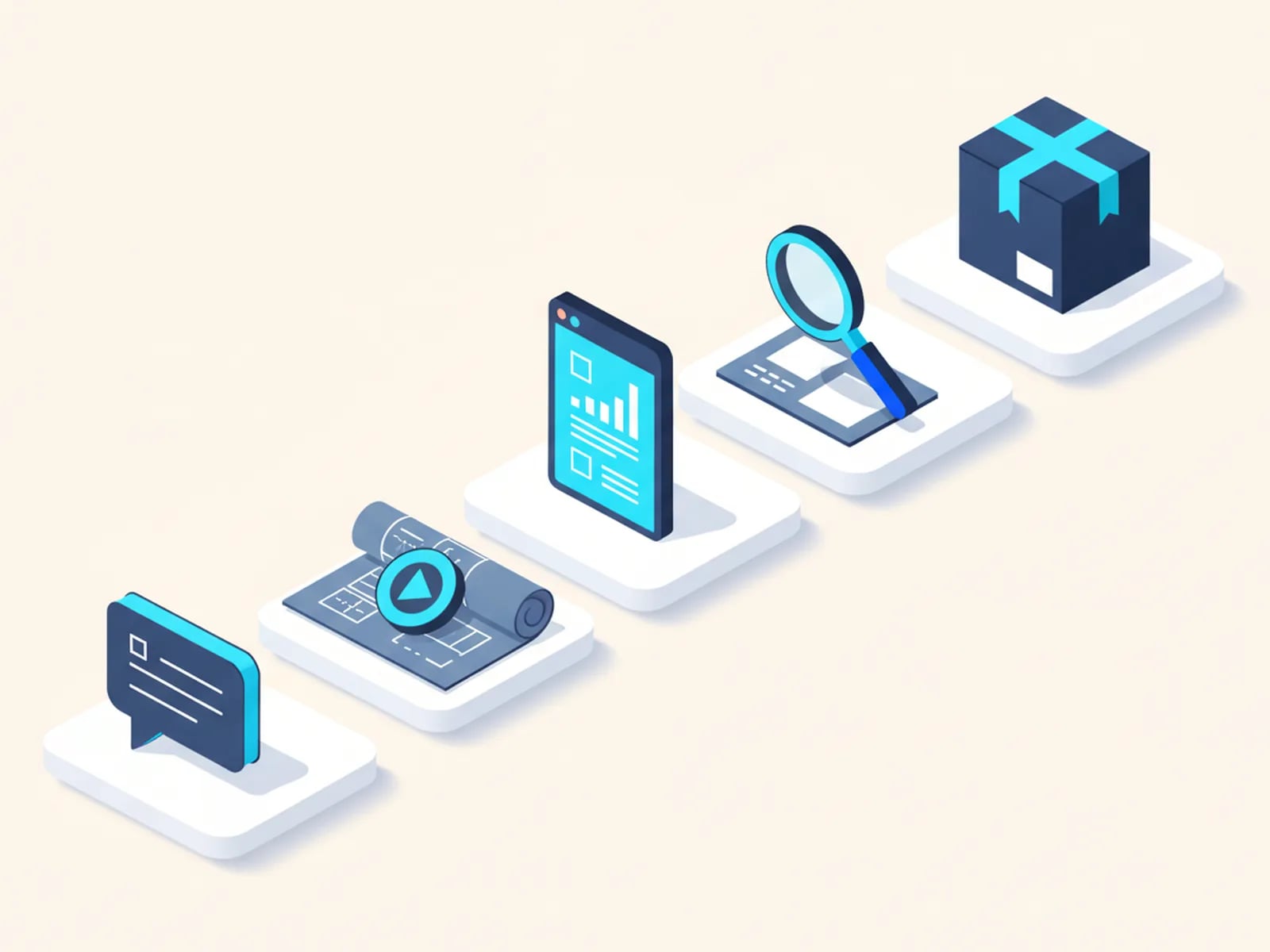
Every serious build follows the same arc, the software development life cycle (SDLC), whatever the vendor calls it. Know the five stages and you can hold any developer to them:
- Requirements and scoping. Your process becomes a technical specification: screens, user roles, business rules, integrations and acceptance criteria, in plain language you can check. Projects are won or lost here. A vague scope is how hourly projects grow.
- Design and architecture. Data model, integration approach, security model. Anything customer-facing across borders gets its internationalization here, or pays for a painful retrofit later.
- Build. The development itself, in our case AI-assisted and reviewed by engineers. You should click through working software during this stage, not only at the end.
- Acceptance testing. You verify the software against the criteria from stage 1, before launch. Write stage 1 clearly and stage 4 has no arguments.
- Handover and maintenance. Deployment, documentation, training, and the full repository in your hands. Maintenance stays an option, not a dependency.
The vendor-neutral walkthrough is in the custom software development process. We document our own version stage by stage, including how AI-written code gets reviewed before it reaches you.
How AI-Assisted Development Changed the Economics
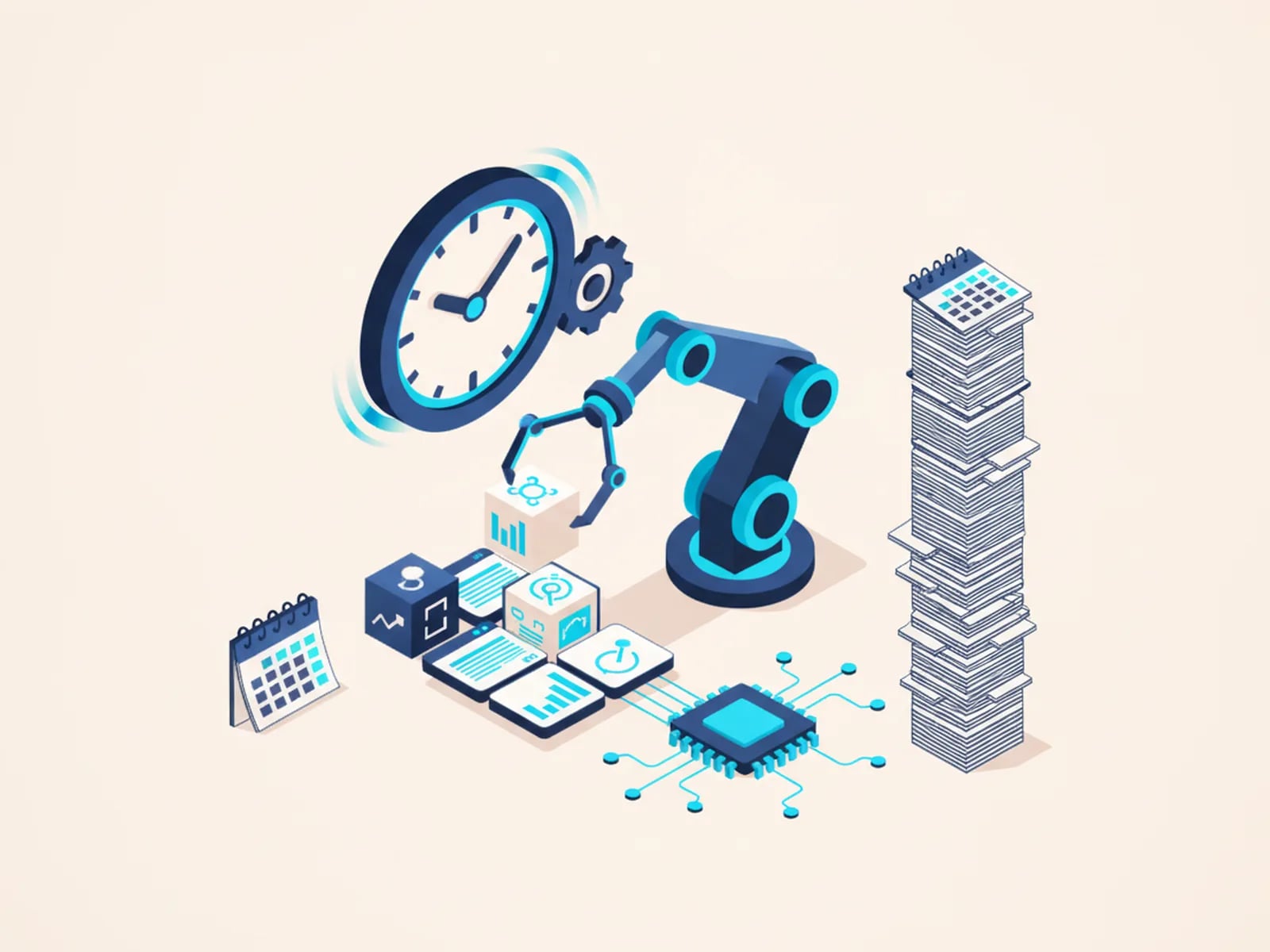
AI-assisted development, also called vibecoding, is why the cost and timeline answers above look nothing like they did in 2020. Engineers direct AI coding tools to generate the software, then review, test and harden every part of it. The typing speeds up. Judgment, architecture and accountability stay human.
For you, the effect is structural. Labor hours were the dominant cost of custom software, so compressing them cuts the price of a build sharply: our fixed-price builds come in at a fraction of a traditional agency quote for the same scope. Shorter builds also make fixed-price contracts workable. When a project takes weeks, the developer can carry the estimate risk instead of billing it to you by the hour.
The smallest project worth building shrank too. A tool that saves one team ten hours a week, once too small for a six-figure agency quote, is now an obvious build. That's why the strongest demand comes from small and mid-sized organizations, not enterprises.
Engineering discipline still matters. Unreviewed AI code is a liability, so the review pipeline is the product. The vibecoding hub shows how that pipeline works and what it catches.
When Not to Build Custom Software
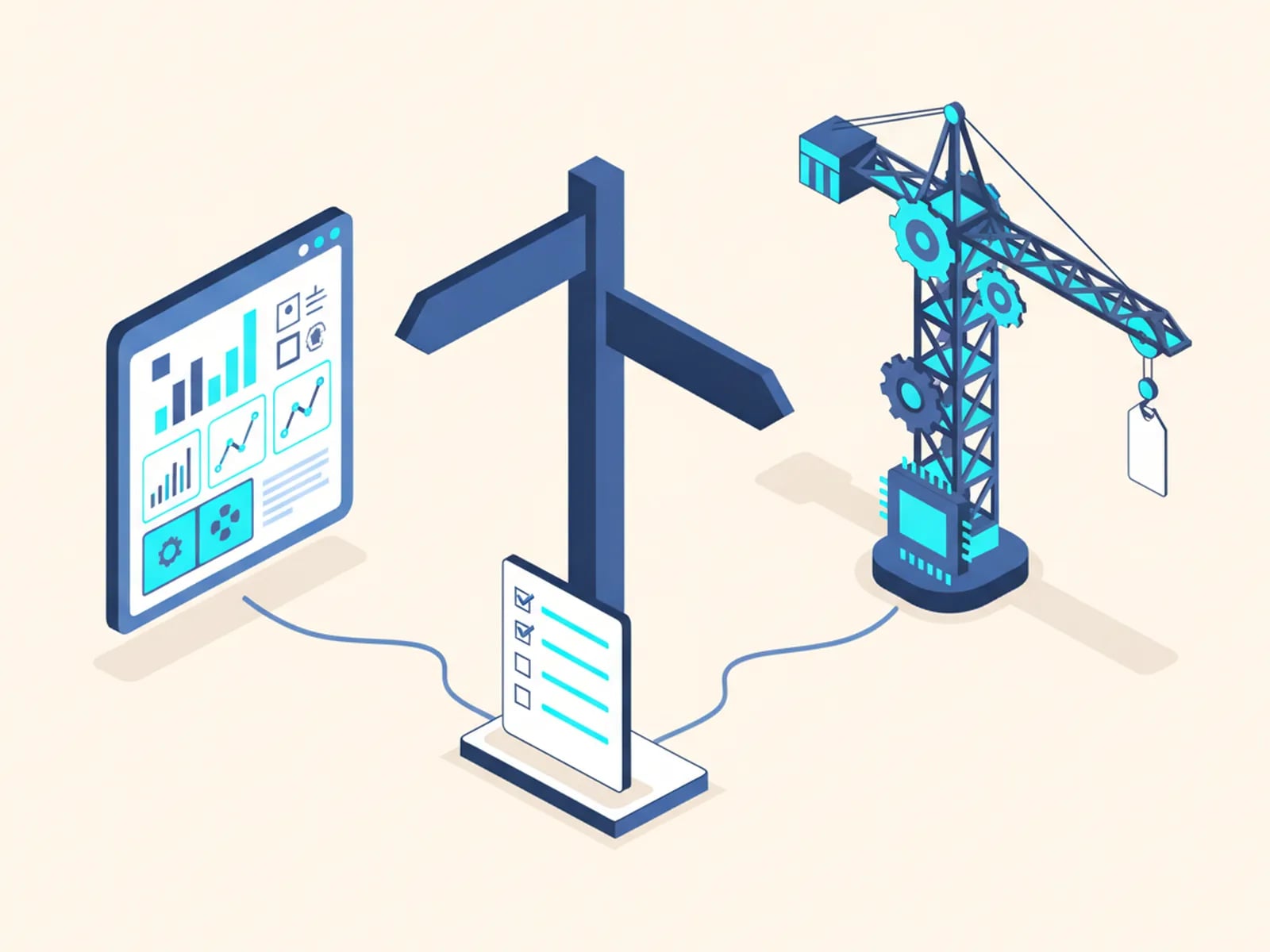
Sometimes custom software is the wrong answer, and we would rather say so before you spend anything. Don't build when:
- A standard tool genuinely fits. If a SaaS product covers your process without workarounds, subscribe. Custom development can't beat a well-fitting product on speed or price, and commodity processes gain nothing from being different.
- The vendor's ecosystem is the point. Marketplaces, hardware integrations, network effects and certified compliance regimes (payment processing, tax filing) are worth renting, not rebuilding.
- You need it tomorrow. Weeks is fast for software. It isn't instant. A deadline measured in days means buying now, and building later if the fit gap proves expensive.
- Nobody owns the process. Software encodes decisions. If no one on your side can say how quoting or scheduling should work, scope the process first, or start with a minimum viable product (MVP) that forces those decisions cheaply.
- The budget has no room for maintenance. Owned software still needs hosting, updates and the odd change. That costs a fraction of a subscription stack, but it isn't zero. Our care plans cover it, and they stay optional.
If two or more of these describe your situation, buy, and revisit when the workaround costs become visible. That reckoning usually arrives on a spreadsheet.
Custom Software by Industry
Generic software fails in industry-specific ways, so we organize our work by vertical. Each industry page shows what we build there, typical costs and timelines, and the integrations that matter:
- Custom logistics software development: TMS and WMS tools, freight tracking, dispatch boards, EDI and carrier API integrations.
- Custom ecommerce development: localized storefronts, multilingual catalogs and PIM, and the payment, tax and ERP plumbing behind cross-border retail.
- Custom internal tools and IT automation: admin panels, KPI dashboards, approval workflows, and the integration layer between too many SaaS tools.
- Custom manufacturing and field service software: CMMS, inspection apps, production dashboards and multilingual work instructions.
- Custom software for small business: booking tools, quoting systems, client portals and automations at fixed prices.
One capability runs through all five: multilingual software development. Globaprom grew out of a 20-year translation business, so every build is ready for more languages from day one. That is the difference between software your international users adopt and software they avoid.
Frequently Asked Questions About Custom Software Development
What is custom software development?
Custom software development is the process of designing, building, testing, and maintaining software for one organization's specific requirements rather than for resale. It covers the full life cycle: requirements, architecture, coding, acceptance testing, deployment, and maintenance. The buyer typically owns the resulting code outright.
Is bespoke software the same as custom software?
Yes. "Bespoke software development" and "custom software development" describe the same thing: software built to one client's specification. "Bespoke" is the standard term in British English, "custom" in US English. Vendors using either term should offer the same essentials: written scope, acceptance criteria, and code ownership.
What are examples of custom software?
Common examples: quoting and invoicing tools encoding company-specific pricing, client portals for orders and documents, booking systems, freight tracking dashboards, custom CRMs shaped to one sales process, inventory tools, and integration middleware syncing an online store with an ERP. Most replace a load-bearing spreadsheet or an almost-right SaaS subscription.
What is the difference between custom software and low-code platforms?
Low-code platforms let non-developers assemble apps from prebuilt blocks, within platform limits: per-seat pricing, capped customization, and lock-in to the vendor's runtime. Custom software has no platform ceiling: you own standalone code, pay no seat fees, and integrate with anything that has an API.
How do I know if my business needs custom software?
Watch for three signals: your team maintains workarounds (spreadsheets, double entry) around an existing tool; per-seat subscription costs keep climbing; or a process that wins you customers is constrained by generic software. If two apply, the build-vs-buy math is worth running. See when to build custom software.
Is custom software more secure than off-the-shelf software?
It can be, but security follows practice, not category. Custom software presents a smaller attack surface (no mass-market product to probe, no shared multi-tenant infrastructure), but it depends on the developer's discipline: code review, dependency audits, access control, and monitoring. Ask any vendor how code is reviewed before deployment.
Ready to Build? Start With a Scope, a Price, and a Date
Describe the tool, automation or integration you need. We reply with a fixed scope, a fixed price and a delivery date in weeks, before you commit to anything. At handover the code is yours, with no per-seat fees.