Custom Logistics Software Development
Globaprom builds custom logistics software for freight forwarders, shippers, carriers and third-party logistics providers (3PLs) who have outgrown their off-the-shelf tools. If your team still runs critical work in spreadsheets, email threads or a transportation management system (TMS) held together with workarounds, we build the piece that's missing: a tracking portal, a dispatch board, a warehouse module, or the integration layer between them.
Fixed scope, fixed price, live in weeks, and multilingual from day one.
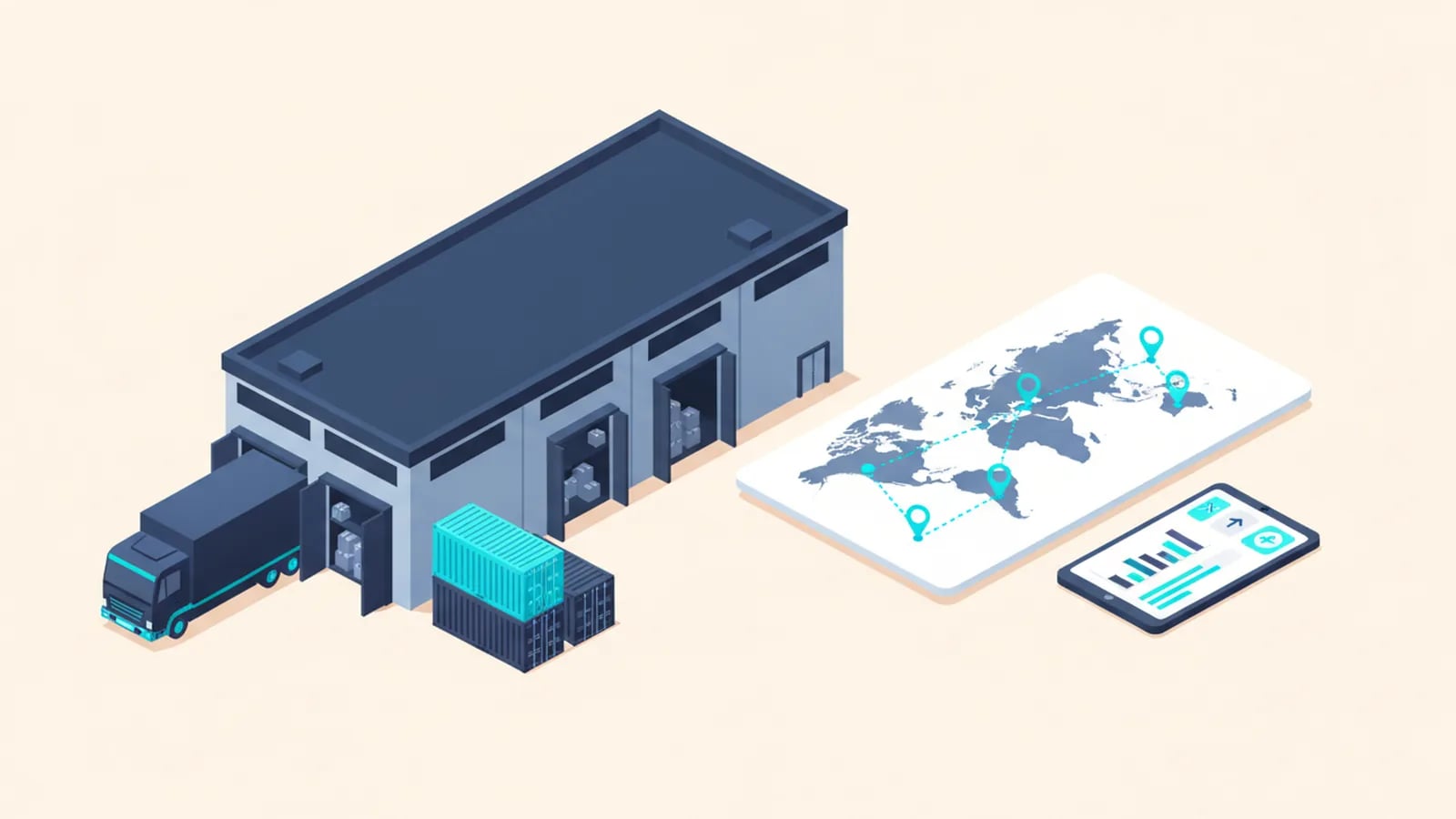
Why Off-the-Shelf Logistics Software Breaks at the Edges
The core features work. It's the edges that hurt: your rate logic, your customs paperwork, the partner who still sends files in a decades-old format. That last stretch is where off-the-shelf logistics software stops fitting and your team starts improvising.
Money isn't the issue. MarketsandMarkets puts the global TMS market at $18.5 billion in 2025 and projects $37.0 billion by 2030, and the wider supply chain management software market reached $23.2 billion in 2025, per IMARC Group. Companies are paying for software. They still end up with gaps.
When a mid-size forwarder or 3PL walks us through their setup, the same three show up:
- Workflow gaps. The platform assumes a standard process. Your dispatchers, customs agents and warehouse leads work differently, so a spreadsheet grows next to the system.
- Integration gaps. One key carrier, customer or customs authority uses a format the platform can't read. Someone re-keys that data every single day.
- Language gaps. Drivers, warehouse crews and overseas partners need the interface in their own language. Most platforms sell that as an enterprise add-on, if they offer it at all.
You don't have to replace the platform to fix this. You need the missing piece, built to fit your operation, and owned by you.
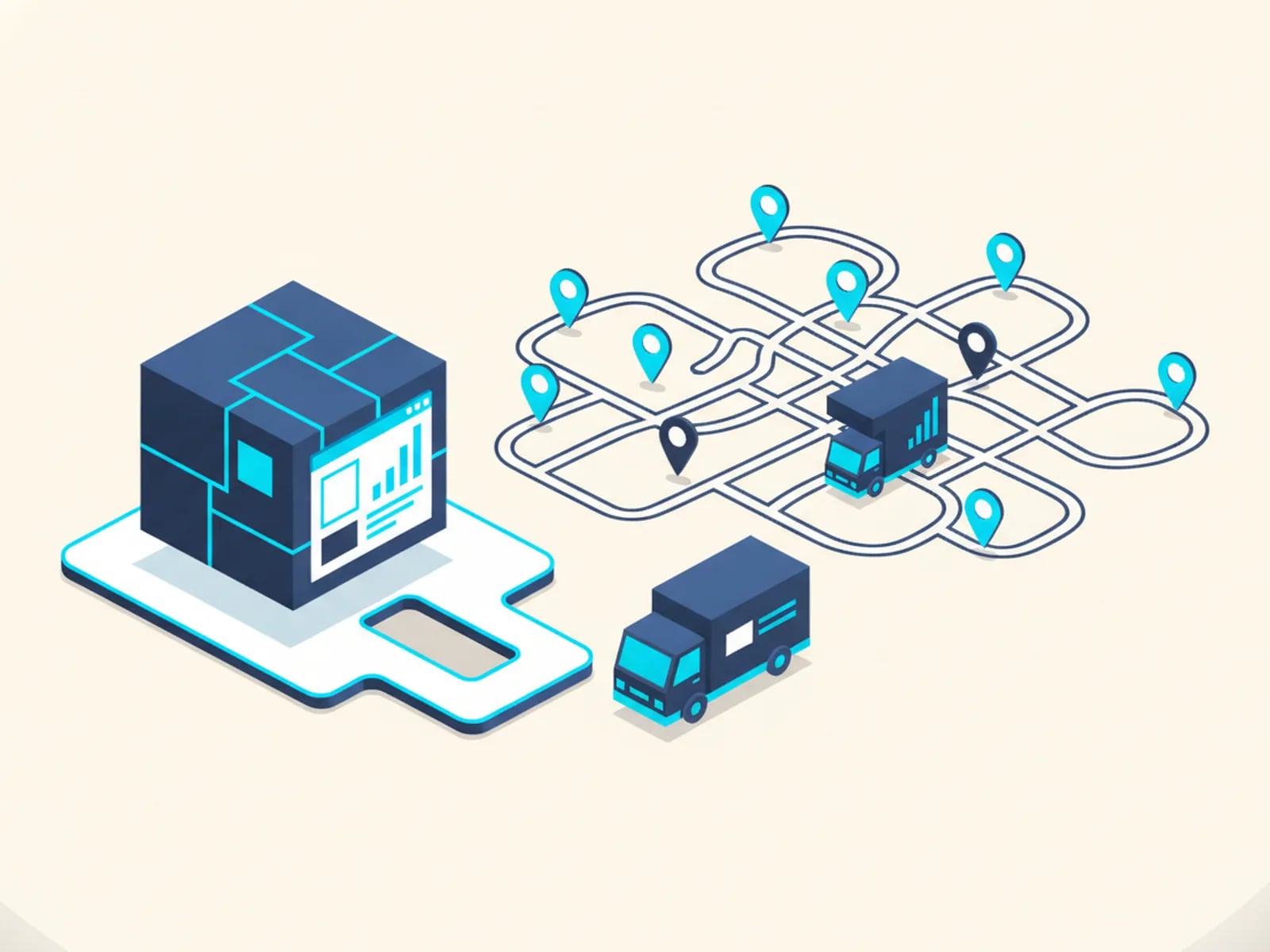
What We Build: TMS, WMS, Tracking Portals, Dispatch & Route Tools
We build the tools closest to your daily operations, each one scoped to how you work rather than to a vendor's feature checklist.
- Transportation management system (TMS) modules. Rate management, load planning, carrier selection and freight billing, as a lean standalone TMS or as modules on top of the platform you already license. More on custom TMS development.
- Warehouse management system (WMS) tools. Receiving, putaway, picking and inventory tracking that match your actual racks, without enterprise pricing. More on warehouse management systems for small business.
- Freight tracking portals. Branded shipment visibility fed by carrier APIs and telematics, so customers check for themselves instead of calling. More on freight tracking software.
- Dispatch and routing tools. Driver assignment, stop sequencing and route optimization on proven vehicle routing problem (VRP) solvers. More on route optimization software.
- Last-mile delivery apps. Proof of delivery, e-signatures and photo capture in a driver app your crews can read in their own language. Last-mile delivery accounts for 53% of total shipping costs as of 2023, up from 41% in 2018, so a right-sized tool pays back fastest here. More on last mile delivery software.
- Visibility dashboards. Carrier data, EDI messages and spreadsheets merged into one live screen. More on supply chain visibility software.
- Freight forwarding tools. Quoting, customs documentation and client portals built for forwarders. More on freight forwarding software.
Every tool ships with sign-in, role-based permissions, an admin area and full code ownership, as part of our custom software development services.
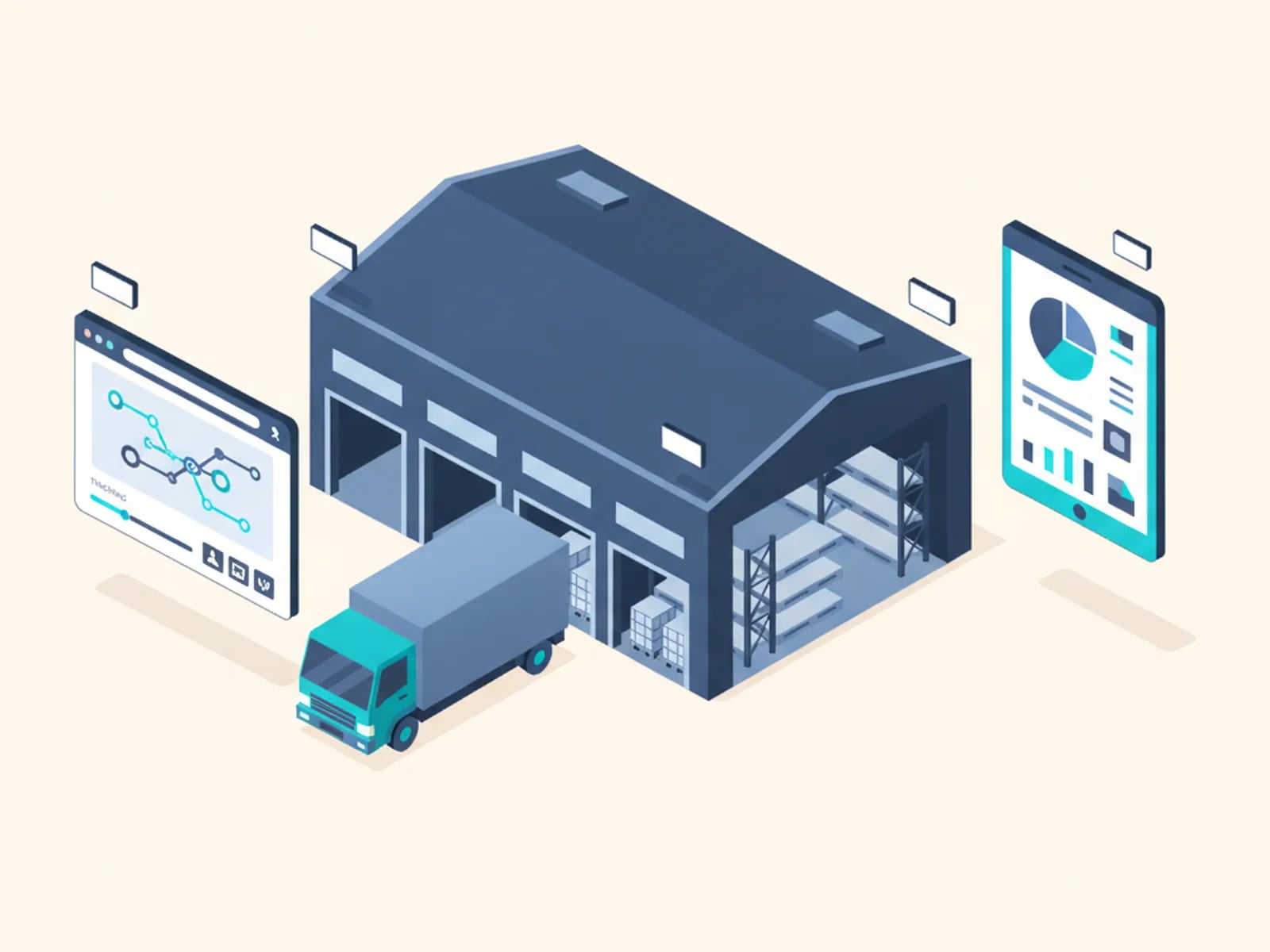
AI-Assisted Development: How a Logistics Tool Ships in 3–6 Weeks
Three to six weeks from approved scope to production is our normal pace for a logistics tool. AI-assisted development (vibecoding) is what makes it normal.
Our engineers direct AI coding tools to generate the repetitive parts: data models, CRUD screens, API clients, test scaffolding. Then they review, test and harden all of it. People stay in charge of what matters most in logistics: integration edge cases, data validation, security, and the domain logic your dispatchers depend on.
Here's how the weeks break down:
- Scope (week 0). We map your workflow, name every integration, and fix the price and delivery date before any code exists.
- Build (weeks 1–3). You click through a working version within the first two weeks. Not a slide deck.
- Integrate and harden (weeks 3–5). Carrier APIs, EDI connections and telematics feeds get wired in and tested against your real data, with error handling and monitoring.
- Deploy and hand over (weeks 5–6). Production on your cloud or ours, documentation, and the complete repository.
The price lands at a fraction of a traditional agency build. What custom software costs in the AI era breaks the numbers down.
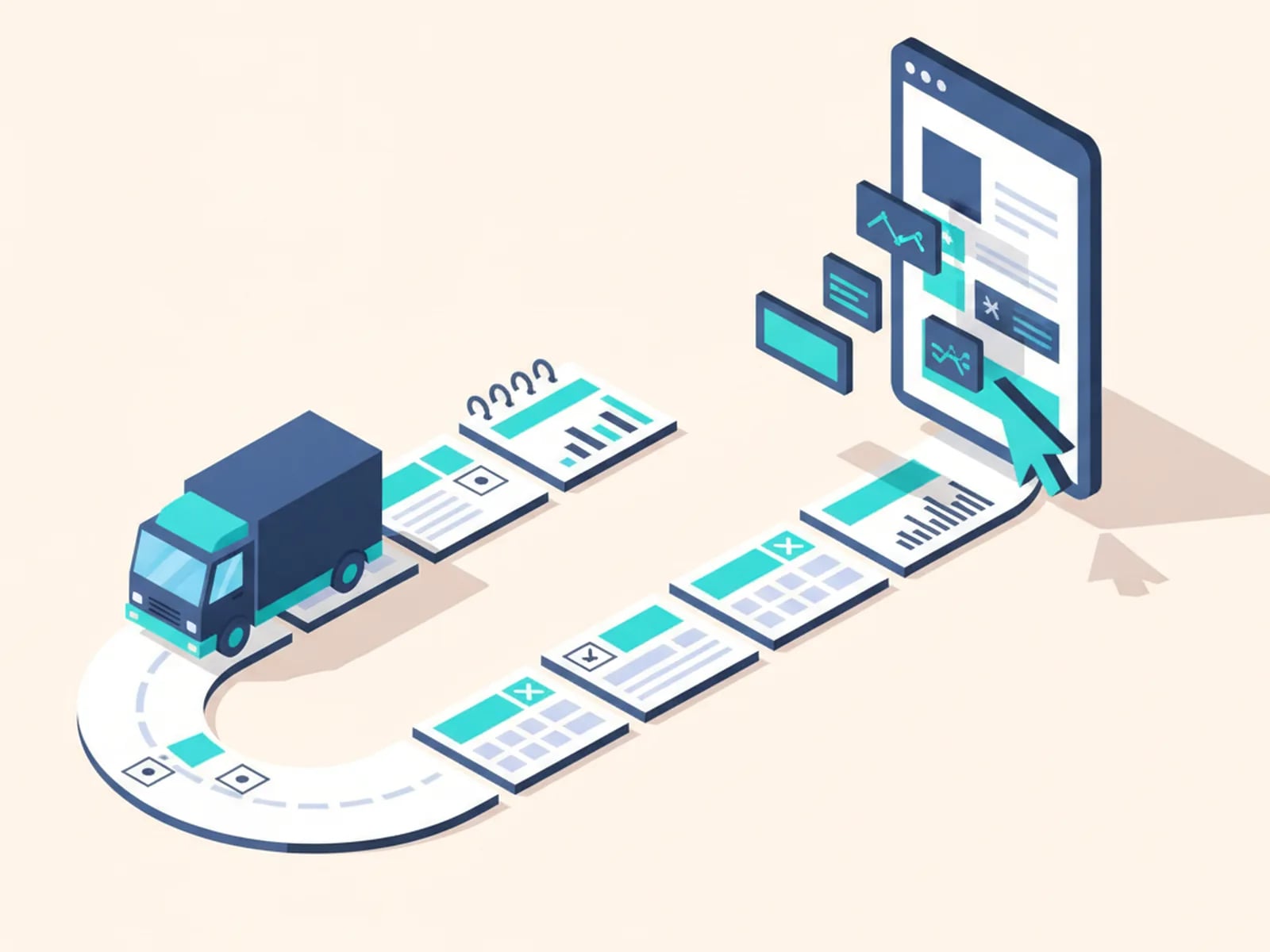
Integrations: EDI, Telematics, Carrier APIs, ERP (SAP, NetSuite)
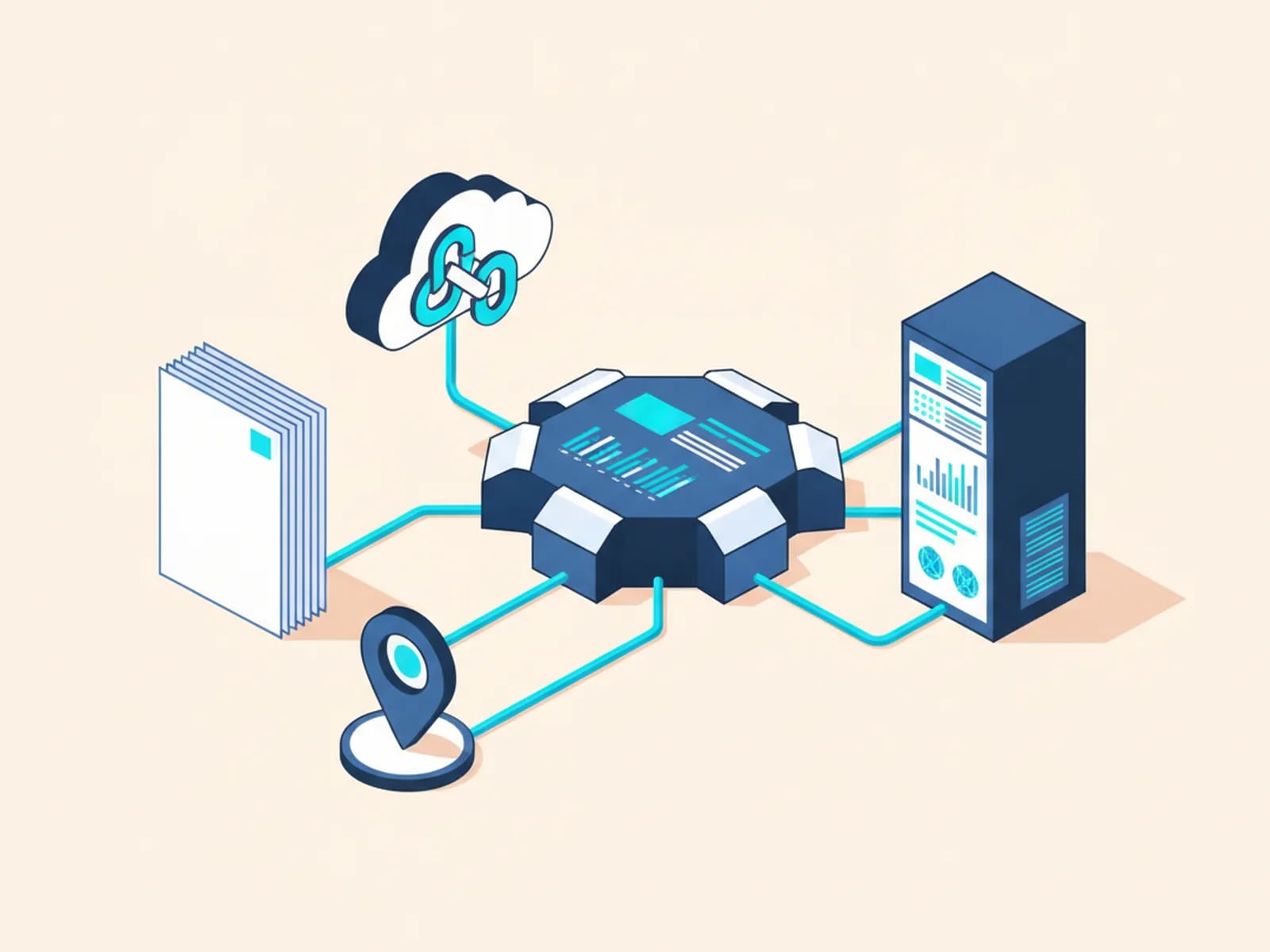
A logistics tool is only as useful as the systems it talks to. So integrations come up in the very first scope conversation. Most projects touch four kinds:
- Electronic data interchange (EDI). The message standard shippers, carriers and 3PLs use for orders, status updates and invoices, such as the 204 load tender or 214 shipment status in the US ANSI X12 standard. We build API-to-EDI middleware, so your new tool trades EDI with partners without legacy translation software on your side. More on EDI integration services.
- Telematics. GPS position, speed and engine data from the hardware in your vehicles. We connect Samsara, Geotab, Webfleet and others through their APIs and feed live locations into tracking portals and dispatch boards.
- Carrier APIs. Direct connections with ocean carriers, trucking networks, parcel carriers and visibility aggregators for rates, bookings and tracking events.
- ERP and accounting. Enterprise resource planning (ERP) systems such as SAP and NetSuite hold the orders and invoices your tool has to respect. We sync both directions, with retries, logging and alerts when a sync fails.
A silent integration failure is worse than no integration at all. Every connection we deliver ships with error handling, automatic retries and monitoring.
Multilingual Logistics Software for Cross-Border Operations
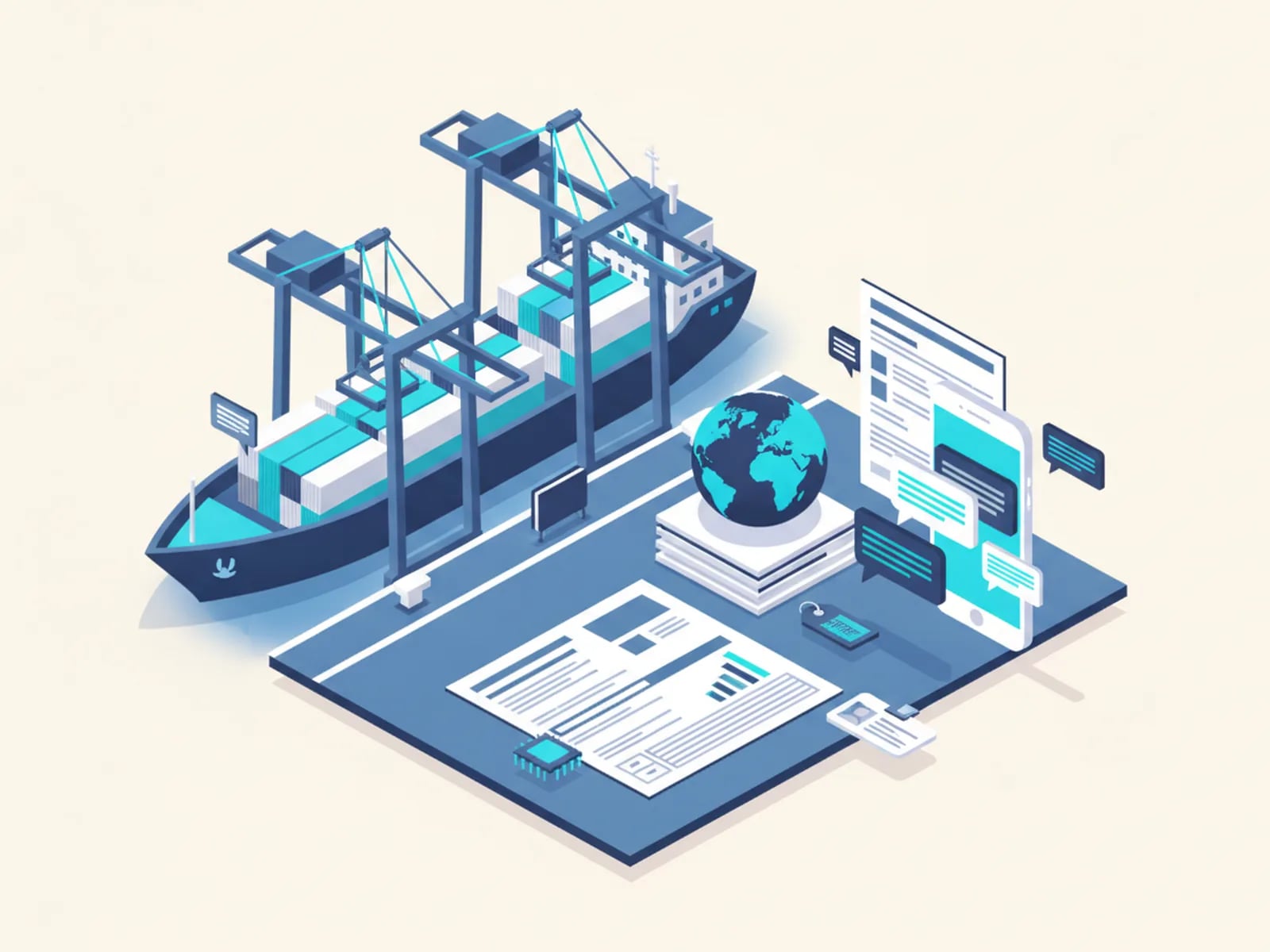
Freight crosses borders. English-only software stalls at every one of them. Globaprom grew out of a 20-year translation business, so we build for several languages by default, which few logistics software developers can say.
It pays off in three places:
- Customs documentation. Commercial invoices, packing lists and certificates of origin often have to be in the destination country's language, with the right Incoterms (EXW, FOB, DDP and the rest, which set who pays and who carries the risk at each stage). We generate that paperwork, translated and correct, straight from your shipment data.
- Driver and warehouse apps. Mixed-language crews are normal in European and North American trucking. A proof-of-delivery app your drivers can't read gives you bad data. Ours speak every language your crews do.
- Partner and client portals. Forwarding is a relationship business. A quote portal in your client's language wins deals that an English-only portal quietly loses.
None of this gets bolted on later. Externalized strings, Unicode-safe storage and locale-aware dates and currencies are in from the first commit, the same multilingual software engineering behind every build we ship.
Cost: Custom Logistics Software vs. Enterprise TMS Licensing
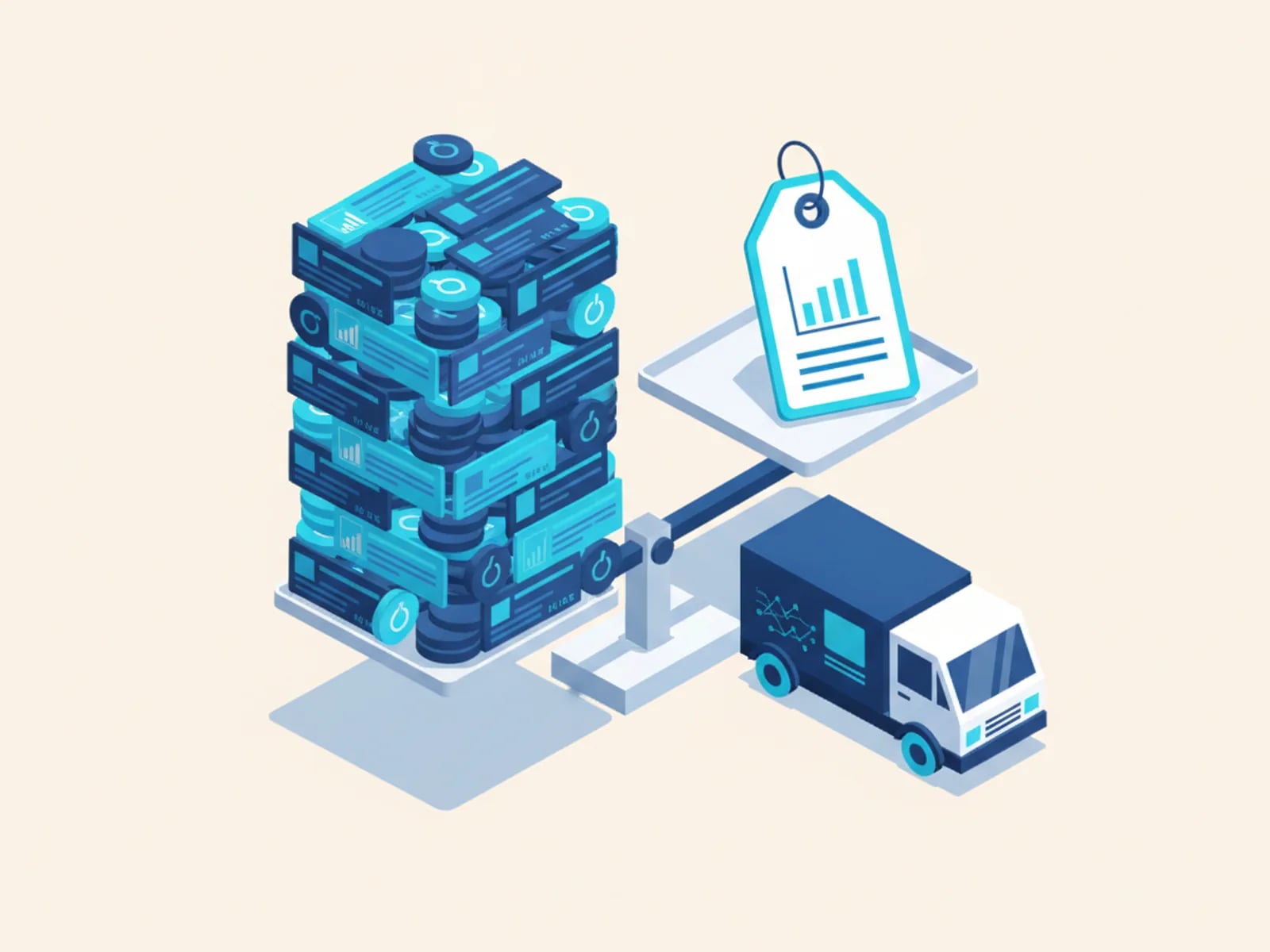
You pay for a custom build once, at a fixed price, and you own it. Enterprise TMS licensing is a subscription that grows with your volume for as long as you use it. Which is cheaper comes down to fit. If a platform covers 95% of your operation, license it. If you pay enterprise fees and still run spreadsheets on the side, building the missing pieces usually wins.
Here's how the two compare, factor by factor:
- Pricing model. Enterprise TMS/WMS licensing: a recurring subscription, often per user, per shipment or per site. Custom build (AI-assisted): one fixed price, quoted before the build starts.
- Cost in years 2, 3 and 4. Licensing: the same or higher (tiers, modules, indexation). Custom build: an optional care plan, and nothing mandatory.
- Fit to your workflow. Licensing: you adapt to the platform. Custom build: the tool is scoped to your exact process.
- Customization. Licensing: vendor change requests or certified consultants, billed separately. Custom build: included in scope, with later changes quoted at a fixed price.
- Integrations. Licensing: supported partners only; the rest cost extra or stay manual. Custom build: any system with an API, EDI or file exchange.
- Languages. Licensing: major languages, often as an enterprise add-on. Custom build: any language, i18n-first, included by default.
- Code and data ownership. Licensing: the vendor owns the platform and you export your data on exit. Custom build: you own the code, the repository and the data outright.
- Time to live. Licensing: enterprise implementations typically take months. Custom build: 3–6 weeks from approved scope for most builds.
Two honest caveats. You own custom software, so someone has to run it; our care plans cover that, but they're optional and priced separately. And a full global TMS replacement isn't a six-week project. Custom builds shine on focused tools and on the integration layer around a platform you keep.
For price ranges by project type, see what custom software costs in the AI era.
Case Study: Freight-Monitoring Portal for Texas International Freight
Client: Texas International Freight, a US-based freight forwarder.
The problem. Shipment status lived in inboxes and phone calls. Staff spent hours every day answering "where is my shipment?", and customers had no way to check for themselves.
What we built. A freight-monitoring portal that shows the internal team and their customers the real-time status of every shipment, so customers self-serve instead of calling in. Delivered in weeks, not quarters.
The outcome. The portal removed roughly 3 hours of manual status-chasing per day. The team now spends that time on actual forwarding work.
Logistics Software Guides
Weighing up one specific tool? Each guide covers when to buy, when to build, and what a build costs:
- Freight tracking software: real-time visibility portals, SaaS vs. custom.
- Custom TMS development: when off-the-shelf transportation software is not enough.
- Warehouse management system for small business: a lean WMS without enterprise pricing.
- Route optimization software: how custom routing tools cut fleet costs.
- EDI integration services: connecting carriers, shippers and 3PLs.
- Last mile delivery software: custom driver apps and proof-of-delivery tools.
- Supply chain visibility software: one screen for every shipment.
- Freight forwarding software: quotes, customs documents and client portals.
Frequently Asked Questions About Custom Logistics Software
How much does custom logistics software development cost?
A focused logistics tool (a tracking portal, a dispatch board or an integration layer) is a fixed-price build, quoted before work starts. With AI-assisted development the total typically comes in below one to two years of equivalent enterprise licensing. The price depends on integrations, user roles and languages. Request a quote for a concrete figure and date.
How long does it take to build a custom TMS or WMS tool?
Three to six weeks from approved scope to production for most builds, with about a week of scoping before that. You see working software within the first two weeks. Larger scopes (several integrations, many user roles, many languages) take longer, but the delivery date is fixed in writing before we start.
Can custom logistics software integrate with EDI and carrier APIs?
Yes, and it usually has to. We build API-to-EDI middleware for trading partners on ANSI X12 or EDIFACT, direct carrier API integrations for rates, booking and tracking, telematics feeds for live vehicle data, and ERP synchronization with systems like SAP and NetSuite. Every integration ships with error handling, retries and monitoring.
Should we build custom logistics software or license an off-the-shelf TMS?
License when a platform fits at least 95% of your operation. Build when you pay enterprise fees and still run spreadsheets and manual workarounds next to the system. Often the right answer is both: keep the platform for the standard core, and build custom tools for the workflows and integrations it can't cover.
Do you build multilingual driver apps and partner portals?
Yes, it's our specialty. Globaprom grew out of a 20-year translation business, so multilingual delivery is native to how we build. Driver apps, warehouse interfaces, customs document automation and client portals ship localized in the languages your crews and partners actually use, with professional translation built into the pipeline.
Who owns the software after delivery?
You do, completely. We hand over the source code, the repository, the deployment configuration and the documentation. No per-user licenses, no per-shipment fees, and no dependency on Globaprom. Optional care plans cover hosting, monitoring and small changes, but the tool keeps running whether or not you take one.
Tell us what's slowing your operation down
Describe the tool, integration or portal you need. We turn it into a fixed scope, a fixed price and a delivery date measured in weeks, before you commit to anything.