How Long Does Custom Software Take to Build? Weeks, Not Quarters
Date Published
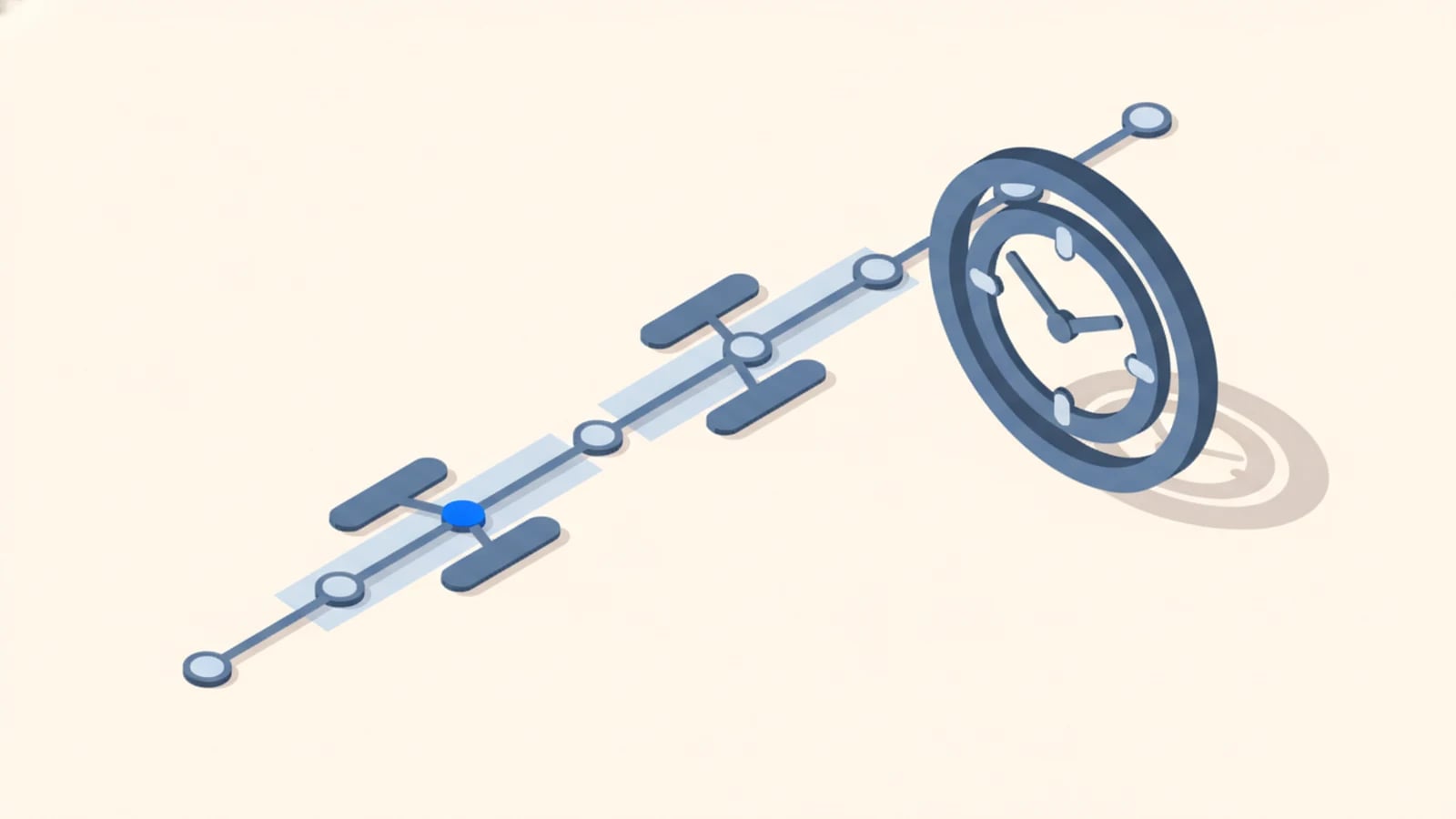
Most custom business software now takes weeks, not months. A workflow automation ships in two to three weeks, a custom web app in three to six, a multilingual platform in five to eight. AI compresses the writing time that used to dominate the schedule, while the parts that protect you, scoping, review, and testing, still take real human effort.
The old answer to this question was "several months, maybe a year," and it kept a lot of businesses from building the tools they needed. That answer is out of date. For the practice behind the compression, see vibe coding and AI-assisted development.
Why the Old Timelines Were So Long
Traditional custom software took months to quarters for one dominant reason: an engineer typed every line. The schedule scaled with the size of the codebase, because writing code was the bottleneck, and everything else queued behind it.
AI coding tools broke that bottleneck. A senior engineer can now direct a model to generate most of a feature's code in minutes, then spend their own time on the work that still needs a human. The writing stopped being the long pole in the schedule. What is left is the engineering around it, and that is a much shorter list of hours. The compression is real and it is large, which is why "weeks, not quarters" is a statement of fact for most business software rather than a slogan.
Real Timelines by Project Size
Globaprom quotes three fixed-price packages, each with a typical delivery window measured from an approved scope. These are the same windows on our fixed-price packages, not estimates invented for the occasion.
Workflow automation: 2 to 3 weeks. A single process automated end to end: document assembly, data re-keying between two systems, an approval chain, a scheduled report. Short, because the scope is contained and the integrations are few.
Custom web app: 3 to 6 weeks. The tool your team currently forces into spreadsheets or an almost-right SaaS product: a booking system, a quoting tool, a client portal, an internal dashboard. Longer, because it carries authentication, roles, an admin area, and usually a couple of integrations.
Multilingual platform: 5 to 8 weeks. A customer- or partner-facing product built to run in more than one language, with localized interfaces, a translation pipeline, and multi-currency, locale-aware formatting. Longest of the three, because every layer has to work across languages and markets.
Most projects land inside one of these bands. The window starts when the scope is approved, which is why the scoping conversation is worth doing carefully rather than fast.
Where the Weeks Actually Go
Most buyers are surprised to learn that the AI-generation step is the shortest part. The schedule is dominated by everything around it.
Scoping comes first, and it sets the clock. Before any code is generated, the features, the price, and the delivery date get written down and approved. Rushing this is the most reliable way to make a project longer, because unclear scope produces rework, and rework is where timelines slip.
Generation is fast. With a clear scope, the AI produces the bulk of the code quickly. This is the step that used to take months and now takes a fraction of the schedule.
Review and testing take real time, on purpose. A senior engineer reads every line, the test suite gets written and run, dependencies get scanned, and security gets checked. This is deliberate human time, and it is the reason the software is something you can run a business on rather than a demo. The full sequence is documented in how we scope, build, and review.
Handover closes it out. Documentation, deployment, and full code ownership transfer to you. Short, but real.
Time and cost move together here, because both are driven by the same compression. The pricing side of the same story is in our AI software development cost breakdown.
What Makes a Build Take Longer
Three factors move a project toward the top of its band, or beyond it.
Integrations. Every system the software has to talk to adds time. A clean, documented API connects quickly. A legacy format like EDI, or a system with no real API, takes longer because the connection itself has to be engineered. A single tricky integration can add more time than a handful of straightforward screens.
Compliance. GDPR data handling, PCI DSS scope on payments, audit trails: all buildable, all faster when scoped upfront rather than discovered halfway through. Compliance discovered late is the classic cause of a slipped timeline on any project, AI-assisted or not.
Localization and complexity. Extra languages add content and testing work. More user roles, more data to migrate, and offline-first mobile requirements each add engineering. None of it is hidden; it all shows up in the written scope you approve before the clock starts. This is exactly why custom logistics software, with its cross-border formats and carrier integrations, tends to sit at the longer end, while a focused tool for a small team lands at the shorter end.
The Fastest Path: Start With an MVP
If speed is the priority, the shortest route to something real in front of users is a deliberately minimal first version. Instead of building every feature at once, you build the core that proves the idea, ship it in weeks, and expand from what you learn. That is the model behind MVP development with AI, and it is the right call when validating demand matters more than launching complete. A great deal of custom software for small business is best started this way: prove it works, then grow it.
A Realistic Timeline From First Call to Launch
End to end, a typical small-to-mid project runs like this. A scoping call and a written scope take a few days, including your time to review and approve. The build, generation plus review plus testing, runs the two-to-eight-week window for its package size. Handover adds a few days. So from "we should build this" to "it is live," most projects measure in weeks, with the exact number set by scope size, integrations, and compliance, all known before you commit.
Frequently Asked Questions
How long does it take to build custom software?
Most business software takes weeks with AI-assisted development: 2 to 3 weeks for a workflow automation, 3 to 6 for a custom web app, 5 to 8 for a multilingual platform. AI compresses the writing time, while scoping, review, and testing still take deliberate human effort.
Why is AI-assisted development faster than traditional development?
Because the AI generates most of the code in minutes instead of an engineer typing it over months. Writing used to be the bottleneck. Once it is removed, the remaining work, scoping, review, testing, is a much shorter list of hours, so months compress into weeks.
How long does it take to build an app specifically?
A focused web app typically takes 3 to 6 weeks from an approved scope. The range depends on how many integrations it needs, whether it handles payments or personal data, and how many user roles and languages it supports. All of that is known before the build starts.
What makes a software project take longer than estimated?
Unclear scope first, then difficult integrations (legacy formats, systems with no API), compliance discovered late, and added languages or user roles. A fixed written scope prevents most overruns, because the factors that lengthen a build are named and priced before any code is generated.
Can custom software be built in a few days?
A rough prototype, yes. Production software you can run a business on, no: review, testing, and security take real time, and skipping them only looks faster until the first incident. The honest floor for reviewed custom software is a couple of weeks.
Does a fixed delivery date mean cutting corners?
No. The date is set against a fixed scope, and review and testing are inside that scope, not sacrificed to hit it. If a build runs long, we absorb it. Our AI-assisted development services commit to the date and the review both.
Get a Real Delivery Date, Not a Guess
Timelines only mean something when they come with a fixed scope behind them. Tell us what you need built and we will reply with a written scope, a fixed price, and a delivery date measured in weeks, with every line reviewed by a senior engineer before it reaches you.