Custom Ecommerce Development
Custom ecommerce development starts where your platform stops keeping up: the theme can't express your catalog, checkout can't take a second currency, and every new market means another plugin that almost works. Globaprom builds the missing pieces (localized storefronts, multilingual catalogs, and the payment, tax and ERP integrations behind them) around the platform you already run. Fixed scope, fixed price, live in weeks.
We grew out of a 20-year translation business, so selling across borders is where we start. The same approach runs through all our custom software development services.
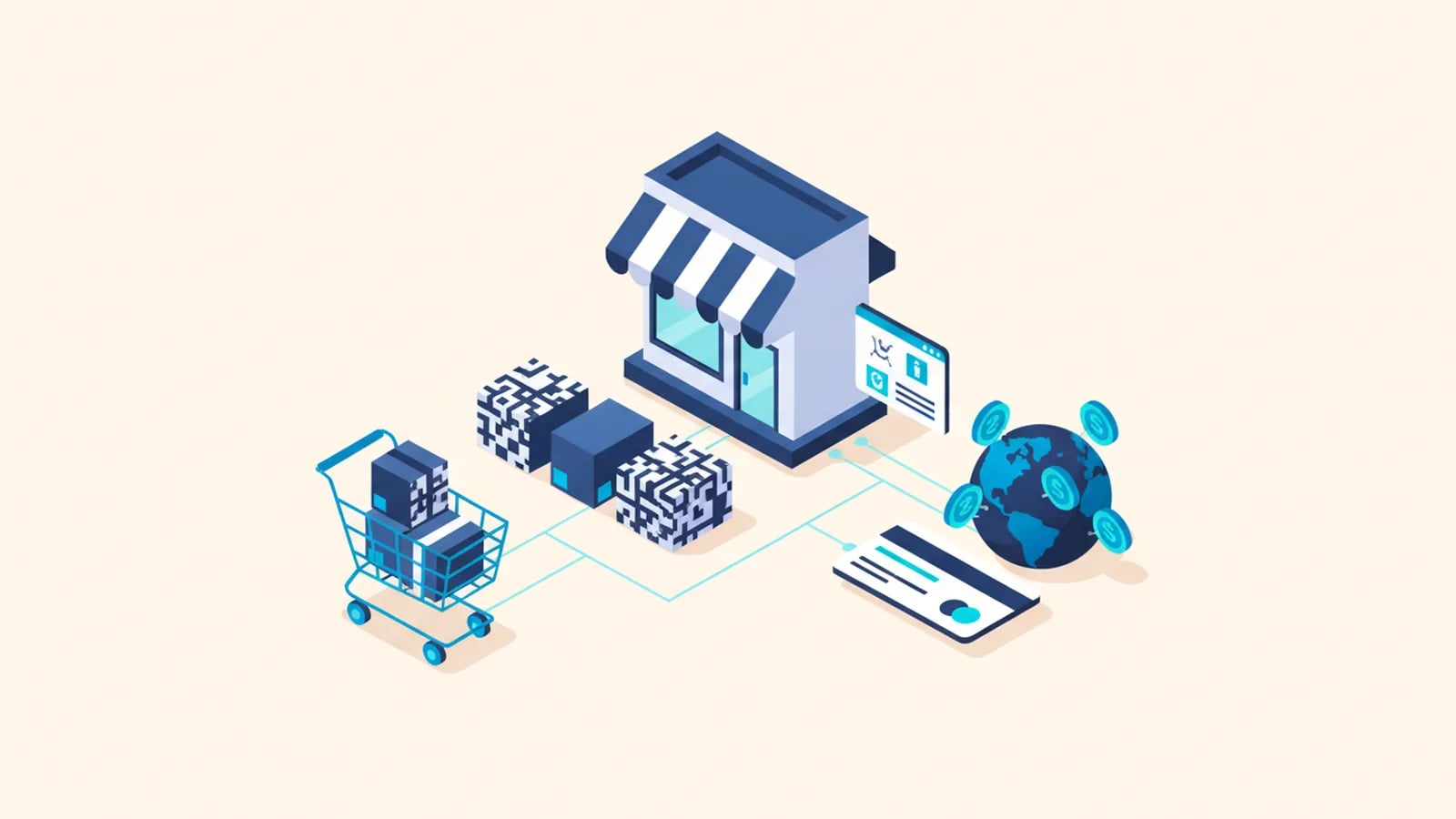
When Shopify, WooCommerce, and Magento Stop Fitting
Every ecommerce platform has a customization ceiling. Shopify, WooCommerce and Magento (now Adobe Commerce) handle the standard path well: one storefront, one language, one tax regime, a catalog that fits the template. Growth breaks that path, and it tends to break in the same places in every store we audit:
- Catalog complexity. Configurable products, B2B price lists or regional assortments that the platform's data model can't represent.
- Checkout gaps. A payment method, tax rule or shipping constraint your target market expects and your platform doesn't support.
- Plugin sprawl. Fifteen extensions patching gaps, each with its own subscription, its own conflicts and its own upgrade risk.
- Manual glue. Staff re-keying orders into the ERP (enterprise resource planning system) or pasting translations into the CMS by hand.
- Language walls. A storefront that only sells convincingly in English while your traffic reports say otherwise.
You don't need a new platform to fix any of these. You need custom software built around the one you have, extending it through its APIs (application programming interfaces) instead of fighting its templates. Your team keeps the admin it already knows, and the gaps close.
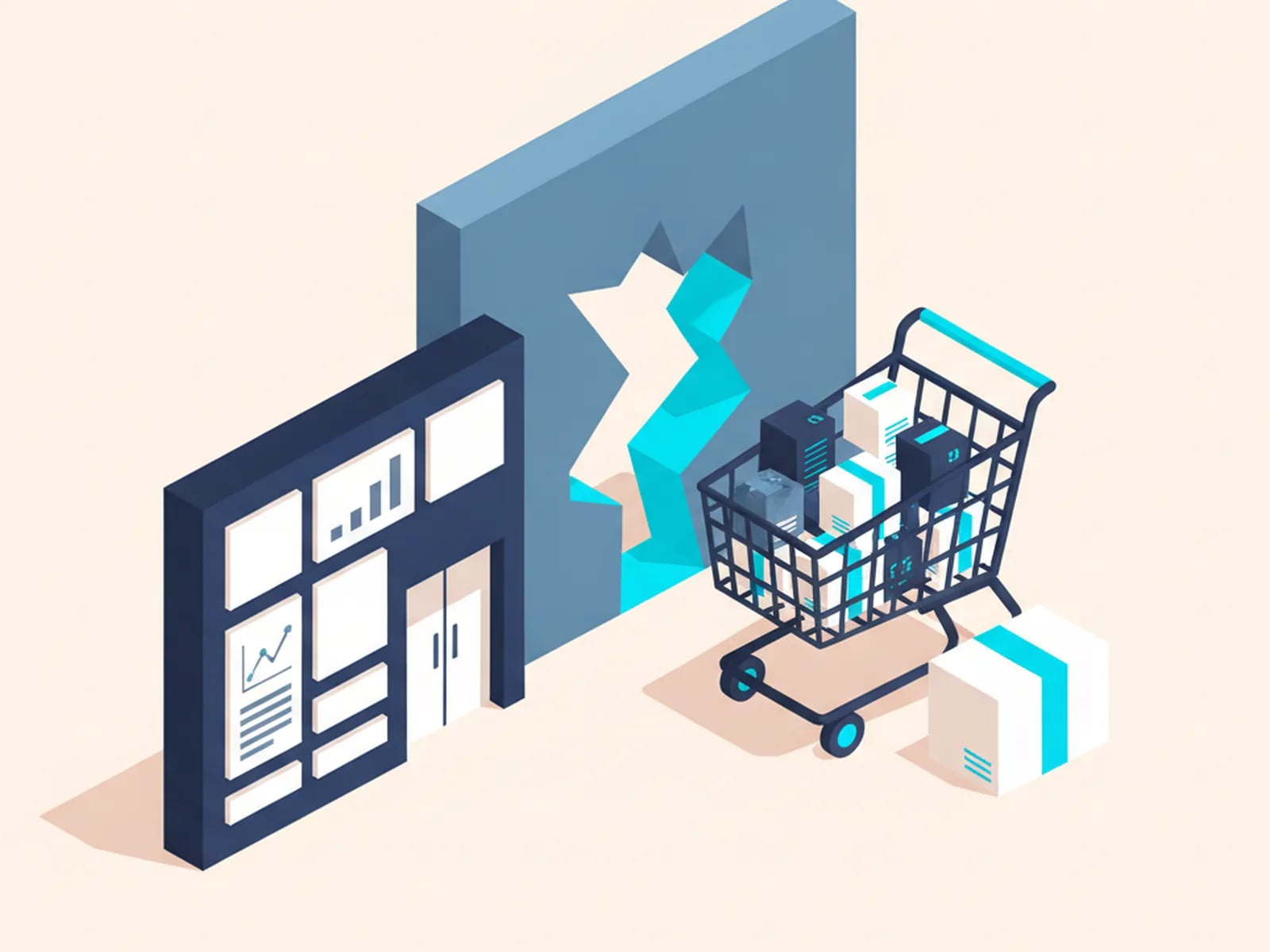
What We Build: Storefronts, Headless Builds, PIM, OMS, and Returns Portals
We build the custom layer around your commerce stack, one focused tool at a time:
- Bespoke storefronts. Custom ecommerce website development for when the theme store caps your conversion: product configurators, B2B ordering flows, regional storefront variants.
- Headless commerce builds. Headless commerce splits the customer-facing storefront from the commerce backend and connects the two by API, so you control design and speed completely. Headless commerce development covers when that pays off, and when it's overkill.
- Platform apps. Custom Shopify app development for the workflow gaps no app store listing covers: bundles, B2B pricing, custom shipping logic.
- PIM and catalog tools. A product information management (PIM) system keeps descriptions, attributes, images and translations in one place and feeds every channel from it. We build lean PIM software for small business and mid-size catalogs, translation workflow included.
- OMS dashboards. An order management system (OMS) pulls orders from every store and marketplace onto one screen, so nobody hunts through five admin panels. See our custom order management system builds.
- Returns portals. Self-service returns with localized labels, carrier integration and refund rules per market.
You approve the scope, the price and the delivery date before we write any code, and you own every line we hand over. The whole engagement is laid out in how we scope, build, and review.
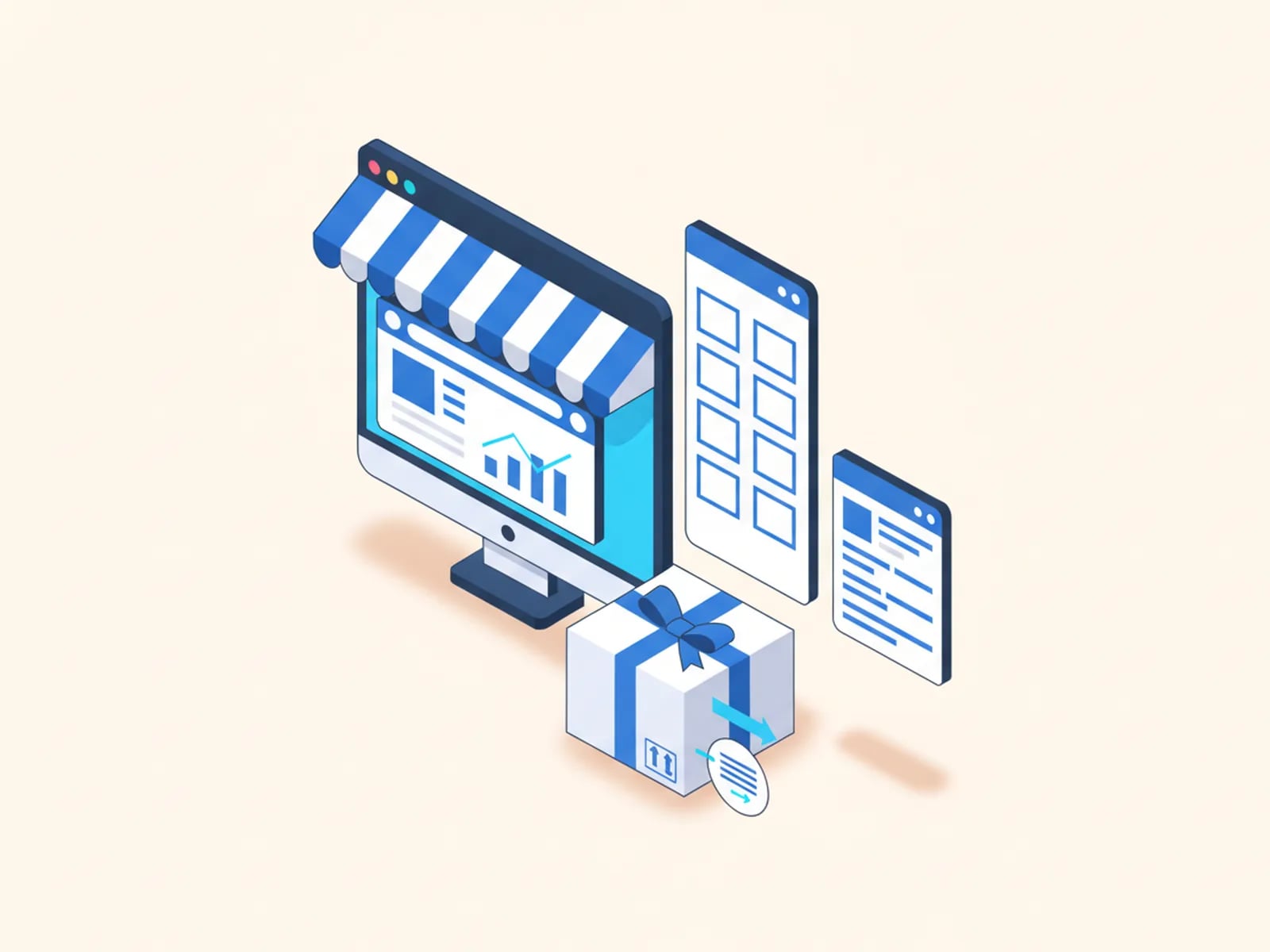
Cross-Border E-commerce: Localized Storefronts That Convert in Every Market
Cross-border stores rarely fail on strategy. They fail on details. The product is right and the demand is there, but the storefront reads like a translation, prices show in the wrong currency, and checkout asks for a ZIP code in a country that doesn't use one.
Language alone moves revenue. CSA Research's "Can't Read, Won't Buy" study of 8,709 consumers in 29 countries found that 76% prefer to buy products with information in their own language, and 40% will never buy from websites in other languages. For a store entering new markets, localization isn't polish. It's the gap between traffic and sales.
So we localize the whole storefront, not just the text:
- Local formats. Addresses, phone numbers, dates and name order that match the market.
- Multi-currency pricing. Prices set or rounded per market, with no surprise on the card statement.
- Local trust signals. The payment methods buyers expect, delivery promises with carriers they know, and legal pages that fit the market.
- Localized checkout UX. Field labels, validation and error messages that behave natively in each language.
We ran a translation business for two decades, and it shows: we get this right the first time. The cross-border ecommerce solutions guide covers the full market-entry stack, and building a multilingual ecommerce website goes deep on the storefront layer. Both rest on our multilingual software engineering: i18n-first architecture, with every language planned in from the first commit.
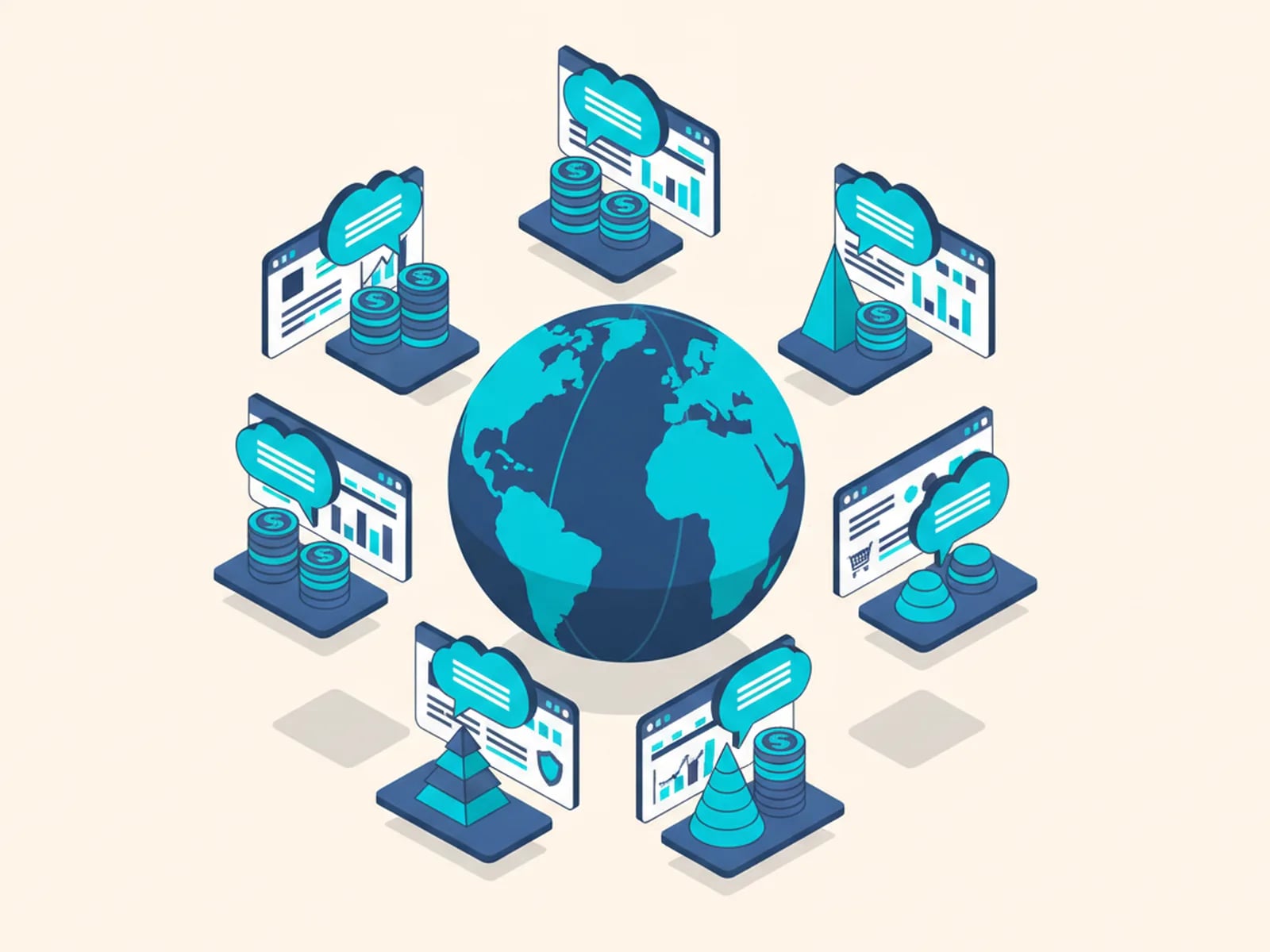
Multilingual Product Data: PIM, Catalog Translation Pipelines, and Hreflang Done Right
Multilingual ecommerce is a data problem first and a translation problem second. A 5,000-product catalog in four languages means 20,000 product records to create, update and keep in sync. Run that in spreadsheets and you fall behind within a quarter. Prices change. Descriptions get edited. Translations quietly go stale.
We fix it with three components:
- A PIM as the single source of product truth. Every attribute, description and image lives in one system, with per-language completeness tracking. Storefronts, marketplaces and feeds become exports, not separate copies.
- A translation pipeline instead of copy-paste. New and changed content flows to translators automatically (machine, human or hybrid, chosen per content type) and comes back into the PIM with version tracking. We ran these translation pipelines for our own translation work before we ever built one for a client.
- Hreflang done right. Hreflang is the HTML annotation that tells search engines which language and regional version of a page to show each user. Generated from catalog data, it's reliable. Maintained by hand across thousands of product URLs, it breaks, and Google serves the wrong language to the wrong market. We generate it in code and validate it in CI.
The payoff: you add a product once, and it appears described, priced and indexed in every market you sell to.
International Payments, Taxes, and Currencies: Stripe, Adyen, VAT OSS, Multi-Currency Pricing
Payments and tax are where cross-border stores leak the most revenue without noticing. Baymard Institute's checkout research puts average cart abandonment near 70%, and payment friction (a missing local method, an unexpected cost, a forced currency conversion) keeps showing up among the leading causes. Fix the checkout and you keep sales you already paid to attract.
We build the payments and tax layer as custom integration work:
- Payment gateways. A payment gateway authorizes and processes card and wallet payments. We integrate Stripe, Adyen and PayPal, including market-specific methods such as iDEAL, Bancontact and SEPA debit, and route each market to the methods its buyers expect.
- Multi-currency pricing. Per-market price books with controlled rounding, not a naive exchange-rate conversion. Your Belgian customer sees a Belgian price.
- VAT and OSS. EU VAT (value-added tax) on cross-border consumer sales is reported through the One Stop Shop (OSS), a single quarterly return covering every member state. We build the rate logic, the evidence capture and the exports your accountant needs, and plug in a tax engine where the catalog calls for one.
- PCI DSS scope control. PCI DSS (Payment Card Industry Data Security Standard) is the card industry's security standard. We design checkouts so card data never touches your servers: hosted fields and gateway tokens keep your compliance scope small.
Payment and customer data raise GDPR questions too. We explain how we handle both in AI-assisted development and compliance (GDPR, PCI DSS).

Integrations: ERP, 3PL and Fulfillment, Marketplaces, Carrier APIs
A storefront that doesn't talk to the back office creates jobs nobody wants: re-keying orders, reconciling stock in spreadsheets, answering "where is my order?" by email. We build the middleware that makes those jobs disappear.
- ERP and accounting. Orders, invoices, stock levels and customer records synced both ways between the store and systems such as SAP Business One, NetSuite, Odoo or Exact. Our ecommerce ERP integration guide covers the patterns, including error handling that survives a Black Friday order spike.
- 3PL and fulfillment. A 3PL (third-party logistics provider) warehouses and ships your orders. We connect their APIs for order push, stock sync and tracking updates back to the customer.
- Marketplace integration. Listings, stock and orders synced with Amazon, Zalando and other marketplaces. Manage the catalog once, sell it everywhere.
- Carrier APIs. Rate shopping, label generation and tracking with the carriers each market expects.
Every integration ships with logging, retries, monitoring and alerts. An integration that fails silently during your peak week is worse than none at all.
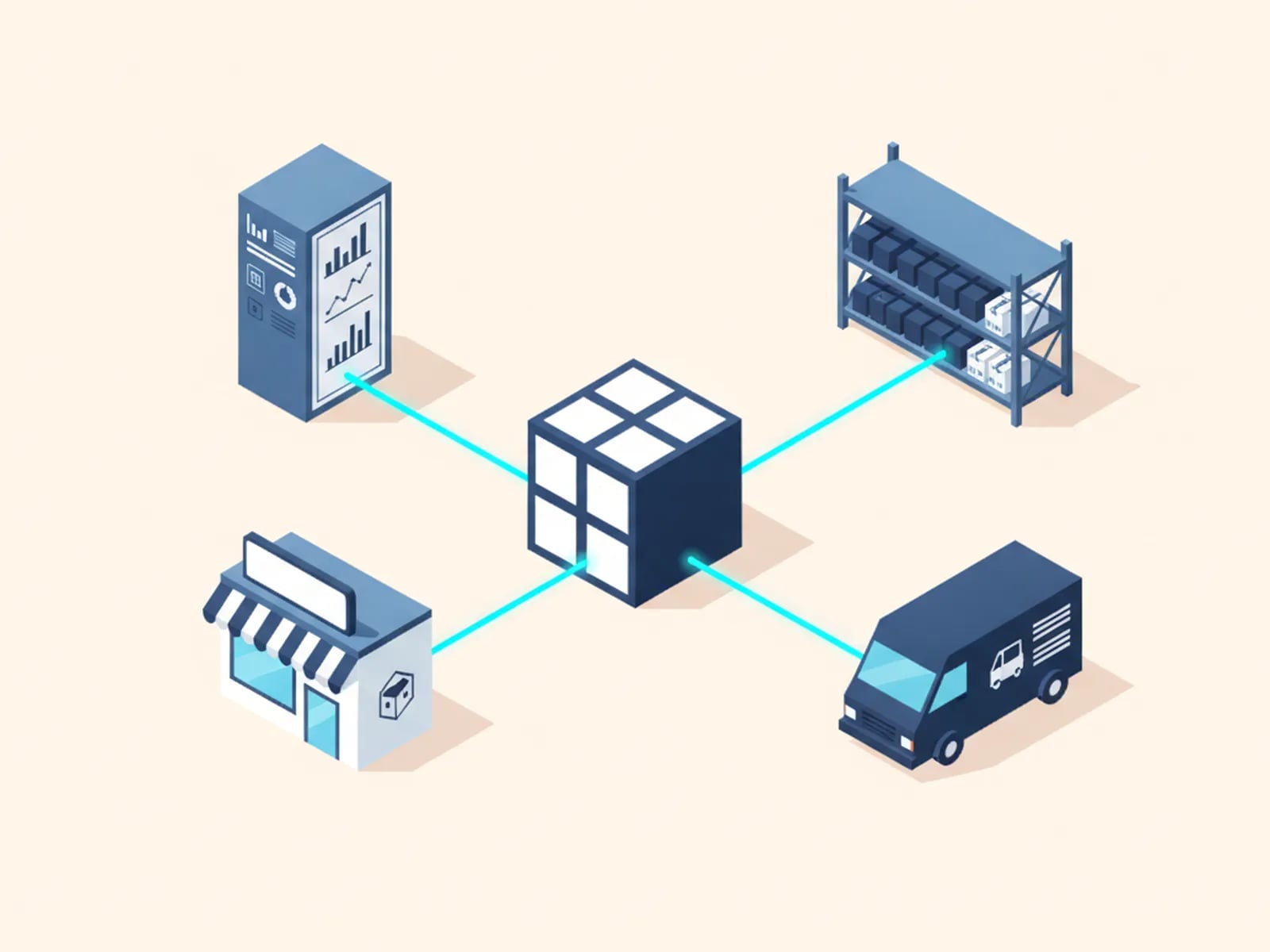
Cost and Timeline: Custom Ecommerce vs. Platform License Plus Agency Retainer
An honest comparison puts a custom build against the full stack most growing stores actually pay for: a platform license, plus apps, plus an agency retainer.
That stack usually combines a platform subscription, 10–20 paid extensions and a monthly retainer for changes. The recurring total often exceeds the one-time cost of building exactly the capabilities your business needs, and the store still doesn't fit.
AI-assisted development shrinks the build side. Our engineers direct AI coding tools to generate the software, then review, test and harden every line. Typical Globaprom timelines:
- Platform app or checkout extension: 2–3 weeks.
- ERP or 3PL integration: 3–4 weeks.
- Custom PIM with translation workflow: 4–6 weeks.
- Localized storefront (headless or platform-based): 5–8 weeks.
Each figure runs from approved scope to production, at a fixed price agreed before work starts. No hourly billing, no open-ended retainer, no per-seat fees on the finished tool. Request a fixed-price quote and we reply with a concrete figure and a date.

Frequently Asked Questions About Custom Ecommerce Development
How much does custom ecommerce development cost?
Most Globaprom e-commerce projects land between the cost of one year's platform-plus-apps subscriptions and a traditional agency's discovery phase. Exact price depends on features, integrations, and languages, and is fixed before work begins. A scoped integration starts lower than a full localized storefront; both are quoted as one figure with a delivery date.
How long does a custom ecommerce build take?
Weeks, not quarters. A platform app or single integration typically ships in 2–4 weeks; a custom PIM in 4–6 weeks; a fully localized storefront in 5–8 weeks. AI-assisted development compresses the build phase, while human engineers review, test, and harden everything before release.
Do we have to leave Shopify or WooCommerce to go custom?
No. Most of our e-commerce work extends an existing platform through its APIs: custom apps, integrations, PIM and OMS layers, localized storefront frontends. Replatforming is a last resort, not a starting point. We recommend it only when the platform's data model genuinely cannot represent your catalog or markets.
How do you make an ecommerce store multilingual?
We centralize product data in a PIM, connect a translation pipeline so new content flows to translators and back automatically, localize the storefront and checkout per market, and generate hreflang annotations programmatically. This architecture keeps every language current as the catalog changes: no copy-paste, no stale translations.
Can you handle international payments and VAT compliance?
Yes. We integrate payment gateways such as Stripe, Adyen, and PayPal with the local payment methods each market expects, build per-market multi-currency pricing, and implement EU VAT logic with One Stop Shop (OSS) reporting exports. Checkouts are architected so card data stays within the gateway, keeping PCI DSS scope minimal.
What is headless commerce, and do we need it?
Headless commerce separates your storefront frontend from the commerce backend, connected by APIs. It gives full design and performance control, at the cost of more moving parts. It pays off for multi-market, multi-channel, or high-customization stores; a single-market store with a fitting theme rarely needs it.
Sell in Every Market Your Customers Live In
Tell us about the gap in your commerce stack: the market you can't enter yet, the integration you keep patching, the catalog you still translate by hand. You get a fixed scope, a fixed price and a delivery date in weeks, before you commit to anything.