Custom Manufacturing & Field Service Software Development
Your ERP runs the orders. The shop floor still runs on clipboards, Excel and a whiteboard next to the machine. Globaprom builds the layer in between for plants, engineering companies and field service teams: maintenance systems, inspection apps, production dashboards and technician tools your crews will actually use.
Fixed price, delivered in weeks, and ready for every language your operators speak.
Why Industrial Teams Still Run on Spreadsheets, Whiteboards, and Paper
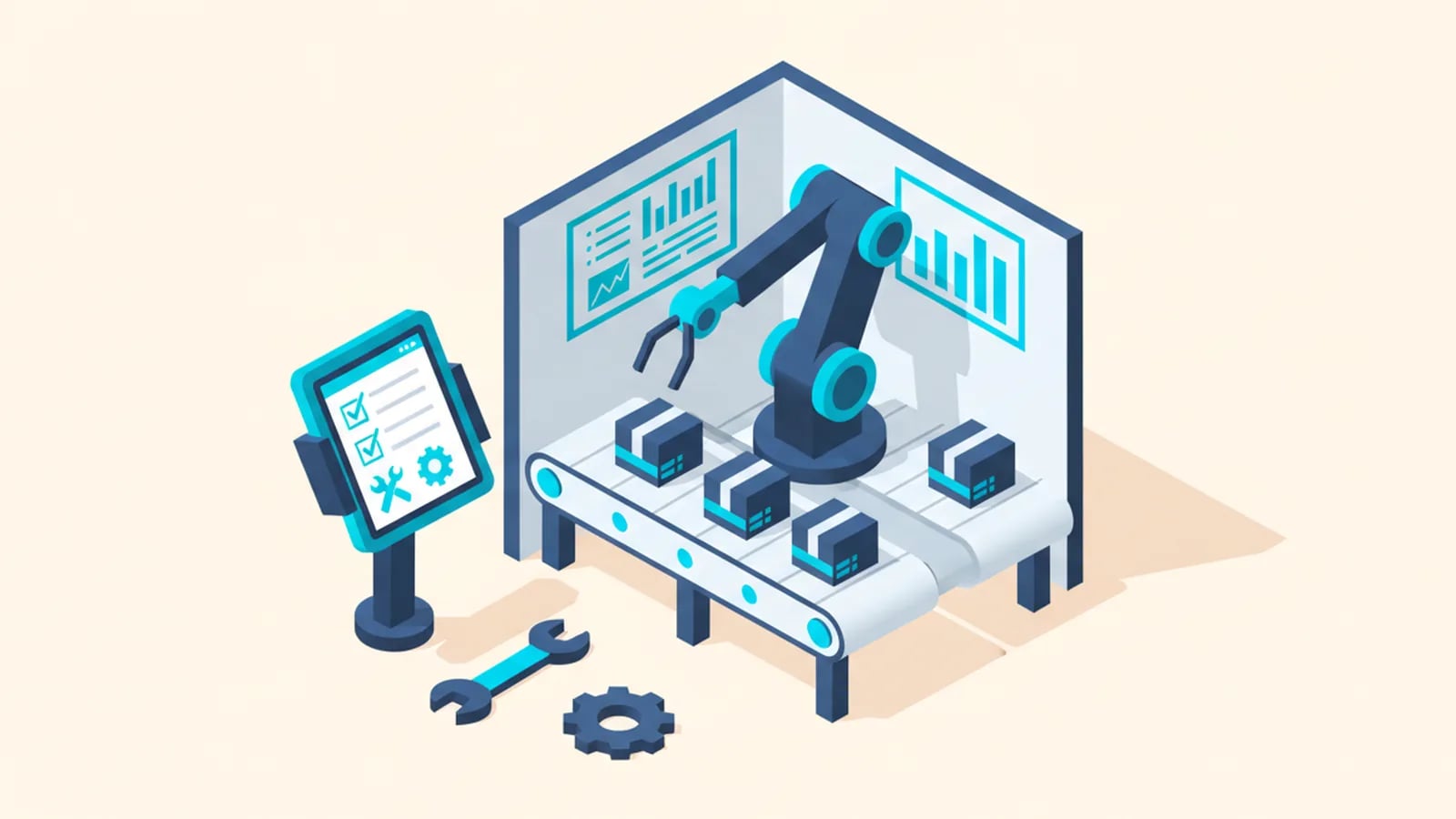
Most industrial software breaks down at the point of work. An enterprise resource planning (ERP) system such as SAP handles orders and inventory well. It was never built for the technician standing at the machine or the inspector out in the field. In Plant Engineering's maintenance study (2016), 52% of facilities still managed maintenance in spreadsheets and 39% on paper.
You probably know the rest. Work orders live in a binder. The production schedule is an Excel Gantt chart only one planner understands. Quality records are photos of forms on a shared drive, and machine data stays locked inside the supervisory control and data acquisition (SCADA) system, where nobody outside controls engineering can read it.
Industrial platforms promise a fix, priced and sized for enterprise. A 60-person job shop can't absorb a multi-year manufacturing execution system (MES) rollout, so the spreadsheets stay. So does the cost. Siemens puts unplanned downtime at $1.4 trillion a year across the world's 500 largest companies, with automotive plants losing $2.3 million per hour (True Cost of Downtime, 2024).
A custom tool changes that math. You digitize the one workflow that hurts, at a fixed price, without adopting a platform designed for someone else's factory.
What We Build: CMMS, Inspection Apps, Production Dashboards, Quoting Tools
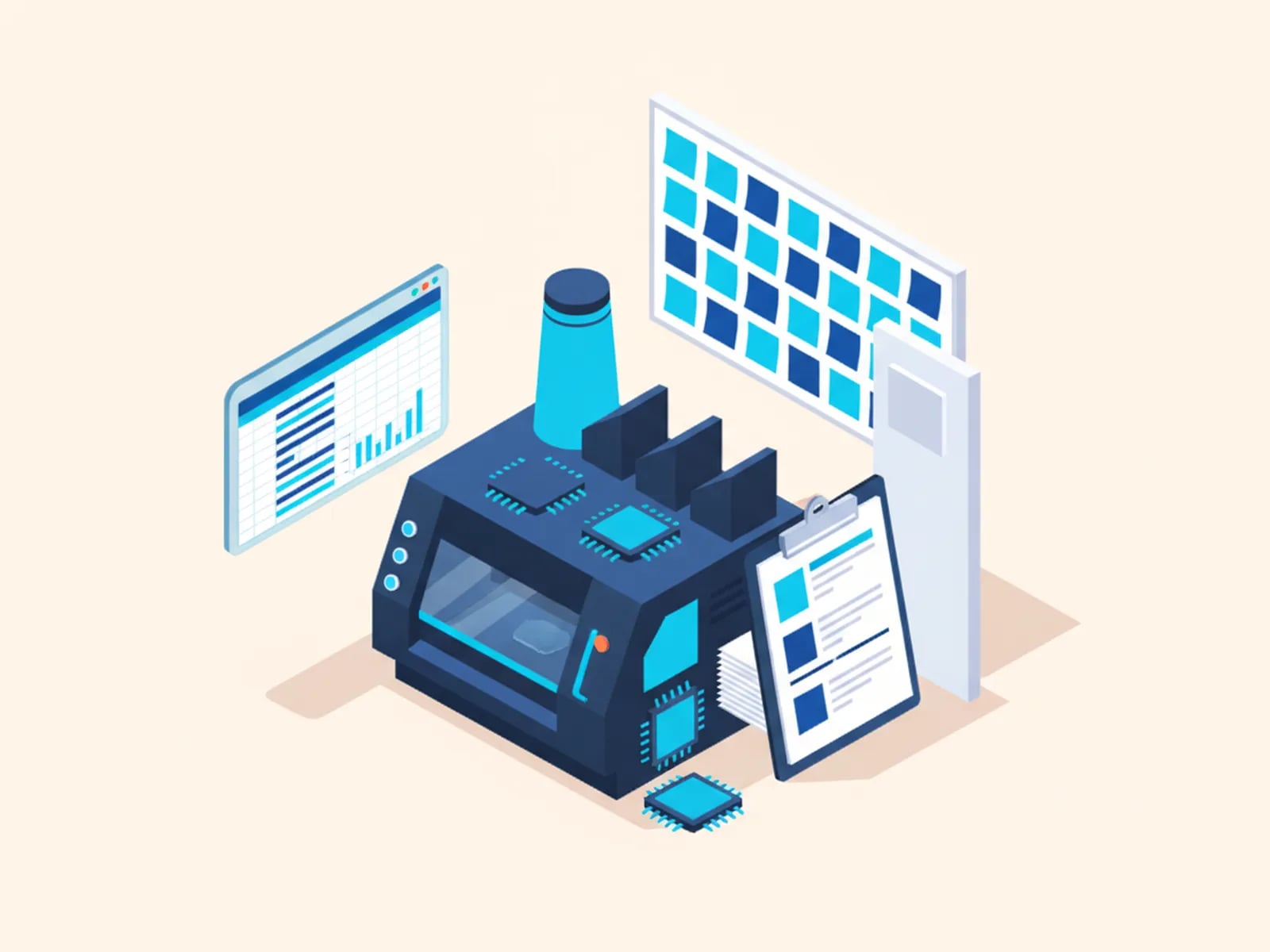
We build the operational tools that sit between your ERP and your shop floor. What plants and engineering firms ask us for most:
- Custom CMMS software: a computerized maintenance management system (CMMS) shaped to your asset hierarchy, with work orders, preventive maintenance schedules, spare-parts tracking and downtime logging.
- Custom equipment inspection apps: offline checklists with photos, e-signatures and instant PDF reports. The paper forms go in the recycling.
- Production scheduling software for manufacturing: finite-capacity scheduling for job shops, the step beyond the Excel Gantt chart your ERP can't replace.
- Building an OEE dashboard: overall equipment effectiveness (OEE) tracking that turns machine data into one screen for availability, performance and quality.
- Quality management software for small manufacturers: a quality management system (QMS) for non-conformance reports, corrective actions and ISO 9001 audit trails, without enterprise bloat.
- Field service management software for small teams: scheduling, dispatch and invoicing for 5–50-technician operations priced out of enterprise field service management (FSM) suites, a market MarketsandMarkets projects will reach $9.2 billion by 2030, growing about 12.5% a year.
- Digital work instructions software: visual, versioned, multilingual instructions at the workstation instead of laminated binders.
Engineering companies also bring us their quoting problem. We build estimating tools with your configuration logic, cost roll-ups and proposal documents generated from your actual rate tables. A quote that takes an estimator a day of spreadsheet work comes out in minutes, and every price traces back to a rate table your team controls.
There's no platform here and no modules to switch on. Each build starts from your workflow (your asset names, your shift patterns, your approval chain) and includes only what that workflow needs. That's why it ends up smaller, faster and cheaper than the industrial suite it replaces.
Every tool ships with role-based access, an admin area and full code handover, as part of our AI-assisted custom software development services.
Shop Floor to Top Floor: Connecting Machines, MES Data, and ERPs
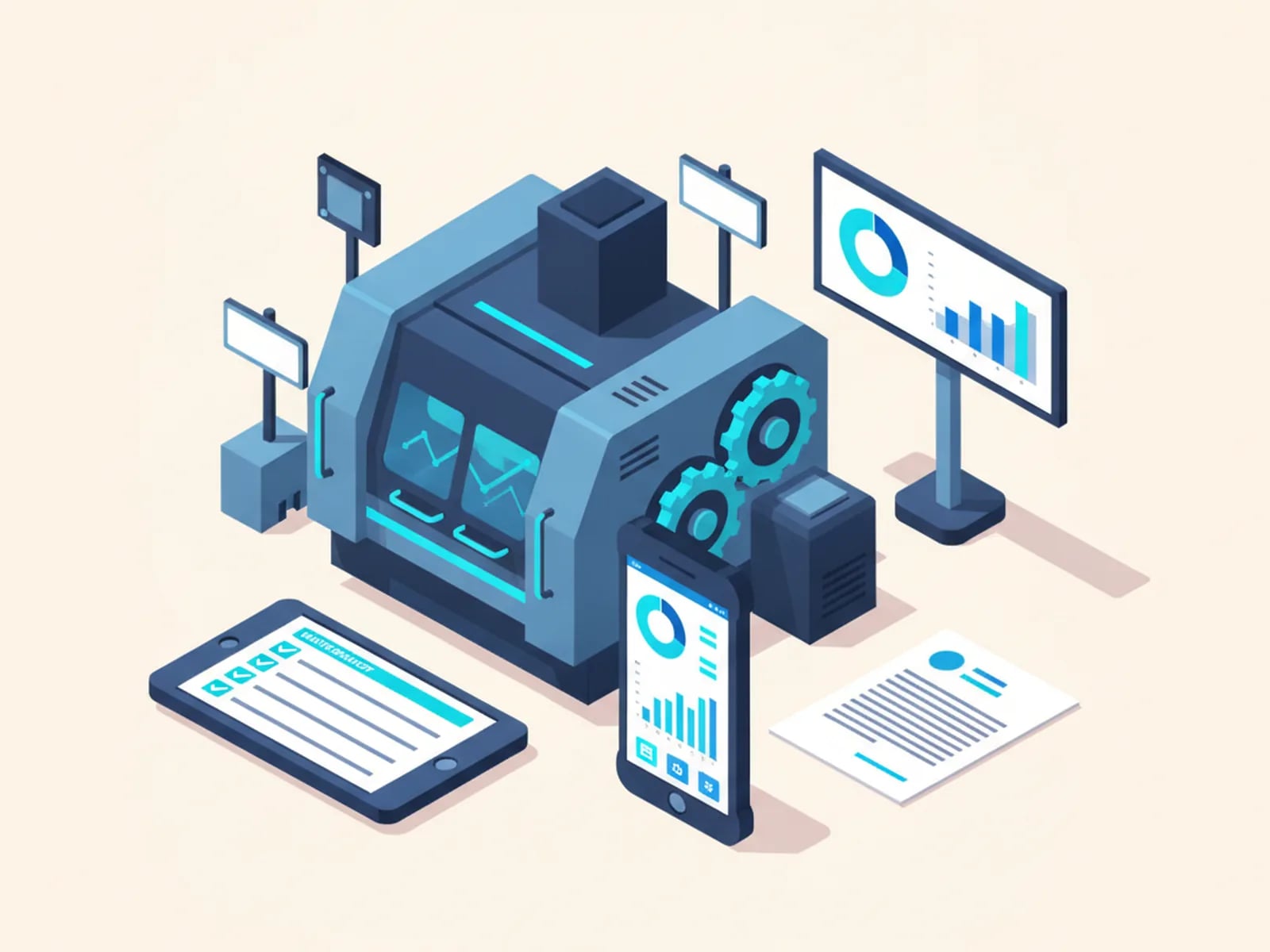
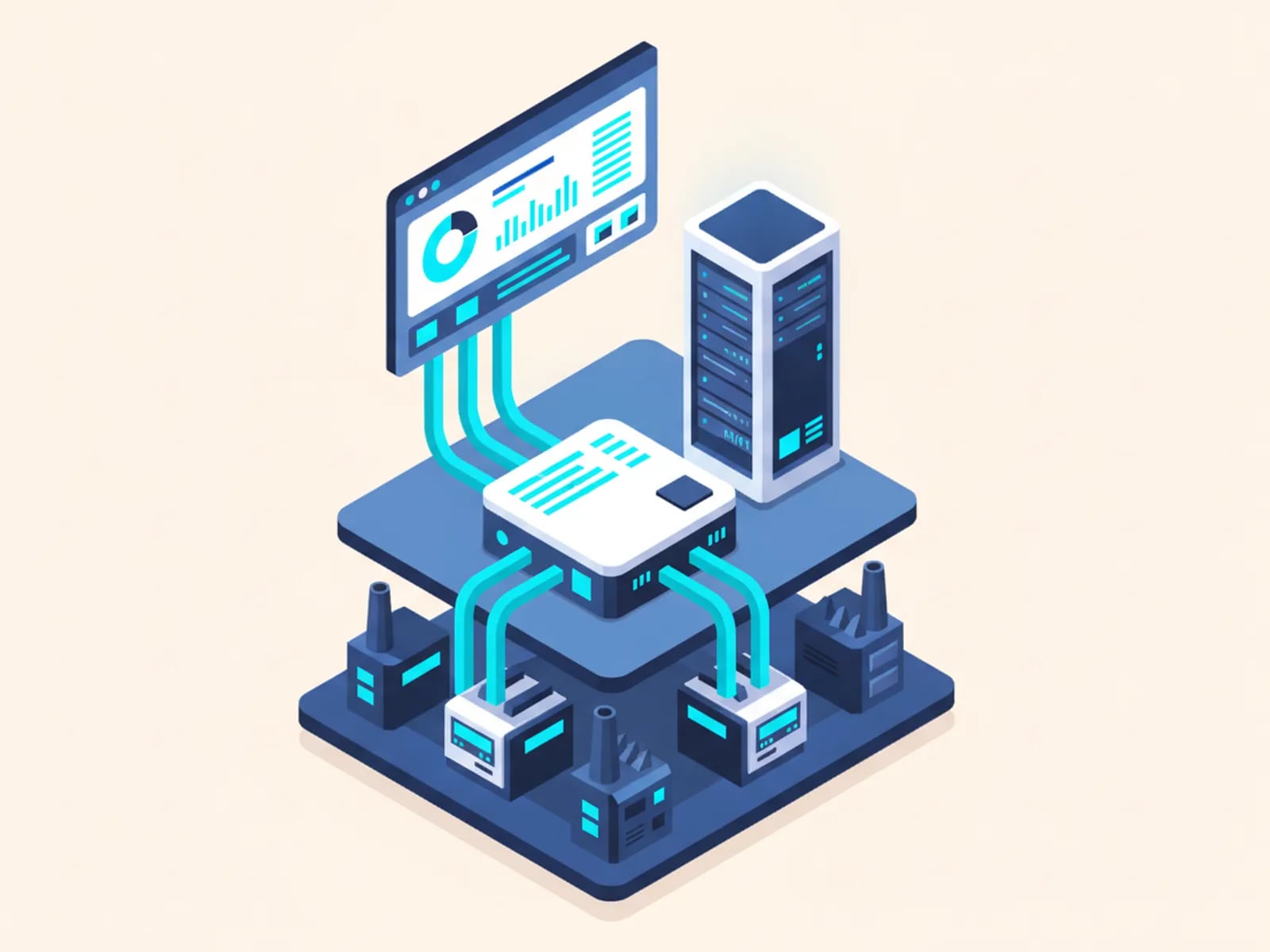
Custom software earns its keep by connecting the layers vendors keep apart. A typical plant has three: machines and their programmable logic controllers (PLCs) at the bottom, MES or SCADA data collection in the middle, the ERP on top. Today a report usually means someone re-keying data between all three.
We build the connections:
- Machine data capture. We read from OPC UA servers, MQTT brokers, PLC data logs or plain CSV exports, whatever your equipment already produces. Nothing gets ripped out.
- MES-lite workflows. Order tracking, operator terminals and production counts for plants that need MES functions without an MES project.
- ERP synchronization. Work orders, confirmations and inventory movements flow to and from SAP or your ERP through its APIs, with error handling and retries built in.
The payoff is one version of the truth. Your production manager sees live order status without calling the floor. Your maintenance planner sees machine hours without asking controls engineering for an export. When the integration is the whole job, our API integration services cover it on their own.
Field-Ready: Offline-First Mobile Apps for Technicians
Field tools have to work where the signal doesn't. Our technician apps are offline-first: work orders, checklists, manuals and photos live on the device and sync when the connection comes back. A basement plant room or a rural site never blocks the job.
A typical technician app includes:
- A work order queue with parts, history and site documents available offline
- Inspection checklists with photo capture, annotations and required fields
- Customer or supervisor e-signature on completion
- Automatic PDF report generation and dispatch once the device is back online
- Time and materials capture that flows straight to invoicing
Two technicians editing the same record is a design case with a defined outcome, not a bug report waiting to happen. We review that sync logic like every other part of a build (how we scope, build, and review). What you get: signed, complete reports in the office without anyone retyping a paper form.
Multilingual Operations: Work Instructions and Apps for Global Plants and Mixed-Language Crews
Operators don't use software they can't read. That's where most industrial tools quietly fail in global plants and mixed-language crews: an English-only interface, work instructions translated once and never updated, and a safety checklist that gets skipped.
Globaprom was built for this problem. We grew out of a 20-year translation business, and every tool we deliver is multilingual-ready from day one: externalized strings, Unicode-safe storage, locale-aware dates and units, and a translation pipeline that carries updated content into every language without copy-paste.
On the shop floor, that means:
- Digital work instructions that stay in sync across languages. When the master version changes, translations are flagged and updated, not forgotten.
- Operator terminals and technician apps with per-user language switching, so one deployment serves the whole crew.
- Inspection and safety checklists in each worker's language, with the answers normalized into one reporting structure for management.
One deployment for every plant, and instructions your crews can follow in their own language. It's the same multilingual software engineering we bring to every industry we build for.
IoT and Sensor Dashboards Without a Platform Mega-Project
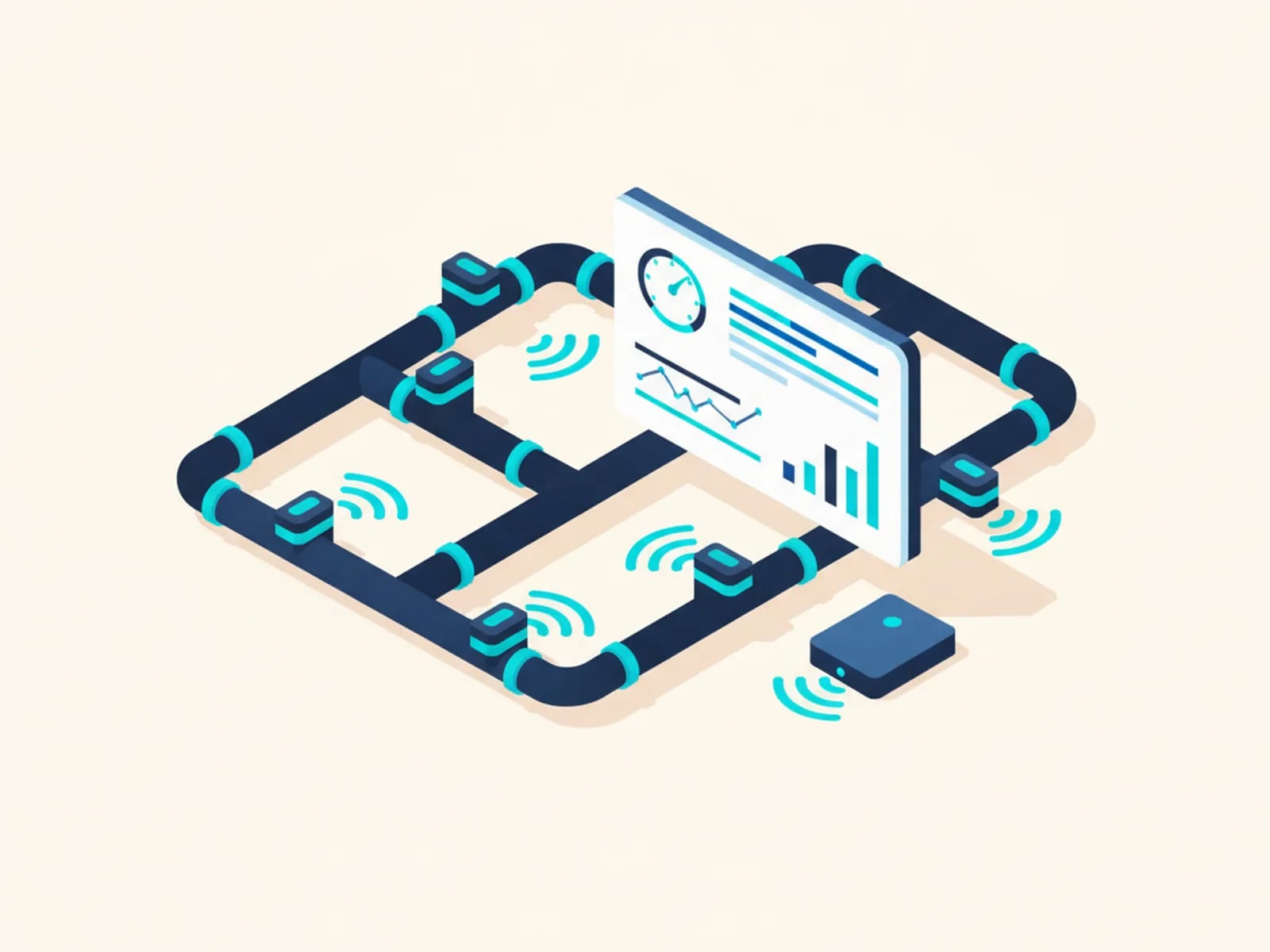
You don't need an Industrial Internet of Things (IIoT) platform to see your sensor data. Most plants need something far smaller: readings from a few dozen sensors, one dashboard, and an alert when a value drifts out of range.
That's the scope we build. Temperature, vibration, energy and counter data flows from your sensors or PLCs into a time-series store. The dashboard shows live values and trends, and sends threshold alerts by email or messaging app. A typical build takes a few weeks, not a platform program.
The same data feeds preventive maintenance. A sensor threshold can open a work order in your CMMS automatically, so a rising vibration reading becomes a scheduled intervention instead of an unplanned stop. When you outgrow the starter scope, the data model extends, and you're never tied to a vendor's device list or per-sensor pricing.
Put availability, performance and quality on the same screen and you have an OEE dashboard, built on the data you're already collecting.
Cost & Timeline vs. Industrial Software Vendors
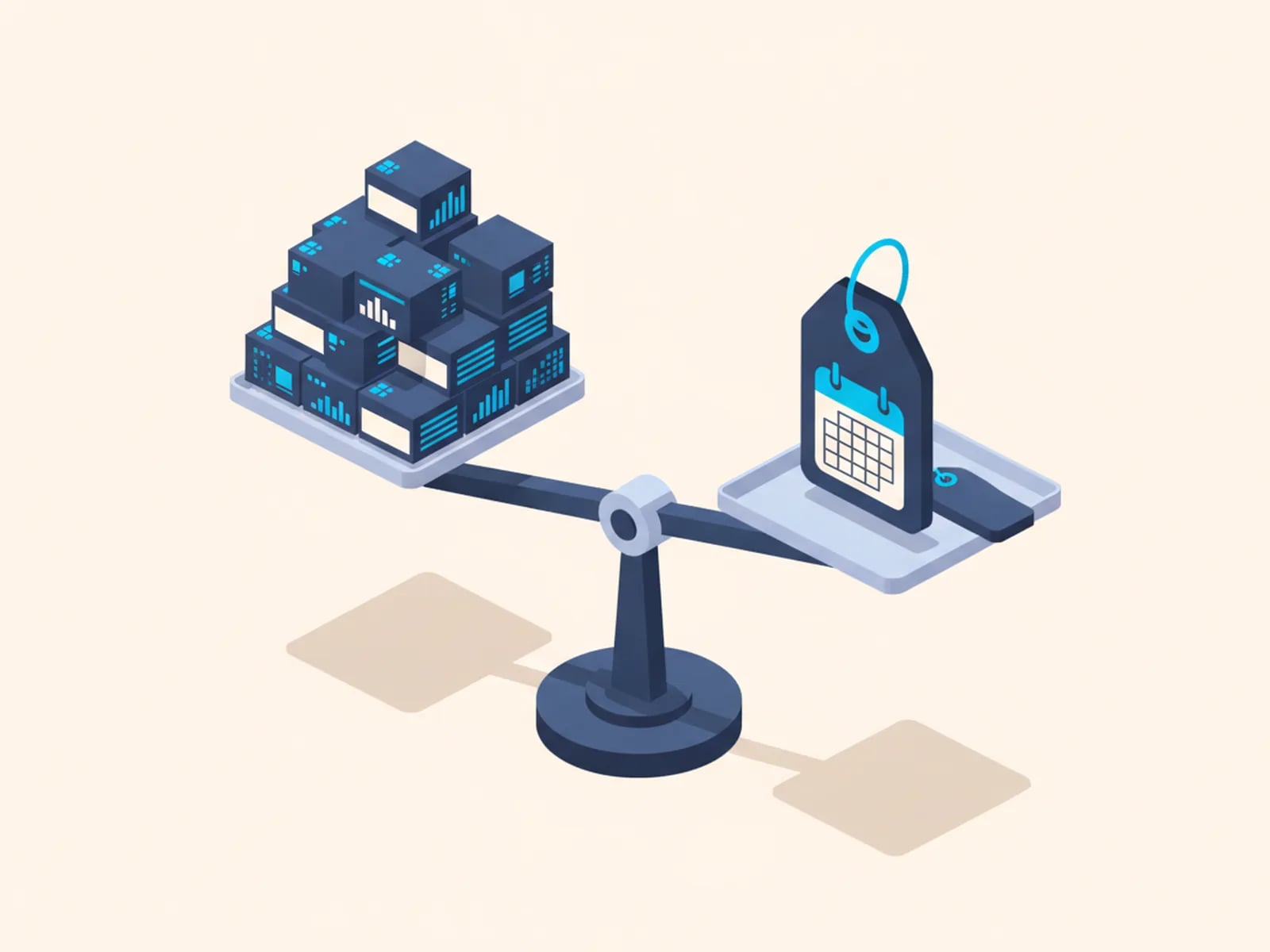
Over three years, custom manufacturing software now costs less than most industrial SaaS. AI-assisted development compresses the build from months to weeks, which removes the labor cost that used to make custom software an enterprise-only option. Full price ranges are in what custom software costs in the AI era.
How the two options compare:
- Industrial platform vendors (CMMS, MES, FSM suites) charge per user, per asset or per site, so the bill grows with you and never stops. The CMMS market alone was worth $1.3 billion in 2024 and grows about 11% a year (Grand View Research). Configuration and onboarding fees often rival the cost of a custom build.
- A Globaprom build is one fixed price, scoped to the workflows you actually run. You own the code outright. No per-seat fees, no per-asset fees, no forced upgrades.
Typical timelines from approved scope to production: an inspection app in 2–3 weeks, a right-sized CMMS or scheduling tool in 4–6 weeks, a machine-data dashboard with ERP integration in 3–5 weeks. You approve scope, price and delivery date before we write code.
Then there's doing nothing. Spreadsheets feel free, but you pay in re-keyed data, missed preventive maintenance and decisions made on week-old numbers. Count the hours your team spends each week moving data between paper, Excel and the ERP, and price them over a year. For most plants we talk to, that figure is bigger than the build.
Frequently Asked Questions About Custom Manufacturing Software
How much does custom manufacturing software development cost?
A scoped tool such as an inspection app or maintenance tracker typically costs a fixed one-time price comparable to one to two years of an industrial SaaS subscription. The exact figure depends on integrations, user roles, and languages. We quote scope, price, and delivery date before development starts.
How long does it take to build a custom CMMS or inspection app?
Two to six weeks from approved scope to production, depending on integrations. An offline inspection app is typically 2–3 weeks. A CMMS shaped to your asset hierarchy, with preventive maintenance schedules and ERP synchronization, is typically 4–6 weeks. AI-assisted development compresses the build phase; human engineers review everything.
Can custom software connect to our PLCs and SCADA system?
Yes. We read machine data through OPC UA, MQTT, database access, or file exports your equipment already produces, with no controls rework required. That data feeds dashboards, OEE calculations, and automatic work orders. Where direct access is restricted, we work from the historian or scheduled exports instead.
Do inspection and maintenance apps work without internet on the shop floor?
Yes. We build offline-first: work orders, checklists, photos, and manuals are stored on the device and synchronized when connectivity returns. Technicians complete jobs in basements, remote sites, or metal-shielded halls without interruption. Conflict handling is designed in, so parallel edits merge safely.
Can you build the software in our operators' languages?
Yes. This is our core differentiator. Globaprom grew out of a 20-year translation business. Interfaces, work instructions, and checklists ship in each crew member's language, with a translation pipeline that keeps every language current when content changes. One deployment serves all your plants.
Do we need to replace our ERP to add custom manufacturing tools?
No. We build alongside your ERP, not instead of it. Custom tools handle the shop-floor and field workflows your ERP ignores, then synchronize orders, confirmations, and inventory movements through its APIs. Your ERP remains the system of record; your teams stop re-keying data into it.
Take one workflow off paper
Describe the process that still lives on paper or in spreadsheets: maintenance, inspections, scheduling, quality or field service. You get a fixed scope, a fixed price and a delivery date in weeks, before you commit to anything.