Custom Software ROI: How to Calculate the Return Before You Build
Custom software ROI comes down to hours saved times loaded wage, minus build and running costs. The payback formula, a worked example, and what to count.
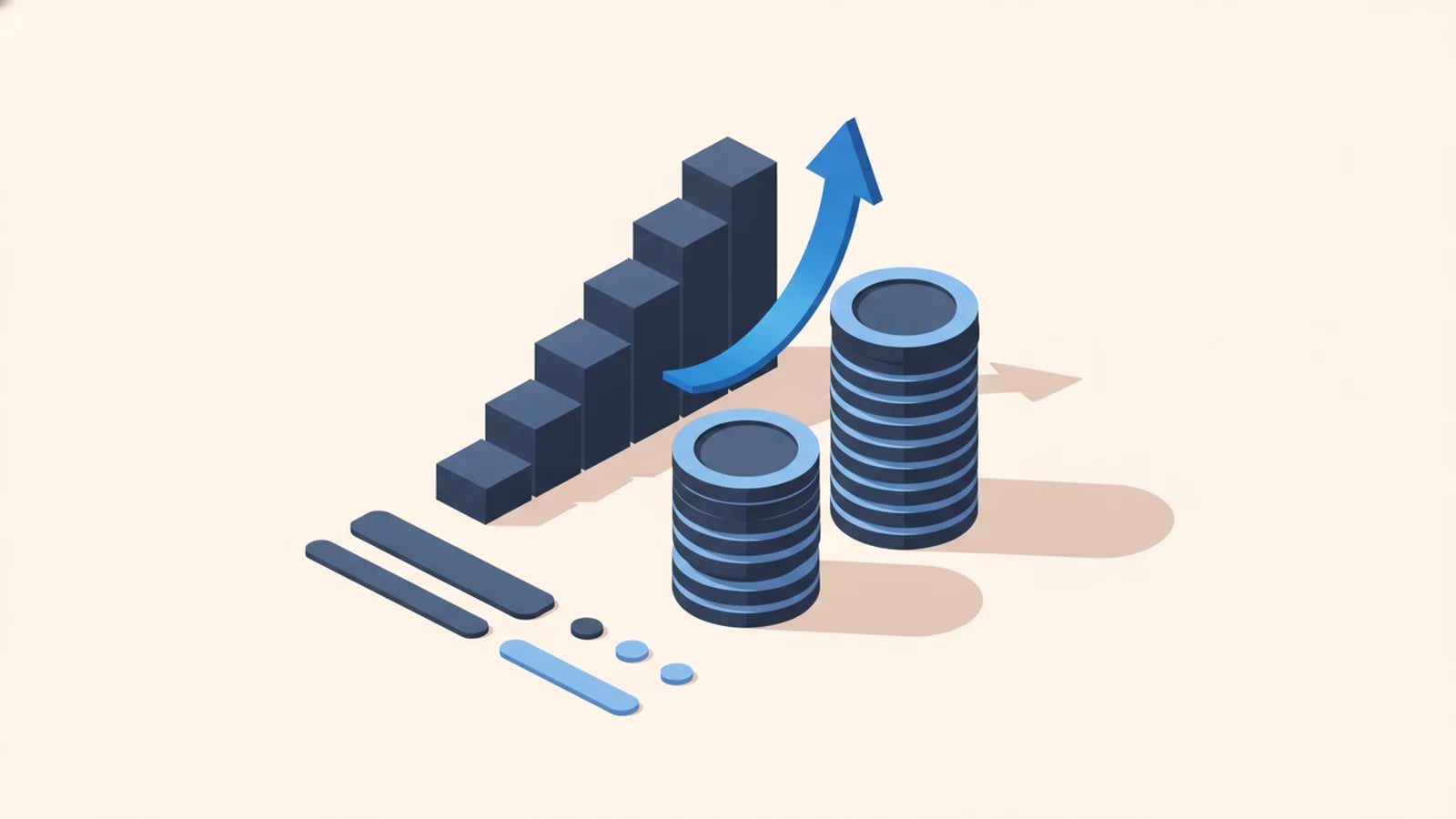
Custom software pays back when the value it creates each year exceeds what it cost to build and run. The value is usually hours: time a tool gives back to people who were doing a job by hand. Multiply those hours by what an hour of that person's time costs, subtract the build and running costs, and you have a return you can put in front of a CFO before you commit a euro.
That calculation is the difference between "this feels worth it" and "this pays for itself in four months." Whether a given price is worth paying is a return question, not a budget question, and it deserves a real number. Our guide to custom software development covers what a build costs; here the focus is the other half, working out what it's worth.
What ROI Means for a Software Build
Return on investment (ROI) is the value a build creates set against what you spent to get it. For custom software, the spend is easy to name and the value takes a little digging.
The spend has two parts: the one-time build cost, and the running cost after launch (hosting, occasional changes). Together those are the total cost of ownership, and a fair ROI uses the total, not just the build price. The value has several sources, but one dominates most builds: labor saved. A tool that removes a weekly manual task hands time back every week, and that time has a price. Name the hours, price them, and the return stops being a feeling and becomes arithmetic.
The Formula: Hours Saved Times Loaded Wage
The core calculation fits on one line.
Annual value = hours saved per week × 52 × loaded hourly cost of the person doing the work.
Two terms need care. "Hours saved per week" is the honest count of time the tool removes, not the optimistic one; watch a real week to get it. "Loaded hourly cost" is not the person's salary divided by hours. It's their fully loaded cost: salary plus payroll taxes, benefits, and overhead, which typically runs well above the base wage. Using the loaded figure keeps the return honest, because that's what the hour costs the business.
Then set annual value against total cost:
ROI = (annual value − annual running cost) ÷ build cost.
A build that returns more than its own cost in the first year has an ROI above 100% in year one, and keeps returning in every year after, because the build cost is paid once and the value recurs.
A Worked Example: A €1,500–4,000 Automation
Take the invoice-reconciliation problem we know first-hand, because we built it for our own operations. Our internal reconciliation platform matches supplier, utility, and invoice payments against purchase orders across two traditional banks, two neobanks, and PayPal. It replaced a manual, spreadsheet-driven process and saves roughly 10 hours a week.
Run the formula. Ten hours a week is about 520 hours a year. Suppose the person doing that reconciliation has a loaded cost of forty dollars an hour, a figure you'd swap for your own. That's roughly $20,800 a year in recovered time. A workflow automation of this kind sits in our €1,500–4,000 package range and ships in two to three weeks.
The result: the build pays for itself in a matter of months, and every year after that is almost pure return, minus a small running cost. The freight-tracking system we built for Texas International Freight tells the same story from a different process: it saves them about 15 hours a week (near three hours a day) of manual status-chasing. Different task, same shape of math. More of these are collected in our case studies.
Payback Period, Not Just Return
ROI tells you whether a build is worth it. Payback period tells you how fast, and it's often the number that gets a project approved.
Payback period = build cost ÷ annual value.
Using the reconciliation example, a build near the low end of its range against roughly twenty thousand dollars of annual recovered time pays back in a small fraction of a year. Even at the high end of the range, payback lands inside the first year. A rule of thumb from real builds: automations that remove several hours a week of skilled labor tend to pay back in months, not years, which is exactly why the smallest, most repetitive tasks are often the best first project.
Subscription Displacement Counts Too
Recovered hours are the biggest return, but not the only one. A custom tool often replaces one or more subscriptions, and those canceled fees are real, recurring savings.
If a build lets you drop a per-seat tool you were paying for, add that annual subscription cost straight into the value side of the formula. The same goes for the paid add-ons and integration tiers that made the old tool workable. For a team carrying a stack of overlapping subscriptions, displacement alone can cover a meaningful slice of a build's cost. We walk through where those charges hide in the hidden costs of off-the-shelf software, and compare the two models directly in custom software vs. SaaS.
The Returns That Don't Show Up in the Formula
Some of the strongest reasons to build resist a clean number, which doesn't make them worthless. Name them honestly and weigh them alongside the math, without dressing them up as false precision.
A reconciliation tool catches the mismatched invoice a tired reviewer waves through on a Friday afternoon; the cost of that error, prevented, is real but hard to predict. A faster quote turnaround wins deals you'd otherwise lose, but you can't count the ones that didn't get away. Software that removes tedious manual work also keeps good people from burning out on it. These belong in the decision as stated benefits, not invented figures. The rule we hold to: put a number on what you can measure, describe what you can't, and never manufacture precision to make a case look stronger than it is.
Frequently Asked Questions About Custom Software ROI
How do I calculate the ROI of custom software?
Multiply the hours the tool saves each week by 52 and by the loaded hourly cost of the person doing the work, to get annual value. Subtract annual running costs, then divide by the build cost. A first-year result above 100% means it pays for itself within the year.
What is a good payback period for custom software?
Many workflow automations pay back within months, because they remove several hours a week of skilled labor against a modest one-time cost. A payback period inside the first year is common and strong. Larger builds may take longer and still be worth it if the value recurs for years.
What is a loaded hourly cost, and why use it?
Loaded hourly cost is a person's full cost to the business: salary plus payroll taxes, benefits, and overhead, not just their base wage. Using it keeps ROI honest, because the loaded figure is what an hour of their time actually costs, which is what a tool saving that hour is worth.
Is custom software worth it for a small business?
It can be, when a specific process eats real hours every week. Because AI-assisted builds start in the low-thousands of euros, even a task saving a few hours weekly can pay back fast. Run the formula on your most repetitive manual job before deciding.
What returns can't be captured in an ROI calculation?
Prevented errors, faster turnaround that wins deals, and reduced burnout are real but hard to quantify. Include them as stated benefits in the decision, not as invented numbers. Measure what you can, describe what you can't, and don't manufacture precision to strengthen the case.
Put a Number on Your Own Return
Tell us which manual task costs your team the most hours each week, and roughly what an hour of that person's time costs. We'll help you run the math, and if it pays back, reply with a fixed scope, a fixed price, and a delivery date in weeks.
Keep reading

Need software that speaks every market from day one?
Tell us what you need built. We reply with a fixed scope, a fixed price, and a delivery date measured in weeks.