Vibe Coding vs. Traditional Development: Speed, Cost, and Quality Compared
Date Published
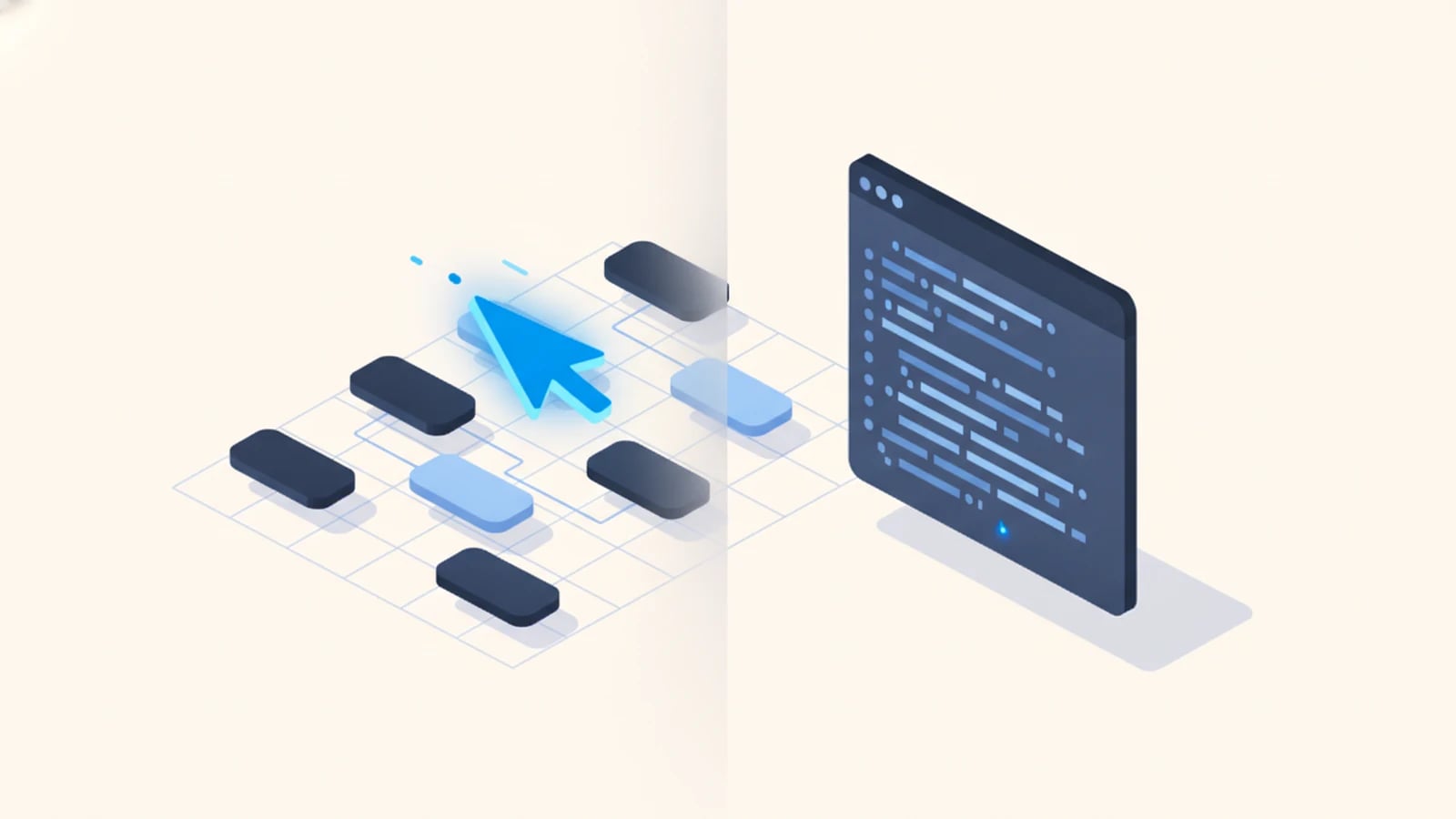
Vibe coding builds software in hours by letting an AI write code nobody reviews. Traditional development builds it in months with engineers writing and checking every line. Most real business software belongs to neither camp, but to a reviewed middle path that borrows the speed of one and the accountability of the other.
The comparison people actually search for is a two-way fight: fast AI coding against slow human engineering. That framing is incomplete, because the interesting option sits between them. For the definition and origin of the practice itself, our hub on vibe coding and AI-assisted development sets the scene this builds on.
Three Approaches, Not Two
Start with clean definitions, because sales copy blurs them on purpose.
Pure vibe coding means describing software to an AI model and shipping what it produces without reading the code. Speed comes from skipping the reading. So does the risk.
Traditional development means engineers write the code themselves, review each other's work, and test it before release. Adoption of AI tools is now near-universal even here: 84% of developers in the 2025 Stack Overflow Developer Survey were using or planning to use AI tools, so "traditional" rarely means AI-free anymore. It means human-authored and human-owned.
AI-assisted development is the middle path. An AI generates most of the code fast, and a senior engineer reviews every line, writes the tests, and owns the architecture. It keeps the generation speed and reinstates the engineering. That is the model behind serious custom software development today.
Speed: Where the Hours Really Go
Pure vibe coding wins any race that ends at "it runs on my screen." An app builder can turn a prompt into a clickable product in an afternoon. Nothing else here is close for a throwaway prototype.
That lead shrinks the moment the software has to be correct, not just present. Traditional development spends its months on writing time: an engineer types every line, so the schedule scales with the size of the codebase. AI-assisted development removes most of that typing. The AI generates the bulk of the code in minutes, and the engineer spends their hours on the parts a model cannot be trusted to finish alone: scoping, review, testing, and the judgment calls.
The result is weeks, not quarters, for most business software. A workflow automation ships in two to three weeks, a custom web app in three to six, a multilingual platform in five to eight. The full breakdown of where those weeks go, and why the review step does not erase the speed advantage, lives in how long custom software takes.
Cost: What You Pay, and Why the Numbers Diverge
The cost gap between the three is large and structural, not a discount.
A traditional US agency often bills $50 to $99 per hour against an open-ended scope. A modest custom web app runs 300 to 600 hours once discovery, build, QA, and revisions are counted, so the invoice lands in the tens of thousands with the clock still running.
Globaprom quotes the same class of app as a fixed price, €4,000 to €12,000, because AI compressed the writing while a senior engineer kept the review. Pure vibe coding can undercut even that, since a vendor who ships unreviewed AI output skipped the one step that costs real money: reading the code. The full ranges and the agency math they replace sit in our AI software development cost breakdown.
The cheap vibe-coded quote carries a bill you do not see on delivery day. CISQ's 2022 report put the cost of poor software quality in the US at $2.41 trillion a year, and the accumulated technical debt behind much of it, code too tangled to change cheaply, at about $1.52 trillion (CISQ, 2022). Unreviewed code is cheapest to buy and most expensive to own.
Quality: The Difference Is Who Reads the Code
Quality is where the three approaches separate hardest, and it comes down to a single question: does anyone read the code before your business depends on it?
Traditional development answers yes by default. Authors and peer reviewers read everything. Pure vibe coding answers no by definition. Nobody reads it, which is why Veracode's 2025 GenAI Code Security Report found security flaws in 45% of its AI-generated code samples. In a reviewed build those flaws get caught before release. In an unreviewed one they ship.
AI-assisted development answers yes the same way traditional development does, and that is the point. The code is generated fast, then read line by line, tested, and secured. The origin of the first draft, human or model, stops mattering once a qualified engineer has checked it. We cover exactly what that review step catches, and why it is the real product, in human review of AI-generated code.
Maintainability: What Happens Six Months Later
The comparison that matters most rarely shows up in a pitch, because it plays out long after the invoice clears.
A traditionally built codebase has authors who can explain it. An AI-assisted one has the same, because a human reviewed and understood every line before it merged. A vibe-coded app has neither. It is a legacy system with no author on day one: nobody, including the person who prompted it, can say how it works. Each new feature becomes a blind negotiation with the model, and small changes start breaking distant parts for reasons no one can trace.
That gap is why pure vibe coding stalls at the prototype stage so reliably. The demo arrives fast and the second version arrives never, because there is no one who understands the first.
A Concrete Example: Three Ways to Build One Tool
Picture a freight forwarder that needs a quoting tool. It pulls carrier rates, applies a margin, and produces a branded PDF quote.
Vibe-coded, it exists by Friday. It also stores the carrier API key in plain sight and rounds the margin wrong on one currency, and nobody notices until a customer does.
Built traditionally, it arrives in about four months at agency day rates, correct and documented, at a price that makes the business hesitate to build it at all.
Built AI-assisted, it ships in roughly three weeks. The AI generated most of the code, an engineer caught the exposed key and the rounding bug in review, and a test suite proves the rate math before handover. That is the version a working logistics operation can actually run, which is why custom logistics software is squarely AI-assisted territory rather than a vibe coding target.
Which Approach Fits Which Job
The honest answer is that each wins somewhere.
Pure vibe coding is the right call for prototypes, personal automations, and internal tools with a small blast radius, jobs where speed is everything and failure is harmless. A great deal of custom software for small business starts life as exactly this kind of experiment.
Traditional development still earns its cost where regulation or extreme scale demands provable, author-owned engineering with no shortcuts.
AI-assisted development is the fit for the wide middle: production business software that touches customers, money, or daily operations and needs to arrive this quarter rather than next year. The full pipeline that makes it work, from written scope to reviewed handover, is documented in how we scope, build, and review.
Frequently Asked Questions
Is vibe coding faster than traditional development?
For a throwaway prototype, yes, by a wide margin: hours versus weeks. For production software the gap narrows, because correctness still takes human time. Reviewed AI-assisted development captures most of the speed and keeps the engineering, landing in weeks instead of months.
Is vibe coding cheaper than hiring a traditional agency?
Usually, yes. AI compresses the writing time an agency bills by the hour, so a fixed-price AI-assisted build costs a fraction of an open-ended agency engagement. Pure vibe coding is cheaper still, but it skips review, which shows up later as incidents and rework.
Is vibe-coded software lower quality than traditionally built software?
Unreviewed, yes: 45% of AI-generated samples carried security flaws in Veracode's 2025 tests. Reviewed, no. Once an engineer reads, tests, and secures the code, quality comes from the review, not from whether a human or a model typed the first draft.
Does AI-assisted development replace traditional developers?
No. It changes what they spend time on. Instead of typing every line, engineers direct AI tools, then review, test, and own the architecture. The accountable human is still an experienced developer; the keyboard time moves to judgment time.
When should I still choose traditional development over AI-assisted?
When regulation or extreme scale requires fully author-owned engineering with an audit trail on every decision, safety-critical systems being the clearest case. For most business software, the reviewed AI-assisted path delivers the same reliability faster and cheaper.
How do I know a vendor reviews the AI-generated code?
Ask who reads it and when, in one sentence. A real answer names a role and a stage: a senior engineer, before every merge. Our AI-assisted development services put that review in writing, with named reviewers and a test suite you can inspect.
Pick the Approach That Matches the Stakes
Vibe coding, traditional development, and reviewed AI-assisted builds each have a job they do best. The mistake is using the fastest one where the stakes are highest. Tell us what you need built and we will scope it with a fixed price, a delivery date measured in weeks, and a senior engineer reading every line before it reaches you.