Can AI Build Enterprise Software? Where Vibe Coding Scales, and Where It Doesn't
Date Published
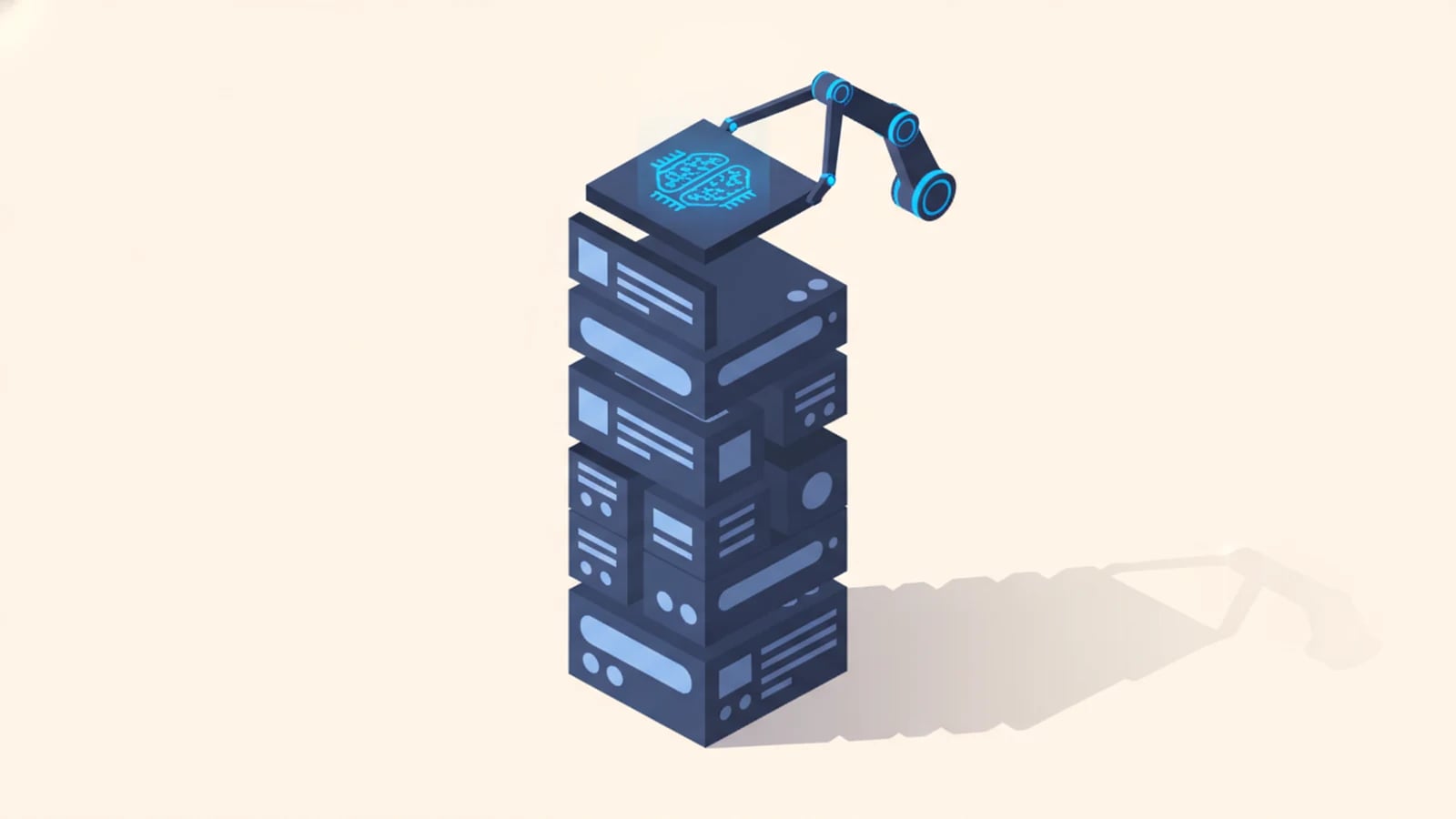
Yes, AI can build enterprise software, but not on its own. AI generates most of the code for a large, high-stakes application quickly, and then the hard parts remain: architecture, scale, security, compliance, and maintenance, all of which still need experienced engineers. Pure vibe coding stalls at the prototype. Disciplined AI-assisted development carries it to production.
The question hides two very different meanings. One is "can an AI model write enterprise-grade code?" The other is "can I vibe-code my way to a system a large organization can run?" The answers point in opposite directions, and confusing them is how projects get funded on a demo and die at the second version. For the foundation it builds on, see vibe coding and AI-assisted development.
What "Enterprise Software" Actually Demands
Strip away the marketing and enterprise software means software that must hold up under conditions a demo never tests. It serves many concurrent users without falling over. It integrates with systems that already exist rather than living alone. It protects data that regulators and auditors care about. And it survives years of change through people who are not the ones who built it.
None of those demands is about writing code faster. Every one of them is about engineering: decisions made before and after the typing, judgment about trade-offs, and accountability for what happens when the load or the data or the team changes. That is the frame for the whole question. AI is extraordinary at the typing. The demands that define enterprise software live mostly outside it.
Where AI Genuinely Delivers at Scale
Give AI its due, because the capability is real and it is not marginal. AI coding tools generate the bulk of an application's code faster than any human team, and that advantage does not disappear when the project is large. A quarter of Y Combinator's Winter 2025 batch shipped codebases that were roughly 95% AI-generated (TechCrunch, 2025), and adoption is now the norm rather than the edge: 84% of developers were using or planning to use AI tools in the 2025 Stack Overflow Developer Survey.
On a serious build, AI accelerates the parts that are large but well-understood: CRUD interfaces, API integrations, data transformations, standard authentication, the long tail of screens and endpoints that used to eat weeks of typing. Directed by an engineer against a clear specification, it compresses the schedule of even a big system dramatically. The speed is not the myth. The idea that speed alone gets you to enterprise software is.
The Ceiling: Five Places Pure Vibe Coding Stops
Push a vibe-coded app toward real scale and it hits the same walls every time.
Concurrency and performance. Code that behaves at five users is unproven at five thousand. Connection pools, race conditions, and slow queries are exactly the problems that never surface in a demo and always surface under load. Fixing them requires understanding the system, which a vibe-coded app has nobody to do.
Architecture that has to change. Enterprise software gets extended for years. That only works if the structure was designed to be extended. Models optimize for making the current prompt work, not for a coherent architecture six versions out, so a vibe-coded system accumulates the kind of structural debt that makes each new feature riskier than the last.
Security under real threat. A larger system is a larger target. Veracode found 45% of AI-generated code samples carried known vulnerabilities (Veracode, 2025), and at enterprise scale those are not embarrassments but breaches. This is review territory, covered in human review of AI-generated code.
Compliance obligations. GDPR, PCI DSS, and SOC 2 all assume a human can explain how the software handles sensitive data. Unreviewed code cannot meet that bar, as AI development, security, and compliance lays out in full.
Maintainability over years. The deepest ceiling is time. CISQ put the cost of poor software quality in the US at $2.41 trillion a year, with a further $1.52 trillion in accumulated technical debt (CISQ, 2022). A vibe-coded system is that problem on day one, with no author to ask.
What Raises the Ceiling
The fix is to put the engineering back around the AI. That, in one sentence, is AI-assisted development.
An engineer owns the architecture and designs for the scale and change the system will actually face. The AI generates the code fast against that design. A senior reviewer reads every line before it merges, so the security and logic flaws get caught in the diff instead of in production. Automated tests and dependency scanning run on every build. Compliance gets scoped upfront rather than discovered mid-project. The result keeps most of the speed and clears every wall the pure vibe-coded version hits, because the demands that define enterprise software, the ones outside the typing, finally have someone accountable for them. The pipeline that does this is described in how we scope, build, and review.
This is not theoretical for the systems that run cross-border operations. A large custom logistics software platform generating customs documents across languages and currencies, or a set of custom internal tools a whole company depends on, both live squarely in AI-assisted territory: too high-stakes for pure vibe coding, too time-sensitive for months of pure hand-coding.
Where the Honest Line Sits
Two claims are both true, and holding both is the point.
AI cannot build enterprise software alone. Hand a model the goal "build us an enterprise platform" and walk away, and you get a fast demo that fails under load, under audit, and under its second year. The demands that make software enterprise-grade are engineering demands, and the model does not carry them.
AI is also indispensable to building enterprise software efficiently now. Directed by engineers, it removes so much of the writing time that a serious system arrives in a fraction of the traditional schedule. The winning move is neither to trust the AI with everything nor to refuse it on principle. It is to use it hard for what it is great at, and to keep experienced humans on everything else. That combination is what serious custom software development looks like today.
Frequently Asked Questions
Can AI build enterprise software on its own?
No. AI generates most of the code quickly, but architecture, scale, security, compliance, and long-term maintenance still require experienced engineers. Left alone, a model produces a fast demo that fails under real load, audit, and change. It is a powerful tool, not a replacement for engineering.
Does vibe coding scale to large applications?
Pure vibe coding does not. It stalls where demos end: concurrency, performance under load, security, and maintainability. Those problems never appear at five users and always appear at five thousand. Reviewed AI-assisted development scales because engineers design for those conditions deliberately.
Can AI replace software engineers for big projects?
No. It changes what they do. Instead of typing every line, engineers direct AI tools, then own the architecture, review the output, and handle scale and compliance. The bigger the project, the more that engineering judgment matters, not less.
Is AI-generated code reliable enough for high-stakes systems?
Only after review and testing. Unreviewed, 45% of AI-generated samples carried known vulnerabilities in Veracode's 2025 study, which is disqualifying for a high-stakes system. Reviewed and tested, the same code becomes reliable, because reliability comes from the engineering around the generation.
How much of an enterprise application can AI actually write?
Most of it, in raw volume: standard interfaces, integrations, and data handling. A quarter of YC's Winter 2025 startups had roughly 95% AI-generated codebases. The remaining engineering, architecture and review and compliance, is small in lines and decisive in outcome.
What is the safe way to use AI on a large software project?
Engineers own the architecture and review every line, the AI generates code fast against a fixed scope, and tests plus dependency scanning run on every build. Our AI-assisted development services apply exactly that to systems too high-stakes for pure vibe coding.
Build Big Without Betting on a Demo
Enterprise-grade software needs the speed of AI and the discipline of engineering, together. Tell us what the system has to do, how many people will use it, and which rules it must meet, and we will scope it with a fixed price, a delivery date in weeks, and a senior engineer accountable for every line.