Supply Chain Visibility Software
When a customer asks "where is my shipment?", the answer should be on screen, not buried in someone's inbox. Supply chain visibility software pulls the status scattered across carriers, partners and spreadsheets into one live view. Globaprom builds it at a fixed price, delivers it in weeks, and connects it to the feeds you already receive, in whatever format they arrive.
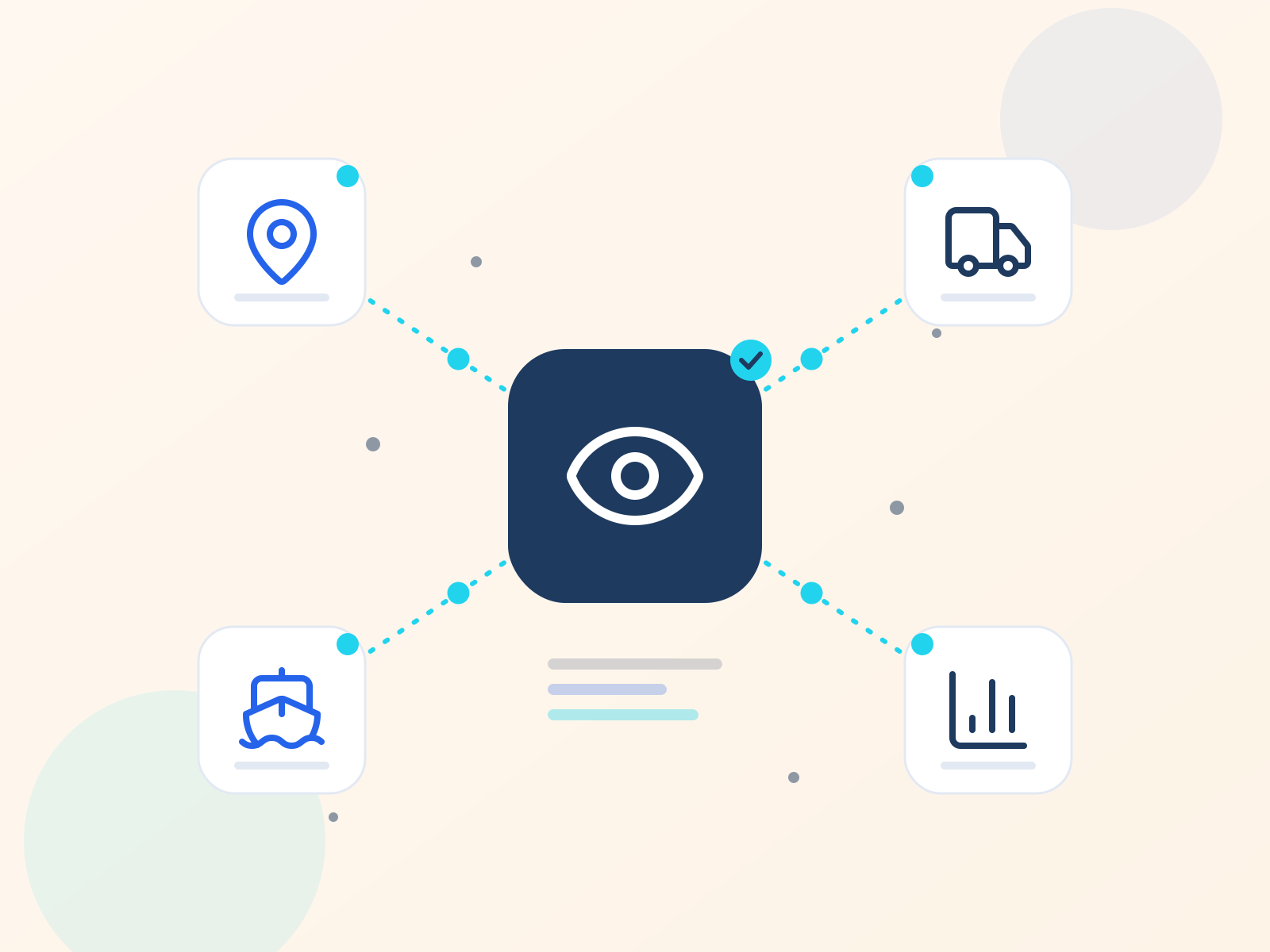
What supply chain visibility software does
Supply chain visibility software gathers shipment and inventory status from every source into one screen, in real time. It's the difference between knowing where your goods are and calling three carriers to find out. The data already exists, scattered across carrier portals, EDI messages, partner emails and spreadsheets. Visibility software brings it together and keeps it current.
The dashboard is only the means. It buys you earlier decisions: a delayed shipment caught before the customer notices, a stockout spotted while there's still time to react, a status question answered without a phone call.
If most of your partner data arrives over EDI, start with EDI integration services.
Why fragmented data is the real problem
Most operations don't lack data. They lack it in one place. A third-party logistics provider (3PL) sends stock counts one way, carriers send tracking events another, and the transportation management system (TMS) holds a third slice. Staff stitch it together by hand, and by the time the picture is complete it's already out of date.
Off-the-shelf visibility platforms promise to fix this, then assume your partners send data in a standard shape. They rarely do. One key carrier, customer or 3PL always speaks a format the platform can't read, so that source stays off the dashboard.
A custom build ingests the feeds you actually receive, in the formats they actually arrive in. Name the source that never makes it onto your screen, and we'll show you how to bring it in.
What Globaprom builds
We build the aggregation layer and the view on top of it, scoped to your sources:
- Feed ingestion. Carrier APIs, EDI messages, telematics, partner files and spreadsheets, normalized into one data model.
- Live dashboard. Shipment and inventory status on one screen, filtered by customer, lane or exception.
- Exception alerts. Automatic flags when a shipment runs late, a milestone is missed or a stock level crosses a threshold.
- Customer-facing view. A branded portal where customers check status themselves instead of calling your team.
- Reliable syncing. Every feed monitored, with retries and alerts, because a visibility tool that silently stops updating is worse than none.
Every build includes sign-in, role-based permissions and full source-code ownership, with no per-shipment or per-user fees afterward.
A visibility portal in practice
Texas International Freight, a US-based forwarder, had shipment status living in inboxes and phone calls. We built a freight-monitoring portal that gives the internal team and their customers one real-time view, so customers self-serve instead of calling in.
It removed roughly three hours of manual status-chasing per day. That's what visibility means on the ground: hours your team gets back, and calls your customers no longer need to make.
How we scope and deliver
Most visibility builds go from approved scope to production in three to six weeks, with the price and the delivery date fixed in writing first.
Our engineers direct AI coding tools to generate the software (an approach we call vibecoding), then review, test and harden the integrations by hand. A visibility tool is only as good as the feeds behind it.
Customer-facing views ship in the languages your clients use. Globaprom grew out of a 20-year translation business, and it shows in the portals.
Related builds: EDI integration services, freight forwarding software and custom TMS development. Or start from the custom logistics software overview.
Frequently Asked Questions
How is custom visibility software different from a SaaS visibility platform?
A SaaS platform reads the data sources it already supports and charges a recurring subscription. A custom build ingests the exact feeds you receive, including the carrier, customer, or 3PL that speaks a non-standard format the SaaS tool ignores. You own the result, with no per-shipment or per-user fee afterward.
What data sources can it pull together?
Carrier APIs and tracking events, EDI messages from trading partners, telematics feeds, partner files, ERP data, and spreadsheets. We normalize each source into one data model so the dashboard shows a single consistent picture rather than five disconnected ones.
Can customers see their own shipments?
Yes. We build a branded, customer-facing view so clients check status themselves instead of calling your team, in the languages they use. That self-service is often where a visibility tool pays back fastest, by removing the daily flood of status questions.
Get every shipment on one screen
List the sources you need in one place: carriers, partners, 3PLs, spreadsheets. You get a fixed scope, a fixed price and a delivery date in weeks.