Route Optimization Software
Your dispatchers already plan routes every morning. We turn their rules into software that plans them better: shorter runs, less overtime, and stops that respect every time window. Globaprom builds custom route optimization software on proven VRP solvers, at a fixed price, delivered in weeks.
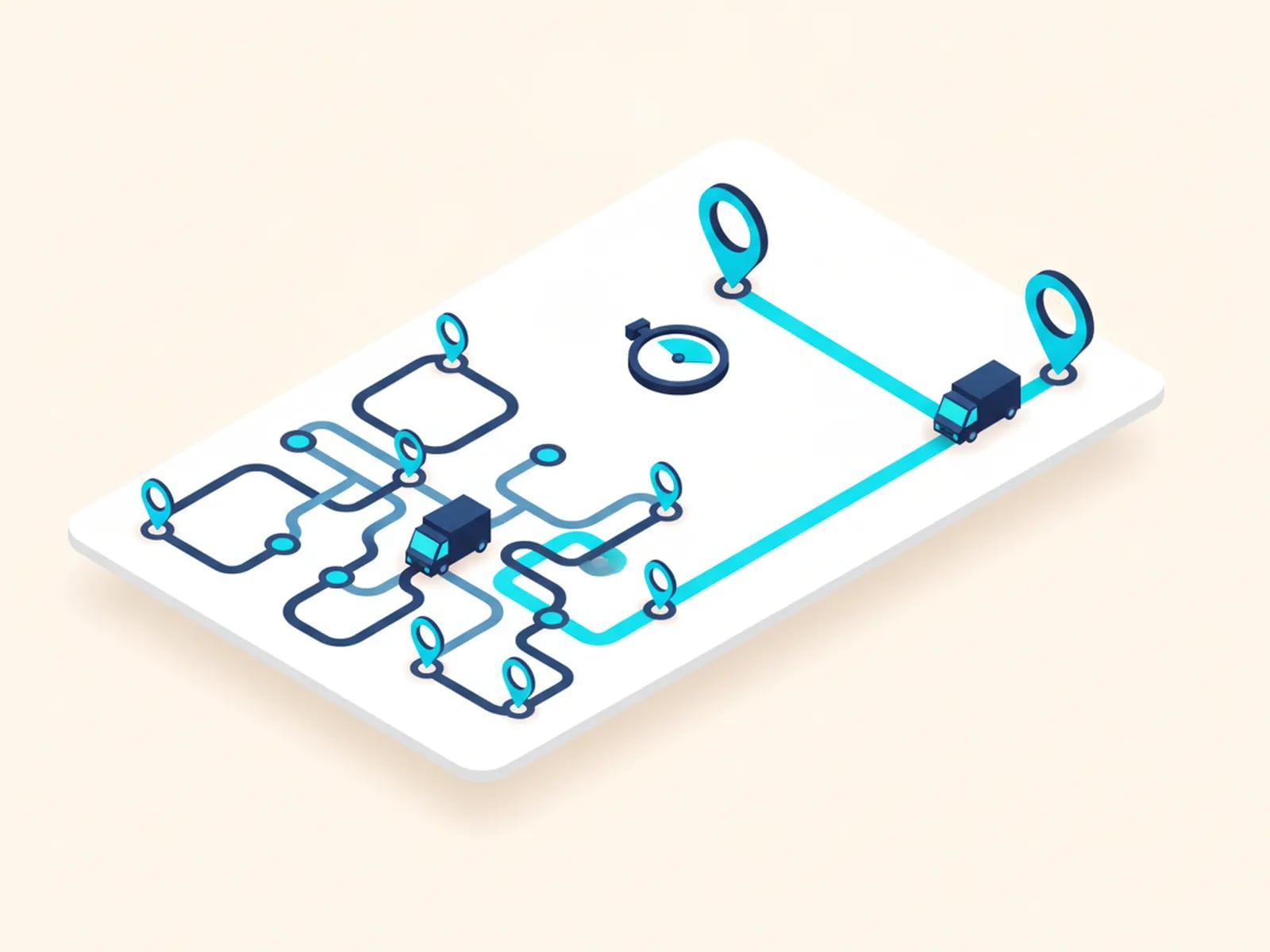
What route optimization software solves
Route optimization software decides which vehicle serves which stop, and in what order, so your fleet covers the day's work with the least distance, time or cost. Planners call it the vehicle routing problem (VRP). Your dispatcher solves it every morning, by hand and by habit.
By hand stops scaling fast. Thirty vans and four hundred drop-offs add up to billions of possible plans, and the number explodes with every stop you add. Nobody checks them all. A solver searches them in seconds and hands back a very good plan before the first truck leaves the yard.
Tomorrow's routes are ready before the shift starts, and shorter than the ones drawn by hand. See what a routing build costs.
Why a fleet builds a custom routing layer
Generic optimizers plan for an average fleet. Yours isn't average. One driver holds the hazardous-goods certificate. One customer only receives before noon. One van can't enter the low-emission zone. Get those rules wrong and the "optimized" plan lands on the dispatcher's desk to be fixed by hand, every morning.
A custom routing layer starts from your rules, not someone else's defaults. Small gains then compound: shave five percent off total distance and you cut fuel, overtime and vehicle wear across the whole fleet, every day. That's why routing projects tend to pay for themselves quickly.
Tell us which rules your planners juggle, and we'll show you where the savings are.
What Globaprom builds
We build the routing engine and the tools your team uses around it, scoped to how your fleet actually runs:
- Constraint modeling. Time windows, vehicle capacities, driver shifts and certifications, and zone restrictions, written as your real rules rather than approximations.
- Route generation. Daily or on-the-fly plans that respect every constraint and minimize distance, time or cost, whichever costs you most.
- Dispatch and re-routing. A van breaks down, a stop gets added, traffic shifts: the plan adjusts while drivers are on the road.
- Telematics integration. Live positions from platforms like Samsara, Geotab or Webfleet feed the plan, so it starts from where your vehicles really are.
- Driver handoff. Stop sequences go straight to a driver app, connecting routing to the last mile delivery software your crews use on the road.
Every build includes sign-in, role-based permissions and full source-code ownership. No per-vehicle fees, ever.
How we scope and deliver
Most routing builds go live three to six weeks after you approve the scope. The price and the delivery date are fixed in writing before we write a line of code.
Our engineers direct AI coding tools to generate the software (an approach we call vibecoding), then review, test and harden the solver logic and constraint handling by hand. A routing bug sends a driver down the wrong road, so that part never ships unchecked.
We build on the maps and telematics data your fleet already collects. The driver-facing side comes localized for mixed-language crews: Globaprom grew out of a 20-year translation business, and it shows in the apps.
Related builds: last mile delivery software and custom TMS development. Or start from the custom logistics software overview.
Frequently Asked Questions
How is custom route optimization different from an off-the-shelf optimizer?
An off-the-shelf optimizer solves the average routing problem and assumes standard constraints. A custom routing layer encodes your exact rules: your driver certifications, delivery windows, vehicle limits, and zone restrictions. That is the difference between a plan a dispatcher trusts and one they have to correct by hand every morning.
Can it integrate with our telematics and mapping data?
Yes. We connect telematics platforms such as Samsara, Geotab, and Webfleet through their APIs to feed live vehicle positions into the plan, and build on the mapping data your fleet already uses. Routing sits on top of data you collect, rather than requiring a new hardware rollout.
How much can route optimization actually save?
Savings depend on your fleet size, stop density, and how routes are planned today. The gains compound: trimming even a small share of total distance cuts fuel, overtime, and vehicle wear across every vehicle, every day. We scope against your current baseline so the expected payback is clear before the build.
Plan tomorrow's routes with your own rules
Send us your fleet size, your daily stop volume and the constraints your dispatchers juggle. You get a fixed scope, a fixed price and a delivery date in weeks.