Field Service Management Software for Small Teams
Close a job on site and the invoice is already drafted. Field service management software schedules visits, dispatches the right technician and keeps one record from the customer's call to billing, built for teams of 5 to 50 that enterprise suites price out. We deliver it at a fixed price, in weeks, with a mobile app that works where the signal doesn't.
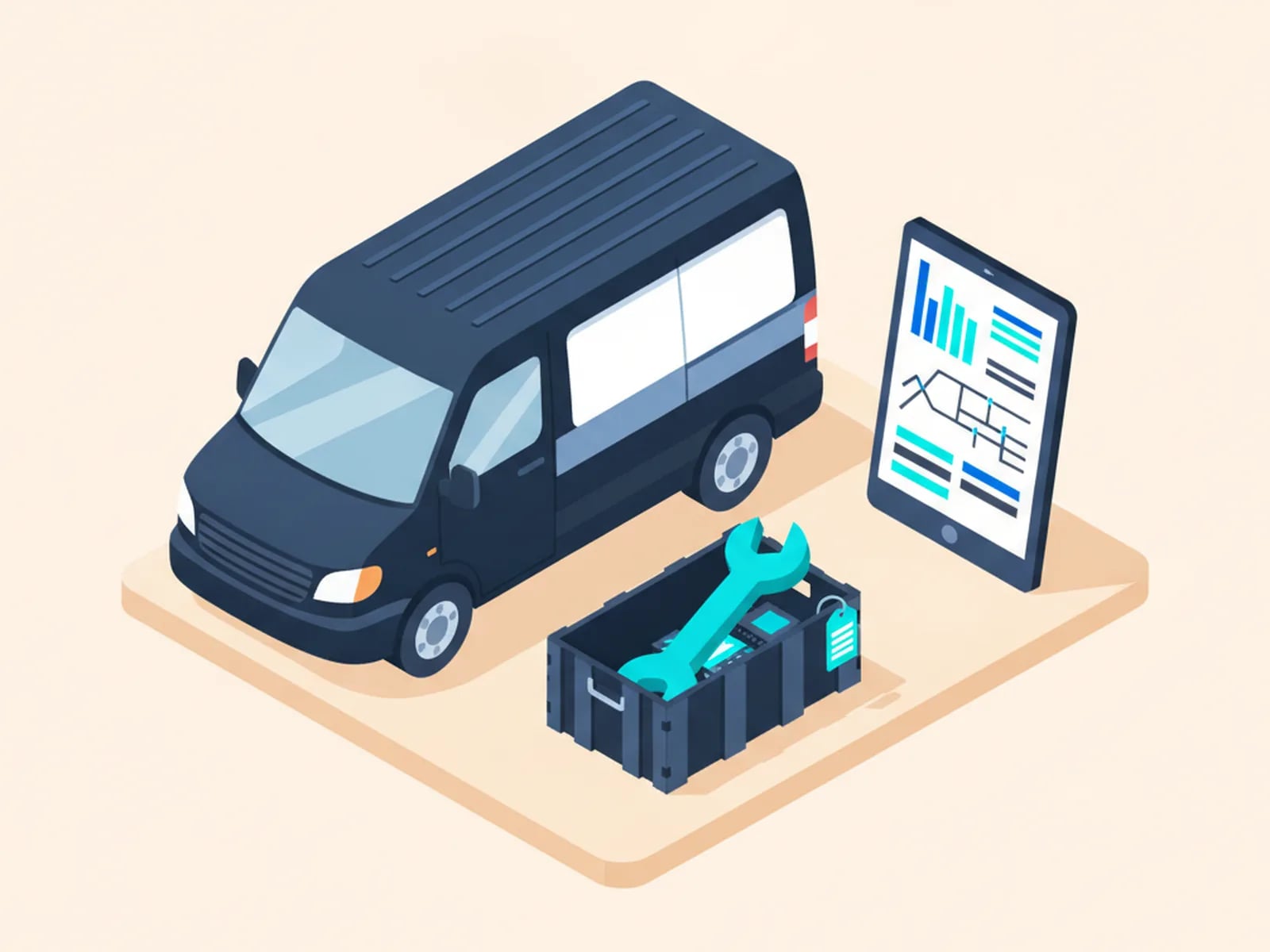
What field service management software does for a small team
Field service management (FSM) software runs the work that happens away from the office: scheduling visits, dispatching the right technician, guiding the job on a phone and capturing what it takes to get paid. The short definition is in our FSM glossary entry.
The loop is simple. A job comes in and the dispatcher assigns it by skill and location. The technician gets it on a phone with the site history and parts, completes it with photos and a signature, and the visit becomes an invoice without re-keying. One record follows the job from call to invoice, so nothing lives only in a van or in the dispatcher's head.
What makes it useful is fit: your job types, your service-level rules, your pricing. See what a build like this costs.
Why small field teams get priced out of enterprise FSM
Field service is a large, growing market. MarketsandMarkets puts it at $5.1 billion in 2025 and $9.2 billion by 2030, a double-digit growth rate (field service management market). The enterprise platforms chasing it are built for hundreds of technicians and priced per seat, per month, forever. A 12-technician HVAC or equipment-service business ends up paying for modules it never opens.
So small operators stay on what they can afford: a shared calendar, a WhatsApp group and a stack of paper job sheets that turn into invoices days later. A visit finished on Tuesday and invoiced the following week is a week of cash sitting in a glovebox.
Custom FSM software closes that gap for the price of a build you own. There are no per-seat fees, so your next technician doesn't come with a new licence bill.
A concrete example
An equipment-service company runs 12 technicians across a region. Dispatch is a whiteboard and phone calls. Technicians write parts and hours on paper job sheets and drop the pile at the office on Friday. An admin types it into invoices the following week, and sheets with unreadable handwriting get billed short or not at all.
Custom FSM software rebuilds that flow. The dispatcher assigns jobs on a screen that shows each technician's location and skills. The technician opens the job with the customer's equipment history, completes it offline at a rural site, records parts and time and captures a signature. The visit becomes a draft invoice the moment it closes.
Billing goes out in days instead of weeks, and handwriting stops costing you money.
How we build your FSM software
We scope from how your service business actually runs: job types, dispatch rules, rate tables. You approve scope, a fixed price and a delivery date before we build.
The technician app is offline-first, because service happens in basements, plant rooms and rural sites where coverage drops. Jobs, history and documents live on the device and sync when the signal returns. Every screen ships in your technicians' languages.
If you maintain your own assets, the same visit data can feed your custom CMMS software, and on-site checks can reuse your custom equipment inspection app. The custom manufacturing software overview shows how field tools connect to the rest of your operation.
Frequently Asked Questions
What does field service management software do?
It runs the work away from the office: scheduling visits, dispatching technicians by skill and location, guiding the job on a mobile device, and turning a completed visit into an invoice. One record follows the job from the customer's call to billing, so nothing lives only on paper or in a technician's van.
Does the technician app work offline?
Yes. We build offline-first, so jobs, customer history, and documents live on the device and synchronize when the signal returns. Technicians complete visits in basements, plant rooms, and rural sites without interruption, then the app uploads the results once back in coverage.
Can it handle invoicing after the job?
Yes. A completed visit becomes a draft invoice the moment it closes, using the parts, time, and rates captured on site. That removes the days-long gap between finishing a job and billing it, and it stops revenue getting lost to unreadable paper job sheets.
Turn finished jobs into invoices the same day
Tell us how many technicians you run, how you dispatch today and how a job becomes an invoice. You get a fixed scope, a fixed price and a delivery date in weeks.