Custom CMMS Software Development
Stop fixing machines after they stop. A custom CMMS opens preventive work orders on its own, keeps a repair history for every machine under your real asset names, and runs on a tablet in the plant, offline when it has to. We build it at a fixed price, deliver it in weeks with AI-assisted development, and ship it in every language your crew speaks.
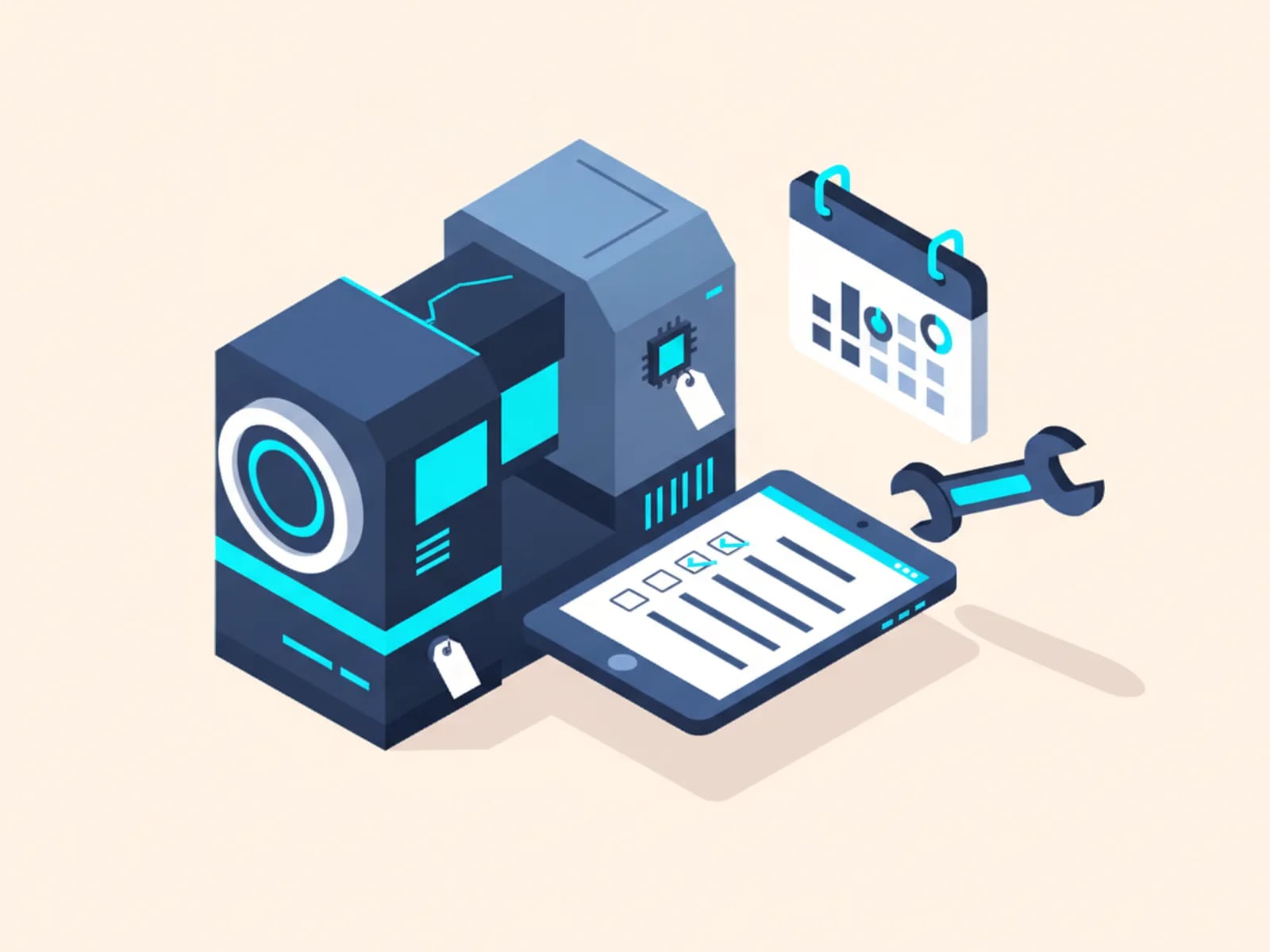
What a custom CMMS does for your plant
A computerized maintenance management system (CMMS) tracks your equipment and the work done on it: work orders, preventive schedules, spare parts and the repair history of every machine. New to the term? Start with what a CMMS is.
The real gain is moving maintenance from reactive to planned. The conveyor gets serviced on hours run, before it breaks down, and the system opens the work order itself. Technicians log the job and the parts they used on a tablet next to the machine. Give it a few months and the history shows which assets eat the budget and which failures keep coming back.
A custom build also knows your machines. The asset hierarchy carries your equipment names, locations and criticality ratings, not a demo catalogue you have to rename line by line.
You get planned stops instead of surprise ones, and a repair budget you can defend with data. See what a CMMS build costs.
Why manufacturers still run maintenance on spreadsheets
Most plants never standardized maintenance because the tools asked them to change how they work. In Plant Engineering's maintenance study (2016), 52% of facilities still managed maintenance in spreadsheets and 39% on paper. That gap has a price. Siemens puts unplanned downtime at $1.4 trillion a year across the world's 500 largest manufacturers (True Cost of Downtime, 2024).
Off-the-shelf CMMS platforms exist to close it, and the market keeps growing: it was worth $1.29 billion in 2024 and expands about 11% a year (Grand View Research). The catch is the pricing model. Per-user, per-asset and per-site fees grow with you and never end. On top of that, the configuration work to bend a generic tool around your plant can rival the cost of a build.
A custom CMMS is a one-time build, and you own the source code. No per-user or per-asset fees, ever.
A concrete example
A metal-fabrication shop runs 40 machines across two shifts. Maintenance lives in one planner's spreadsheet and a binder of paper work orders. A press brake fails, and nobody can say when it was last serviced or whether the spare seal is in stores.
With a custom CMMS, each machine has a record with its service interval and run-hours. When the hours cross the threshold, the system opens a work order, reserves the parts and slots the job into the next planned stop. The technician closes it on a tablet at the machine. The history writes itself.
Six months in, the planner can name the three assets behind most of the downtime and argue for replacing them with numbers instead of a hunch. Tell us where your maintenance records live today, and we'll scope the fix.
How we build your CMMS
We start from your workflow, not a module list. Your asset names, shift patterns and approval chain define the scope. You approve that scope, a fixed price and a delivery date before we write code, and a CMMS build typically reaches production four to six weeks later.
- Offline-first. Technicians finish jobs in basements and metal-shielded halls with no signal, and the app syncs once they're back in coverage.
- Run-hours without typing. Where your machines expose them through OPC UA, MQTT or a database export, we read them automatically.
- Your crew's languages. We grew out of a 20-year translation business, so the interface and checklists ship in each technician's language from one deployment.
Our engineers build with AI coding tools and review everything by hand before release.
The CMMS shares its data with custom equipment inspection apps and an OEE dashboard. The custom manufacturing software overview shows how it connects to your ERP.
Frequently Asked Questions
How long does it take to build a custom CMMS?
Typically four to six weeks from approved scope to production, depending on integrations. A CMMS shaped to your asset hierarchy, with preventive maintenance schedules and ERP synchronization, sits at the upper end of that range. AI-assisted development compresses the build phase, and human engineers review everything before release.
Can a custom CMMS pull run-hours from our machines automatically?
Yes. Where your equipment exposes data through OPC UA, MQTT, a database, or a file export, we read run-hours directly and trigger preventive work orders from real usage. No controls rework is required. Where direct access is restricted, we work from the historian or scheduled exports instead.
Will the CMMS work offline on the shop floor?
Yes. We build offline-first: work orders, checklists, parts lists, and machine history live on the device and synchronize when connectivity returns. Technicians finish jobs in dead zones without interruption, and conflict handling is designed in so parallel edits merge safely.
Put maintenance on a schedule, not a spreadsheet
Send us your machine count, the shifts you run and where maintenance lives today. You get a fixed scope, a fixed price and a delivery date in weeks.