Ecommerce ERP Integration
Stop retyping orders. Ecommerce ERP integration connects your store to the system that runs your accounting, stock and orders, so data flows both ways without anyone touching it. Your team stops reconciling stock in spreadsheets and chasing invoice errors. Globaprom builds it at a fixed price, in weeks, and builds it to survive your busiest day.
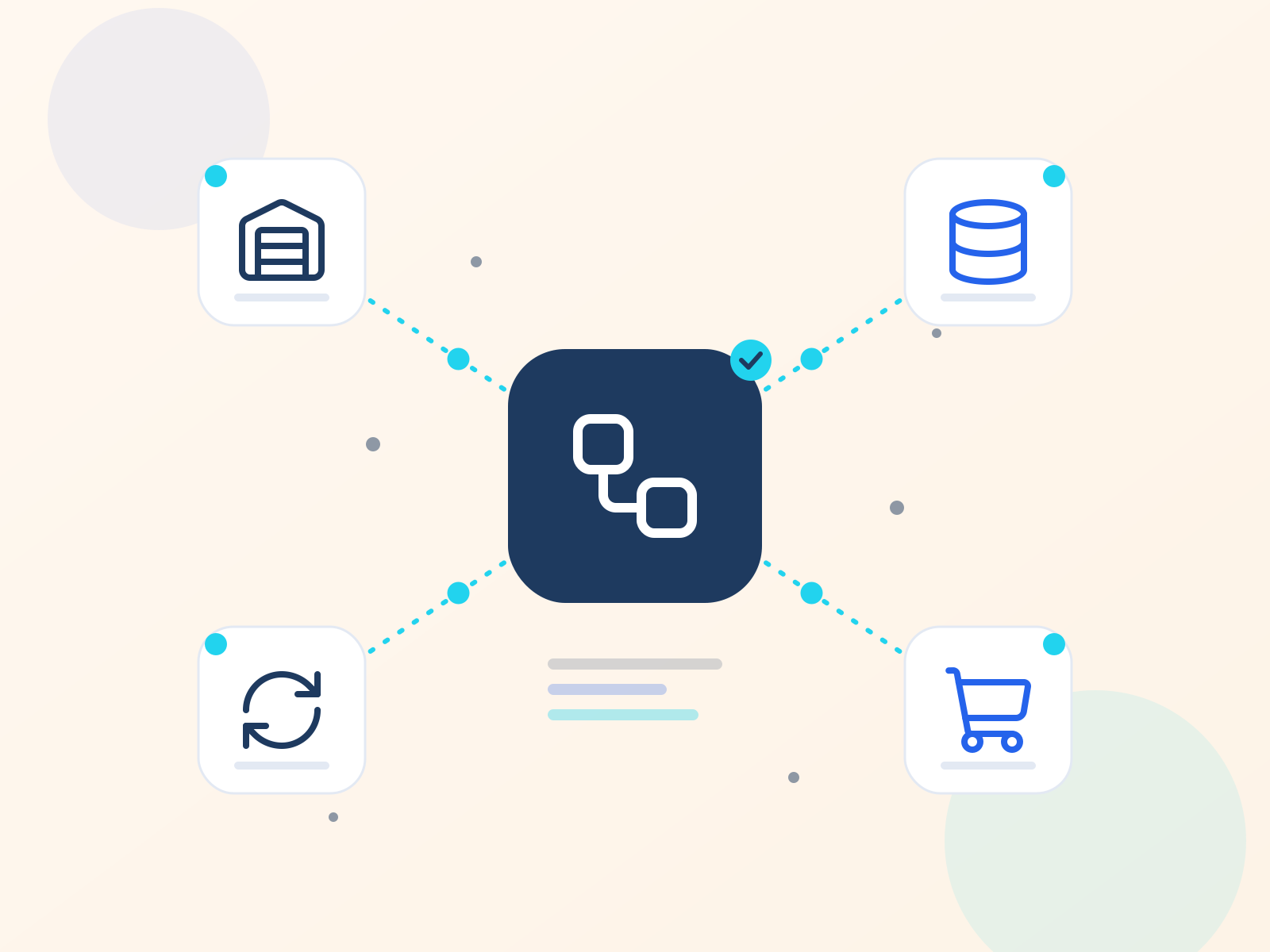
What ecommerce ERP integration connects
Ecommerce ERP integration links your storefront to your ERP, the software that holds accounting, inventory, purchasing and order records. Data moves both ways: a sale in the store becomes an order, an invoice and a stock movement in the ERP without anyone retyping it.
That removes the manual work a growing store piles up:
- Order re-keying. Orders land in the ERP automatically, instead of staff copying each one by hand, slowly and with errors at volume.
- Stock drift. Store and ERP hold the same stock numbers, so the site neither oversells nor hides goods you have.
- Invoice and tax mismatches. Totals, tax and customer records agree across systems, and month-end stops being a reconciliation exercise.
- No single truth. "What did we actually sell and ship?" gets one answer, from one screen.
Most SMB stores run a recognizable ERP: SAP Business One, NetSuite, Odoo, Microsoft Dynamics 365 Business Central or Exact. Each exposes an API or a supported integration method, so orders, invoices, stock levels and customer records can sync automatically in both directions.
What makes an ERP integration reliable
A reliable ERP integration is defined by how it behaves when something goes wrong, because at some point something will. A network blip, a malformed order or a sudden spike must not silently drop data or leave the two systems disagreeing. That's the line between an integration that saves work and one that quietly creates it.
Picture a flash sale that brings in a month of normal orders in one afternoon. A naive integration pushes each order the instant it arrives, falls over under the load, and orders vanish somewhere between store and ERP. A reliable one queues the orders, retries the ones that fail, logs every exchange and alerts a human when something needs attention.
That's the integration we scope for you: one that absorbs the spike instead of losing it.
How we build ERP integrations that hold
You approve scope, price and delivery date before we write code, and you own the code we hand over. AI-assisted development keeps the build to weeks. Our engineers put their time into the logging, retries, monitoring and alerting that decide whether an integration holds, because one that fails silently during your peak week is worse than none. We build for the bad day, not just the demo.
Up front, we agree exactly which flows are automated and how edge cases are handled. No silent gaps where someone still has to step in unexpectedly. After launch, an optional care plan keeps us watching it, and you never need one to keep it running.
ERP integration rarely arrives alone. It pairs with a custom order management system when orders come from several channels, and with a custom Shopify app when the store side needs its own logic. Both belong to our custom ecommerce development work.
Frequently Asked Questions
Which ERPs can you integrate with an ecommerce store?
The systems most SMB stores run, including SAP Business One, NetSuite, Odoo, Microsoft Dynamics 365 Business Central, and Exact. Each exposes an API or supported integration method, so we can sync orders, invoices, stock levels, and customer records both ways between the store and the ERP. If your ERP has any documented integration path, we can usually connect it.
Will the integration survive a Black Friday order spike?
That is exactly what we build for. A naive integration that pushes each order the instant it arrives falls over under a sudden spike and drops data. We queue orders, retry failures, log every exchange, and alert a human when needed, so a month of orders in an afternoon is absorbed rather than lost. We build for the bad day, not just the demo.
Does ERP integration replace manual data entry entirely?
For the connected flows, yes. Orders, invoices, stock levels, and customer records move automatically between the store and the ERP, so no one retypes them. What we scope up front is exactly which flows are automated and how edge cases are handled, so there are no silent gaps where a human still has to step in unexpectedly.
Connect your store and your ERP, both ways
Tell us which ERP you run and where the manual work piles up. You get a fixed scope, a fixed price and a delivery date in weeks.