Localization vs. Translation: What the Difference Means for Your Software Budget
Localization vs translation: one converts text, the other adapts the whole product. What each costs and when each is enough, from 20 years in the trade.
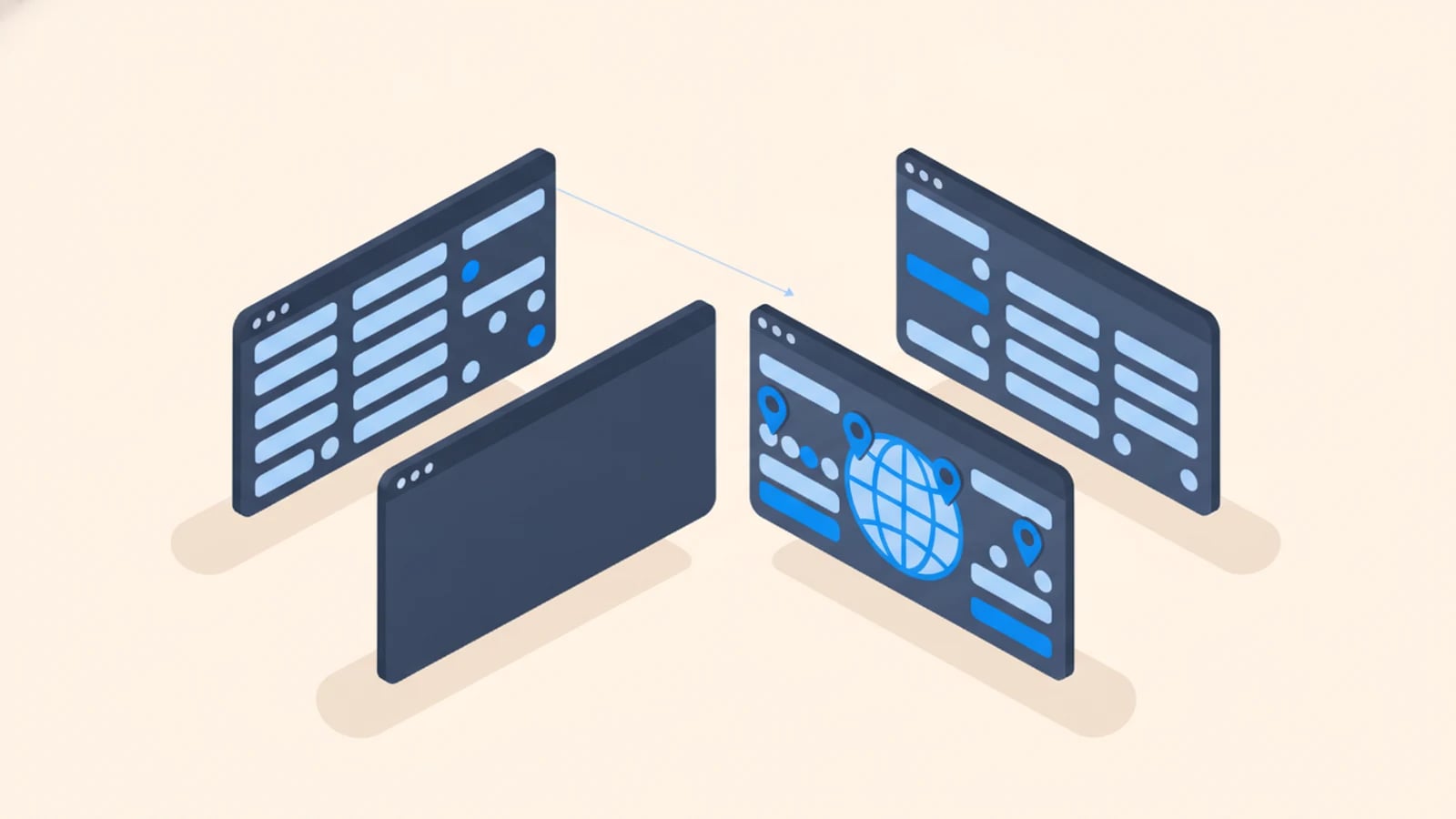
Translation converts text from one language into another. Localization adapts the whole product experience for a market: formats, currencies, imagery, UX conventions, legal notices. Translation is one line item inside localization, and the price tags differ accordingly.
We sold both for more than 20 years. At BeTranslated, the translation business Globaprom grew out of, we quoted translation by the word and localization by the project, and we watched smart clients confuse the two at budget time. The localization vs. translation question is not academic: it decides what your quote contains and what your users get. It matters most in multilingual software development, where the wrong assumption surfaces at checkout, in production.
The short version: translate when readers only need to understand, and localize wherever they pay or sign.
What Is Translation?
Translation is the conversion of text from a source language into a target language. A translator takes your English product description and produces the German one, preserving meaning, tone, and terminology. The deliverable is text.
Billing follows the text. Professional translation is priced per source word, typically $0.10 to $0.25 for common language pairs as of 2026, with specialized content at the top of the range. You can count the words in your product today and predict the invoice, which makes translation the most controllable line in any multilingual budget.
What translation does not touch matters more for planning. It leaves your date formats, your prices, your photos, your checkout flow, and your legal pages exactly as they were. A translated product is your product, word for word, in another language. Sometimes that is all a market needs; it depends on what the reader must do next.
What Is Localization?
Localization (abbreviated l10n, for the ten letters between l and n) adapts a product to one specific market until it feels locally made. Text gets translated as part of the job, but the work extends into everything around the text:
- Formats. Dates, times, number separators, units of measure, paper sizes for anything printed.
- Money. Local currency, price presentation that matches local law and habit (tax in or out), and the payment methods the market actually uses.
- Imagery. Photos, illustrations, and color choices that read correctly in the target culture. A model in a US-autumn sweater sells poorly in a Singapore June.
- UX conventions. Name order, address forms, phone formats, honorifics, the page structure buyers expect.
- Legal notices. Consumer-rights text, imprint requirements, privacy language that matches local law rather than translated US boilerplate.
- Tone. Formality level, for a start. German business buyers expect Sie, not du; a faithful translation can still be socially wrong.
You localize per market, not per word: once for Germany, then you keep translating new content into German for as long as the product lives.
One Product Page, Translated vs. Localized
Here is the difference on a single page. Take a US kitchenware store selling a stand mixer, entering the German market.
Page element | Translated only | Localized |
|---|---|---|
Price | $349.00 | 329,00 € with VAT included, as German price law expects |
Capacity | 5.5 quarts | 5,2 liters |
Delivery promise | "Ships in 3–5 business days," US date format elsewhere on the page | German date convention plus a realistic EU delivery window and customs status |
Payment options | Card fields only | Cards plus PayPal and the invoice and direct-debit options German shoppers favor |
Voltage note | None (120 V assumed) | 230 V model shown, EU plug visible in photos |
Legal footer | Translated US terms | Imprint and statutory withdrawal text aligned with EU consumer rules |
The translated page reads German and behaves American. Shoppers rarely articulate the problem; they hesitate at checkout instead, and hesitation is expensive. CSA Research's "Can't Read, Won't Buy" survey of 8,709 consumers in 29 countries found that 76% prefer buying products with information in their own language, and 40% refuse to buy in other languages entirely (CSA Research).
Language opens the door. The localized details decide whether anyone walks through it.
Where Internationalization (i18n) Fits
Internationalization is the engineering layer beneath both. i18n (internationalization) prepares the software itself so any language, script, or format can be supported without rewriting code: text stored outside the code, encoding that survives non-Latin scripts, locale-driven formatting, layouts that tolerate longer words.
Three layers, three rhythms. Engineers internationalize once. A mixed team localizes once per market. Linguists translate again with every content change. Skipping the bottom layer saves nothing; the cost moves upward, because every new market then pays for re-engineering before it can pay for adaptation.
We wrote i18n explained for non-engineers as the companion piece if you want the engineering layer in plain English.
What Each Costs, and When Each Is Enough
Translation is a content cost. A 20,000-word product and website runs roughly $2,000 to $5,000 per language at the professional rates above, and it recurs as content changes. Predictable, countable, easy to budget.
Localization is a project cost. On top of the translation sit format and payment adaptation, imagery work, legal review, and market-specific QA, scoped per market rather than per word. A first market carries the heaviest overhead; later markets get cheaper because the adaptations become repeatable. Any agency that quotes localization purely per word is quoting translation and calling it localization.
Honest guidance, from two decades of writing both kinds of quote:
- Translation alone is enough when the reader only needs to understand: internal documentation, support content, technical manuals for professional audiences already used to foreign conventions.
- Localization earns its cost wherever users transact or trust is on the line: checkout, pricing, onboarding, forms, anything regulated, any consumer surface in a competitive market.
- When budget forces a choice, localize the money path and translate the rest. A partially localized product with a fully localized checkout outperforms the reverse every time.
How This Plays Out in Software
Software sharpens the distinction, because code makes assumptions that prose never has to.
UI strings. Interface text lives in resource files and breaks in ways paragraphs don't. A label that fits its button in English overflows in German: longer text typically grows about 30% from English, and short interface strings can reach two to three times their English length (W3C). Localization includes catching this in layout QA; translation stops at the words.
Plurals. "1 file, 2 files" works in English because the CLDR standard defines only two plural categories for it. Arabic uses all six categories the standard allows (Unicode CLDR). No translated string can rescue logic that hardcodes an English "s".
Right-to-left scripts. Arabic and Hebrew reverse the reading direction of the entire screen, not only the sentences. Translation delivers the words; localization, resting on proper i18n, flips navigation and reading order and mirrors directional icons.
Dates and numbers. A shipment promised for 05/06 lands a month apart in Chicago and Cologne. An amount displayed as 1,234.56 looks like a typo in Berlin, where the same figure is written 1.234,56. These are code-level formatting decisions, out of any translator's reach.
In production, the text side of all this flows through a translation management system (TMS) that feeds approved strings back into each release. How that loop works end to end is the subject of our guide to translation pipelines.
Frequently Asked Questions About Localization and Translation
What is localization?
Localization is adapting a product to a specific market: translating the text, then adjusting formats, currencies, imagery, UX conventions, payment methods, and legal notices until it feels locally made. It is scoped per market, unlike translation, which is priced per word.
Is translation part of localization?
Yes. Translation converts the text; localization includes that plus every non-text adaptation the market needs. A localization quote therefore contains translation as one line item among several, which is why the two totals should never be compared directly.
When is translation without localization enough?
When readers only need to understand rather than transact: internal documentation and support content, or manuals read by professional audiences. Once users pay, sign, or submit personal data through your product, localizing formats, payments, and legal text starts paying for itself.
How much more does localization cost than translation?
Translation runs $0.10 to $0.25 per source word for common pairs as of 2026. Localization adds per-market adaptation and QA scoped as a project, so a first market costs a multiple of its translation invoice. Each additional market is cheaper, because the adaptations repeat.
Can you localize software that was never internationalized?
Yes, but internationalization comes first: hardcoded text and formats must be externalized before localized content has anywhere to live. Our development services cover that retrofit, scoped at a fixed price after a short audit of the codebase.
Ship the Version Your Market Actually Expects
Tell us which markets you're entering and what your product has to do there. We'll tell you where translation is enough, where localization pays, and what both cost, in a fixed-price plan delivered in weeks.
Keep reading
Need software that speaks every market from day one?
Tell us what you need built. We reply with a fixed scope, a fixed price, and a delivery date measured in weeks.