API Integration Services
When an off-the-shelf connector can't handle your logic or your volume, people fill the gap by re-keying data. Globaprom builds the custom integration instead. It moves records between your systems through their official interfaces, retries and logs every call, and arrives at a fixed price as code you own.
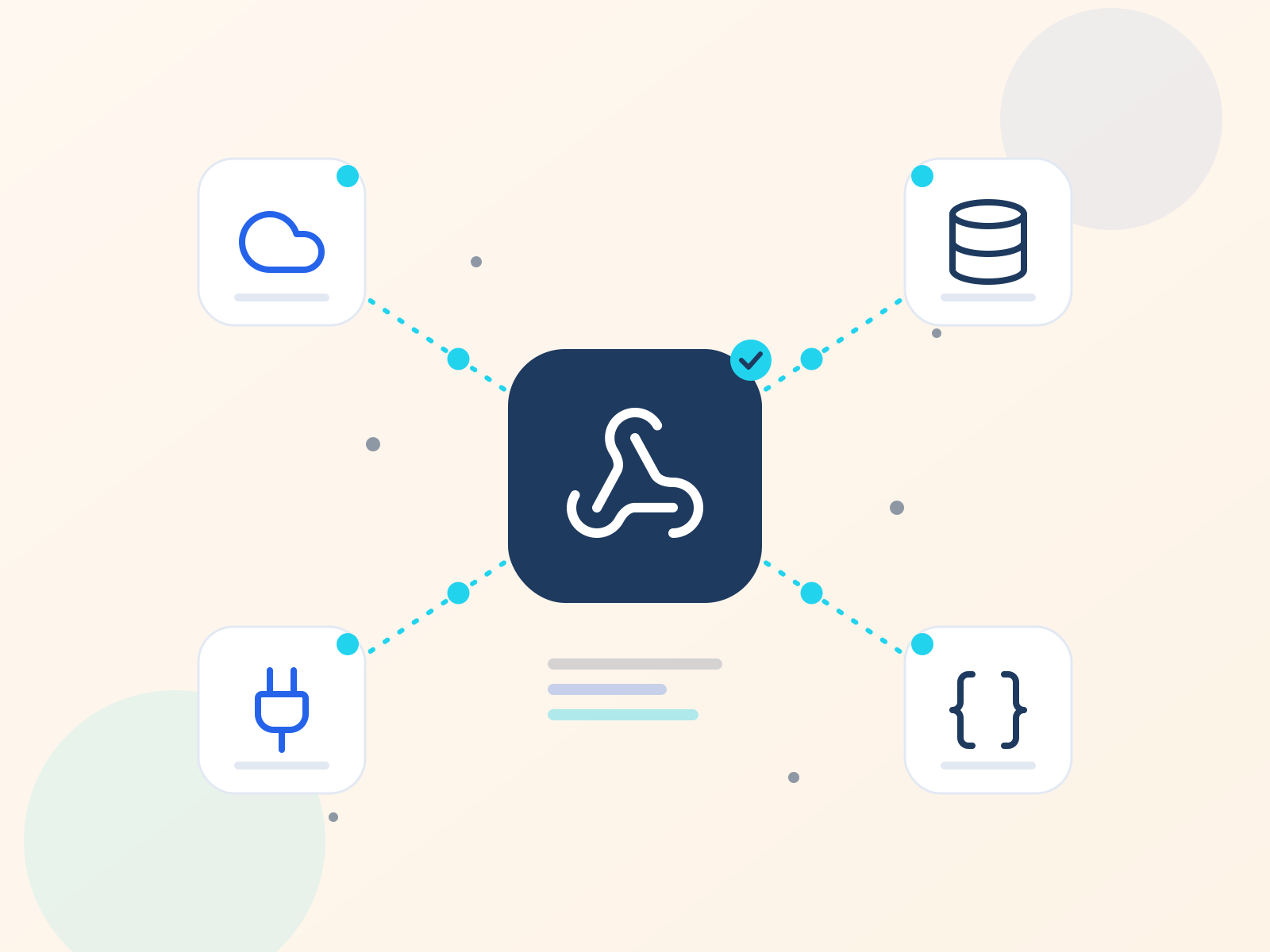
What API integration actually involves
An API (application programming interface) is the contract one system publishes so another can ask for data or trigger an action. Integration is the code that speaks those contracts on both sides. It reads from one system, reshapes the data and writes it into another, on a schedule or the moment something happens.
Three building blocks do most of the work:
- APIs for request-and-response calls.
- Webhooks for events one system pushes to another as they happen.
- Pipelines built on ETL (extract, transform, load) for bulk movement into a warehouse or reporting database.
What you get is one dependable path for each piece of data, instead of three people copying it between screens. See what an integration build costs.
Why the SaaS stack needs it
The average company now runs 305 SaaS applications, according to Zylo's SaaS Management Index (2026). Each one holds a slice of the truth. The CRM knows the customer. The billing system knows the invoice. The support desk knows the ticket. Keeping those slices consistent by hand is where the errors and the lost hours pile up.
Internal IT feels it first. A new tool arrives, and within a week comes the request: connect it to everything we already have.
For simple, low-volume flows, an iPaaS tool like Zapier or Make is the right answer, and we'll tell you so. Once the logic turns multi-step, the volumes climb or errors must never slip through, a custom integration costs less to run and is far easier to debug.
A typical build
A distributor takes orders through a webshop and two marketplaces, and fulfils them from one warehouse system. The orders arrive in three formats. Every morning, staff re-key them by hand.
We build one integration that reads all three sources, standardises the order data and writes clean records into the warehouse system. A webhook flags anything it can't match so a person can resolve it. The morning re-keying stops, and nothing gets silently dropped.
We run the same pattern on our own books: a platform that pulls payments from five sources and matches them automatically. Read the reconciliation case study.
How Globaprom builds it
You approve a written scope and a fixed price, and the integration goes live in one to three weeks, depending on the APIs involved.
Every build ships with the parts off-the-shelf glue leaves out: automatic retries for transient failures, structured logging, monitoring and alerts. An integration that fails silently is worse than none. AI-assisted development (vibecoding) speeds up the writing, and our engineers review and test every path before it touches your data.
Integrations are part of our custom internal tools development for IT teams. They often feed business process automation, and they're frequently the first step in legacy application modernization, where a modern module talks to an older system through its API.
Frequently Asked Questions
When should we use Zapier or Make instead of a custom integration?
Use an iPaaS tool like Zapier or Make when the flow is simple, low-volume, and fits the connectors on offer. Move to a custom integration when the logic is multi-step, volumes are high, or you need strict error handling that a visual builder cannot express.
What happens when an integration fails?
Every integration we build includes automatic retries for transient failures, structured logs, monitoring, and alerts. Records that cannot be processed are held and flagged for a human rather than dropped, so a failure is visible and recoverable instead of silent.
Can you integrate a system that has no API?
Often, yes. Where no API exists we use file exports, database access, or scheduled ETL jobs to move the data. We check for a usable interface first, because its absence is one of the main things that decides whether an integration is cheap or difficult.
Connect the systems that won't talk to each other
Name the two systems and the data that should flow between them. You get a fixed scope, a fixed price and a delivery date in weeks.