Internal Reconciliation Platform: A Business Process Automation Case Study
Most of the projects in our case studies start with a client's problem. This one started with ours.
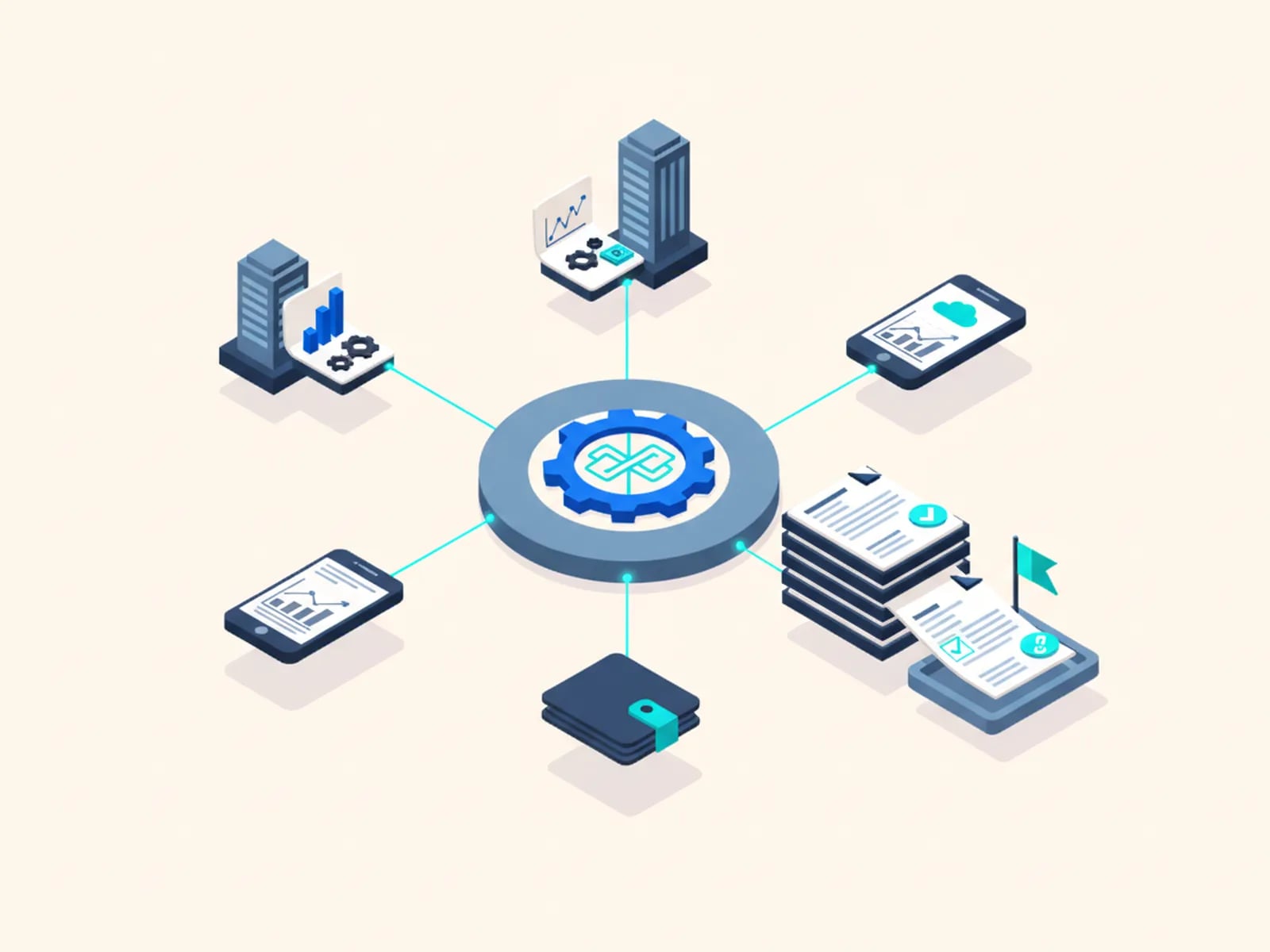
The system at a glance
The Problem
Every week, someone on our team had to match supplier payments, utility bills, and invoices against purchase orders, by hand, across five separate payment sources: two traditional banks, two neobanks, and PayPal. Each source had its own statement format, its own login, and its own export quirks. None of them talked to each other.
The process ran on spreadsheets. A payment landed in one of the five accounts, and someone copied the details into a tracking sheet, then hunted down the matching purchase order to confirm the amount, the vendor, and the date all lined up. When they didn't, someone had to work out why: a partial payment, a currency conversion, a duplicate charge, a PO that never got raised.
None of that work required judgment most of the time. It required attention, and attention is exactly what a five-way manual reconciliation eats fastest. Rows got skipped. Matches got missed until month-end. The spreadsheet was accurate eventually, but "eventually" cost real hours every single week, and those hours came out of a finance function that had other things to do.
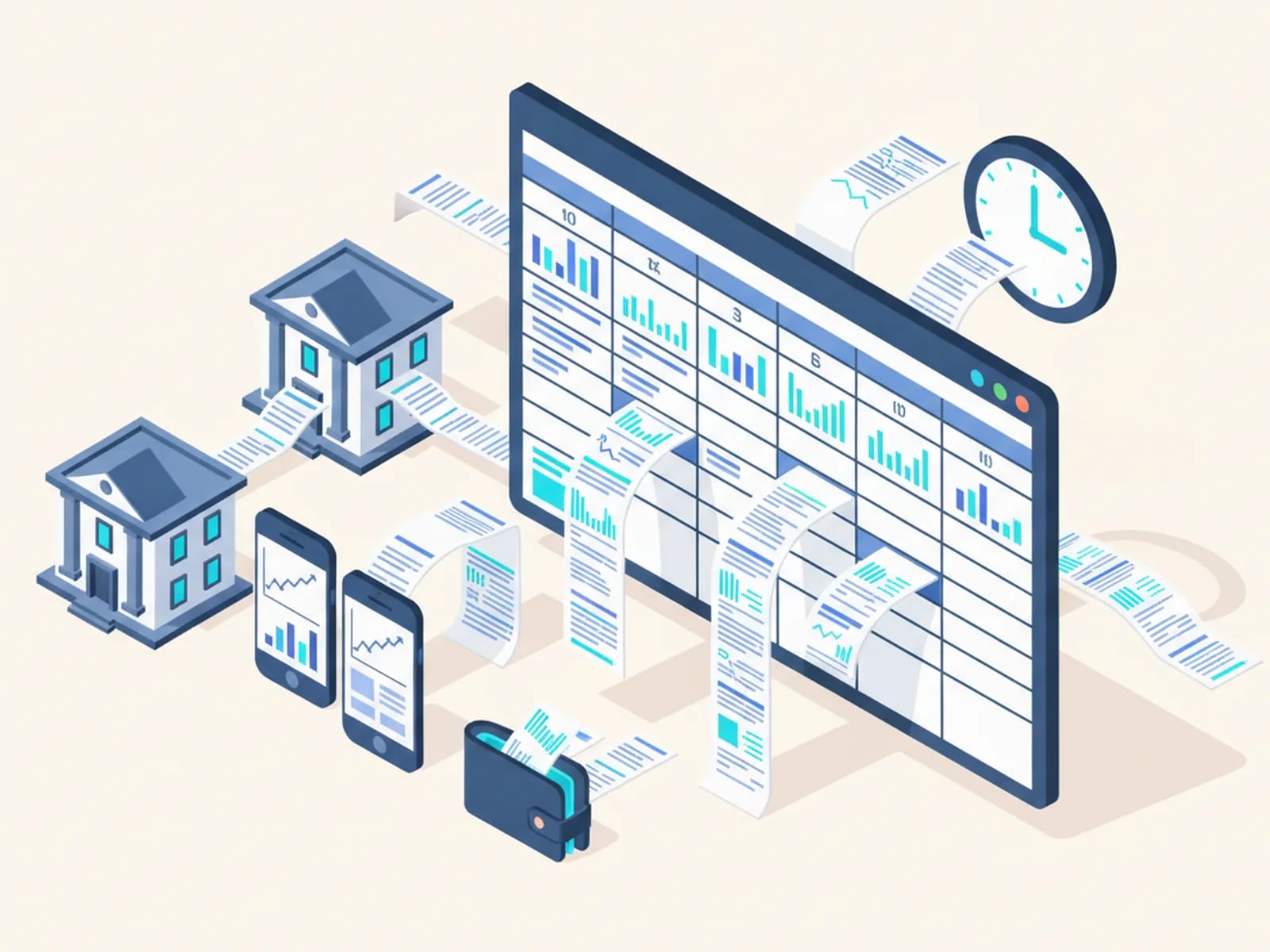
The Build
We built an internal platform that pulls payment data from all five sources (supplier and utility bank accounts, the neobank accounts, and PayPal) and matches each transaction against its purchase order automatically. This lives under the same category of work we describe on our internal tools page: software built for a workflow that already exists inside a business, not a product sold to the market.
The platform does the matching the spreadsheet used to do by hand. It pulls the transaction, finds the corresponding PO, checks the amount and vendor, and flags anything that doesn't reconcile cleanly. A clean match needs no human at all. An exception (a partial payment, a mismatch, a PO gap) gets surfaced for a person to look at, instead of being buried in a row someone might not check until the sheet is reviewed.
We built it the way we build every project: a scoped requirement, AI-assisted development, and human review on every change before it touched real money. Finance software has zero tolerance for a plausible-looking bug, so the review discipline here was, if anything, tighter than usual.

How a payment gets matched
Pull
Transactions come in from all five payment sources.
Match
The platform finds the purchase order and checks the amount and vendor.
Flag
Anything that does not reconcile cleanly is surfaced for a person.
Confirm
A clean match needs no human at all.
What gets flagged for a person
These are the cases that used to hide in a spreadsheet row.
Partial payment
Less than the invoice total arrived.
Currency conversion
The amount differs because the payment crossed currencies.
Duplicate charge
The same payment shows up twice.
Missing purchase order
A payment has no PO to match against.
The Result
The platform saves roughly 10 hours of manual reconciliation work a week. That time used to go into copying numbers between a bank statement and a spreadsheet. Now it goes into the exceptions that actually need a decision, and into the rest of finance's job.
We didn't build this once and move on. It's still in production, still reconciling live payments across all five sources, every week, right now.
Why This Proves Something Client Cases Cannot
A client case study tells you what we built for someone else. Our own platform tells you what we trust with our own money.
We are our own first and toughest client. Nobody hands a finance tool the benefit of the doubt the way an outside client might; if the matching logic misses a discrepancy, we're the ones who find out the hard way, on our own books. That's a different bar than shipping a feature and moving to the next contract.
Running this platform ourselves means every claim we make about AI-assisted development (the fixed-scope approach, the review discipline, the delivery speed) has already been tested against a use case with no room for a shrug and a patch next sprint. It's the same reason our about page leads with the tools we built for our own translation business before Globaprom existed: we don't ask a client to trust an approach we haven't already run ourselves, on something that matters to us.
Get the Same Kind of Build
If reconciliation, matching, or any other manual finance process is still eating hours out of your week, tell us how it works today. We'll come back with a fixed scope, a fixed price, and a delivery date measured in weeks, the same process we used to build the platform we still run ourselves.